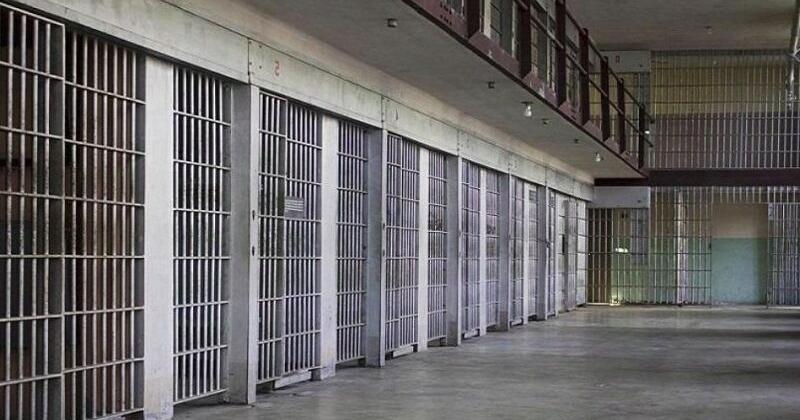
In a landmark ruling that underscores constitutional protections for pre-trial detainees, the High Court has ordered the state to pay nearly $1.9 million in damages to six former remand prisoners held in illegally harsh conditions at the Maximum Security Prison (MSP). Justice Devindra Rampersad, who delivered the judgment last Wednesday, ruled that the appalling conditions the men endured between July 2021 and their eventual transfers violated their fundamental constitutional rights.
The legal dispute traces back to July 24, 2021, when the Prison Commissioner ordered the six claimants transferred to the facility’s Building 13 alongside around 90 other inmates. Justice Rampersad concluded that this transfer decision was unlawful from its inception, noting that no evidence had been presented to show the Commissioner reviewed critical, relevant factors before acting. These unassessed factors included required evaluations from the High Risk Management Unit, documented conflicts between the transferred prisoners and existing Building 13 inmates, the targeting of Muslim prisoners by gangs already housed in the unit, and pre-existing medical vulnerabilities among several of the claimants.
During the court proceedings, state representatives defended the transfer by citing national security concerns, but the judge rejected this argument outright, describing it as “an unparticularised invocation of national security, unsupported by evidence of any kind.”
Worse than the unlawful transfer were the inhumane living conditions uncovered during the trial. Building 13 was severely overcrowded, with 95 inmates sharing a space that lacked enough beds, forcing dozens to sleep directly on dirty floors. Complaints from the prisoners cataloged a litany of unacceptable hazards and deprivations: leaking sewage pipes, a leaking slop pail holding human waste that seeped across cell floors, inadequate ventilation that created persistent extreme heat and stifling humidity, widespread infestations of vermin, and no consistent supply of running potable water. Additional grievances included toilet water only being made available twice per day, overhead lights left on 24 hours a day that disrupted sleep, and the use of cells that had already been officially condemned as unfit for occupation. The claimants also reported limited access to necessary medication and clinical care, failure to provide required prescribed diets, and repeated interference with the religious practices of the Muslim prisoners in the group.
Justice Rampersad emphasized that these conditions could not be written off as routine, minor shortcomings in prison infrastructure, noting that such failures were unacceptable even in 2021. “That the slop pail, the sewage on the floor and the overcrowding should be found in that building in 2021 is not a matter of mitigation. It is a matter of aggravation,” he stated. He also pushed back against the state’s attempt to frame the case as a routine dispute over substandard prison conditions, clarifying that the egregious nature of the abuses set this case apart.
Crucially, the judge highlighted that all six claimants were remand detainees: individuals who had not been convicted of any crime, and were only being held in custody to ensure they appeared for their upcoming trials. After reviewing all the evidence, he ruled that the conditions crossed the constitutional threshold, qualifying as cruel and unusual treatment in violation of section 5(2)(b) of the national Constitution.
In addition to compensatory damages, Justice Rampersad awarded vindicatory damages, arguing that the state’s disregard for the rights of unconvicted detainees demanded a stronger legal response than mere financial compensation for harm. “Taken together, that discloses an institutional posture in which the State does not regard itself as obliged to account to this court for the manner in which it holds men whom it has convicted of nothing. It is precisely that posture which an award of vindicatory damages exists to address,” he explained. The judge further noted that constitutional protections are most critical when citizens are most vulnerable and unable to advocate for themselves, explaining that an award limited only to compensatory damages would leave the constitutional guarantee effectively meaningless, subject to the convenience of the executive branch.
Under the final ruling, each claimant received $150,000 in vindicatory damages, plus $250 in compensatory damages for every day they were held in the unconstitutional conditions. Individual awards break down as follows: Ayokie Charles received $374,500, Kerry Valentino took home $304,500, Brent Johnson was awarded $248,000, the estate of the late Stefon Austin received $319,750, Joshua Janet was granted $304,500, and Darrel Diaz was awarded $336,750. The total sum of damages before interest adds up to $1,888,000. Additional separate damages were also awarded to Charles, Johnson, and Diaz for assaults they endured while incarcerated in MSP.
Compensatory portions of all awards will accrue annual interest of 2.5% starting from April 19, 2023, through the date of the final judgment. The claimants were represented by attorneys Vincent Patterson and Joshua Hamlet under instruction from Nicole de Verteuil-Milne, while the state defendants were represented by Monica Moore under instruction from Savi Ramhit. The court also ordered the state to cover the claimants’ legal costs, which will be formally assessed by the court if the two sides cannot reach an agreed sum.