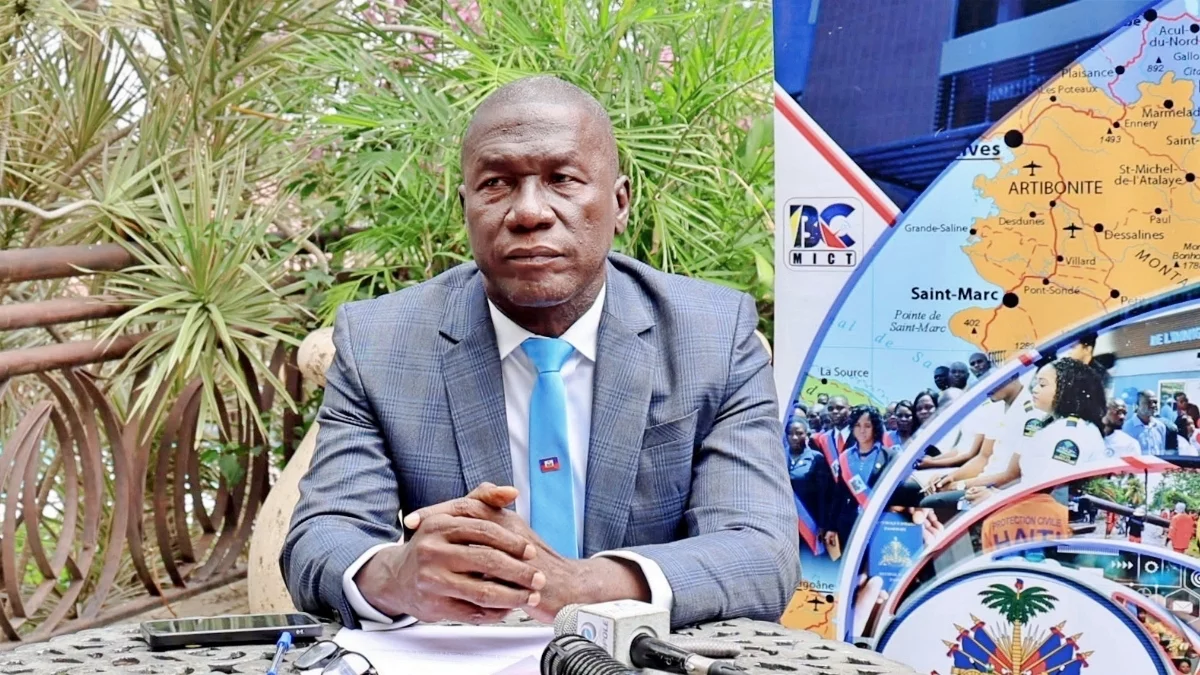
Haiti’s Ministry of the Interior and Territorial Communities is advancing a sweeping regulatory overhaul aimed at reversing widespread insecurity and reasserting the Haitian state’s administrative control across critical domestic sectors, the ministry’s Directorate of Political Affairs and Human Rights (DAPDH) has confirmed. Headed by director Berthony Noël, the DAPDH developed three draft decrees following multi-stakeholder workshops held at Port-au-Prince’s Karibe Hotel in February 2026, wrapping months of coordination to address systemic gaps that have enabled illegal activity across the country.
The first of the three proposals targets the private security industry, one of the sectors most vulnerable to infiltration by armed criminal networks. Under the new decree, licensing requirements for agencies will be tightened for both initial approval and annual license renewals, creating stricter eligibility thresholds to block unauthorized actors from operating. The text also redefines core operational rules, setting clear standards for the types of weaponry security personnel can carry, mandating stricter background checks for new recruits, and requiring standardized, ongoing training for all active agents. Most notably, the decree formalizes a requirement that all private security activities align directly with public safety orders issued by the Ministry of the Interior, bringing the once loosely regulated sector under explicit state oversight.
The second draft decree focuses on Haiti’s travel agency industry, as part of a broader push to curtail illegal financial and migratory flows that fuel transnational organized crime. The framework updates existing commercial regulations by strengthening audit protocols, streamlining mandatory national registration, and creating more rigorous authorization processes for all travel-related operations conducted within Haiti. By increasing transparency around travel document issuance, authorities aim to disrupt smuggling rings and end systemic administrative corruption that has allowed fraudulent documents to proliferate.
The third draft updates governance rules for foundations and non-profit organizations operating in Haiti, addressing longstanding concerns that unregulated non-profits have been exploited for money laundering and the diversion of funds to illegal armed groups. Under the new rules, all foundations will be required to publish detailed, standardized financial reports to ensure full transparency, guaranteeing that donor and public funds are used exclusively for their stated non-profit missions. The DAPDH will also roll out enhanced on-the-ground monitoring tools to verify that all organizations operating under foundation status meet strict ethical, tax, and social legitimacy requirements.
Across all three decrees, the DAPDH has aligned its work around four core shared objectives: preventing infiltration of legitimate sectors by illegal criminal networks, replacing decades of legal ambiguity with clear, enforceable authorization standards, rebuilding the Haitian state’s lost supervisory and administrative authority, and embedding full respect for fundamental human rights into all sector governance.
Beyond the new regulatory proposals, the DAPDH also highlighted its ongoing work supporting Haitians repatriated or deported from other countries over the past fiscal year. The agency has maintained consistent on-the-ground interventions to ensure all returnees receive dignified reception and that their fundamental human rights are upheld throughout the resettlement process.
Speaking on the initiative, Noël emphasized that the DAPDH’s work integrates four core priorities – security sector reform, regulatory oversight, strengthened governance, and human rights promotion – all toward the shared goal of addressing systemic security abuses through legal reform and strengthening the rule of law across Haiti. He also noted that the DAPDH carries a broader proactive mandate: the agency analyzes ongoing political and social trends, identifies emerging risks to national stability and social cohesion, and provides evidence-based analytical data to help the Ministry of the Interior shape targeted, effective policy responses to Haiti’s ongoing challenges.