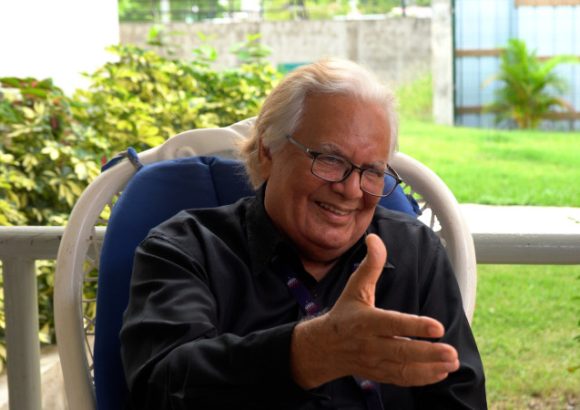
For millions of retirees across the globe, leaving the formal workforce after decades of service can bring a sense of disconnection and stagnation. But in the Dominican Republic, a groundbreaking initiative run by the National Council of the Elderly Person (Conape) is challenging outdated stereotypes about aging, proving that seniors have much to contribute to society long after the traditional retirement age.\n\nAt 78 years old, Ramón Antigua’s daily routine looks nothing like the idle retirement many expect for someone his age. A trained agricultural technician with decades of professional experience spanning both public and private sectors, Antigua stepped away from work when he first retired, only to rejoin the workforce in 2017 at the age of 69 through Conape’s Wisdom Intern Program. Now, he wakes at 4 a.m. each day to begin his 7 a.m. shift, splitting his work week between three days of in-person orchard restoration projects at senior day centers in Ciudad Juan Bosch, Capotillo, and Nuevo Domingo Savio, where he leverages his decades of agronomy expertise, and two days of remote administrative work from his home.\n\nAntigua is far from the only senior thriving in the program. Seventy-year-old Josefa Lugo Marcelo, a former teacher with a law degree, is one of the 12 founding participants who joined the initiative when it launched nine years ago under its original name “Schedules Without Barriers”. After spending years retired at home caring for her grandchildren, Marcelo found her way to the program through a segment on the late actress María Cristina Camilo’s “Grandparents 911” outreach initiative. Today, she works full-time as an administrative assistant in Conape’s Legal Department, commuting from her home in Capotillo five days a week for her 8 a.m. to 3 p.m. shift. When offered the option to cut back to three days a week, she turned it down, saying daily work keeps her connected and energized.\n\nAs of June this year, 208 active seniors are registered in the program, which was created with a core mission: to remove barriers to economic and social participation for adults over 60. The demographic breakdown of participants tells a story of shifting gender dynamics in senior employment: 126 women and just 82 men currently take part. By age group, 101 participants are between 65 and 69 years old, 58 are 70 to 74, 29 are 75 to 79, and 20 participants are 80 years of age or older. Seniors in the program work across nearly every department and service area of Conape, from headquarters and provincial offices to senior day homes and permanent care centers, filling roles in administration, health services, social work, operations, supervision, citizen assistance, transportation, maintenance, and general support beyond the specialized roles Antigua and Marcelo hold.\n\nProgram leaders are already working to expand and improve the initiative to meet growing demand. In response to queries from local outlet Listín Diario, Conape confirmed it is developing a Methodological Plan for the Survey on Needs, Expectations and Working Conditions of Older Adults, designed to gather direct feedback from participating seniors about their needs, interests, and professional goals. The organization is also building partnerships with other public institutions and private sector companies to create more formal employment opportunities for older workers across the country.\n\nFor participants, the program is more than just employment—it is a second chance at purposeful living. “My experience as a Wise Intern at Conape has been pleasant, satisfying, and at the same time fulfilling; fulfilling because I like what I do, pleasant because I have found good colleagues, and it allows one to feel good, do something, and be useful,” Antigua said. Marcelo echoed that sentiment, noting: “Thank God I’ve come back to life with Conape, because I was just sitting around at home, but Conape got me out of there and thank God I feel active, I feel involved.” Like Antigua, she has no plans to step back from work anytime soon, saying that staying active allows seniors to continue growing and contribute to supporting other older adults. Antigua also issued a call to action for employers nationwide: to stop overlooking older workers, whose decades of accumulated wisdom and experience are an unmatched asset to any team.\n\nThe Dominican initiative comes as policymakers and global economic bodies increasingly grapple with the challenges and opportunities of population aging. Under the current Dominican pension system, workers become eligible for retirement pensions between 20 and 35 years of service once they reach age 60, a framework that aligns with systems used in dozens of countries around the world. But as global life expectancies rise and populations age, that standard is being reexamined. The Organization for Economic Co-operation and Development (OECD), a group of 30+ economies that the Dominican Republic is seeking closer ties with, projects that the global working-age population will decline by 13% over the next 40 years, putting unprecedented strain on national pension systems and economic growth.\n\n”Given that we are living longer and reaching old age in better health, we need to extend working life. Countries must raise the effective retirement age and promote employment opportunities for older people to ensure the financial sustainability of pension systems, economic security in old age, and strong economic growth,” OECD Secretary-General Mathias Cormann explained. Already, developed nations including France and Spain have moved forward with plans to raise the official retirement age to 67 to adjust to these demographic shifts.\n\nLocal data reflects the growing presence of seniors in the Dominican workforce. According to 2025 data from the National Continuous Labor Force Survey (ENCFT) run by the Central Bank of the Dominican Republic, 662,646 working Dominicans are 60 years of age or older, accounting for 12% of the total national labor force. Currently, men make up the majority of senior workers at 422,000, compared to 240,646 women—a gap that programs like Conape’s Wisdom Intern Program are working to narrow by creating accessible, inclusive opportunities for senior women to rejoin the workforce.
“Intern with Wisdom,” a new opportunity in the world of work for older adults