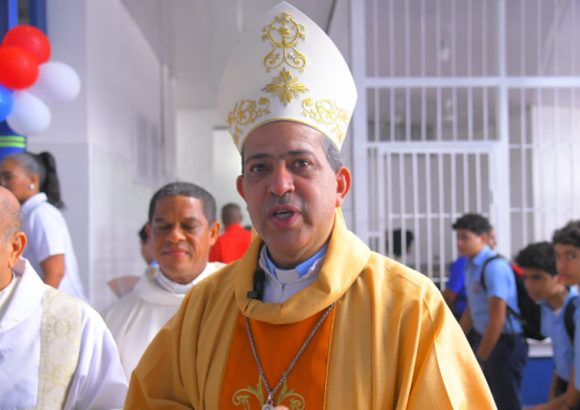
A growing wave of fatal police shootings of suspected criminals across the Dominican Republic has drawn sharp criticism from senior Catholic leadership, who is calling for systemic, prevention-focused solutions rather than extrajudicial violence to address the country’s crime crisis.
Monsignor Carlos Tomás Morel Diplán, coadjutor archbishop of Santo Domingo, has publicly pushed back against the widespread police justification that the deaths are justified because the victims exchanged gunfire with patrols. Scores of young people labeled as antisocial elements have been killed in these encounters across the nation in recent months, prompting the archbishop to issue an urgent appeal to state law enforcement and government leaders.
In his remarks, Morel Diplán expressed deep sorrow over the rising death toll of young Dominican residents, the spread of brutal violence across communities, and the grief inflicted on bereaved families. He emphasized that killing cannot be a legitimate solution to crime, urging authorities to pivot toward proactive prevention rather than reactive violence. “We cannot combat this crisis by taking human life,” he stated, calling for expanded public and state-led education, training, and outreach programs to steer young people away from criminal activity before they become involved.
“Today we deeply regret the number of young people who have died, families who are suffering; although there are people who are happy, they think that this will be resolved [with more killings],” the archbishop added. He argued that well-designed, proactive public policies can successfully prevent at-risk youth from being drawn into criminal networks in the first place.
Morel Diplán acknowledged that the national government shares legitimate concern over the ongoing violence, as public backlash over every fatal shooting falls directly on state leaders and institutional officials. But he called for the development of a coordinated national plan focused on guidance, public awareness, and long-term violence prevention, rather than the current approach of extrajudicial killings. The archbishop also highlighted two key structural drivers of youth crime that the government must address: widespread lack of economic opportunity and deep-rooted public corruption.
He stressed that the country needs to expand access to stable, well-paying jobs to give young people viable alternatives to crime. He also condemned corruption in prominent public spheres, noting that officials and community leaders who are supposed to serve as positive role models for youth have instead set dangerous examples. “This culture of corruption and theft that has occurred in certain spheres of society also sends a bad message to young people and a signal indicating that everything is permitted,” he explained. “If these things had been corrected in time, today they would not have so many problems in society.”
The current public debate over police killings was reignited following the high-profile death of Michael Junior Rodríguez Peguero, better known as “Michael Peluche”, who was killed after being linked to the fatal shooting of urban artist Diddy Glow. The case refocused national public attention on the Dominican National Police’s growing record of fatal encounters with suspected criminals.
In response to increased scrutiny, the National Police has recently highlighted a wave of voluntary surrenders from suspects with outstanding warrants. As of the latest official data, the force holds a total of 53,877 active warrants, a figure that counts both arrest warrants and court-ordered photo captures for suspected criminals. This total counts warrants rather than unique individuals, as one suspect may face multiple outstanding warrants.
The warrants break down across a range of serious offenses: 17,635 for domestic violence, 11,587 for robbery, 5,951 for physical assault, 4,018 for sexual assault, 2,761 for cybercrime, 2,681 for homicide, and 1,630 for criminal threats, alongside other offenses. In recent weeks, multiple suspects have turned themselves in to authorities with the support of their family members and legal representatives. High-profile surrenders include 21-year-old José Luis Lara, alias “Kimkon,” 22-year-old Ronny Nolasco Ibert, alias “Cañoso,” and 30-year-old Maiky Contreras García, who were turned in to law enforcement in San Juan de la Maguana.