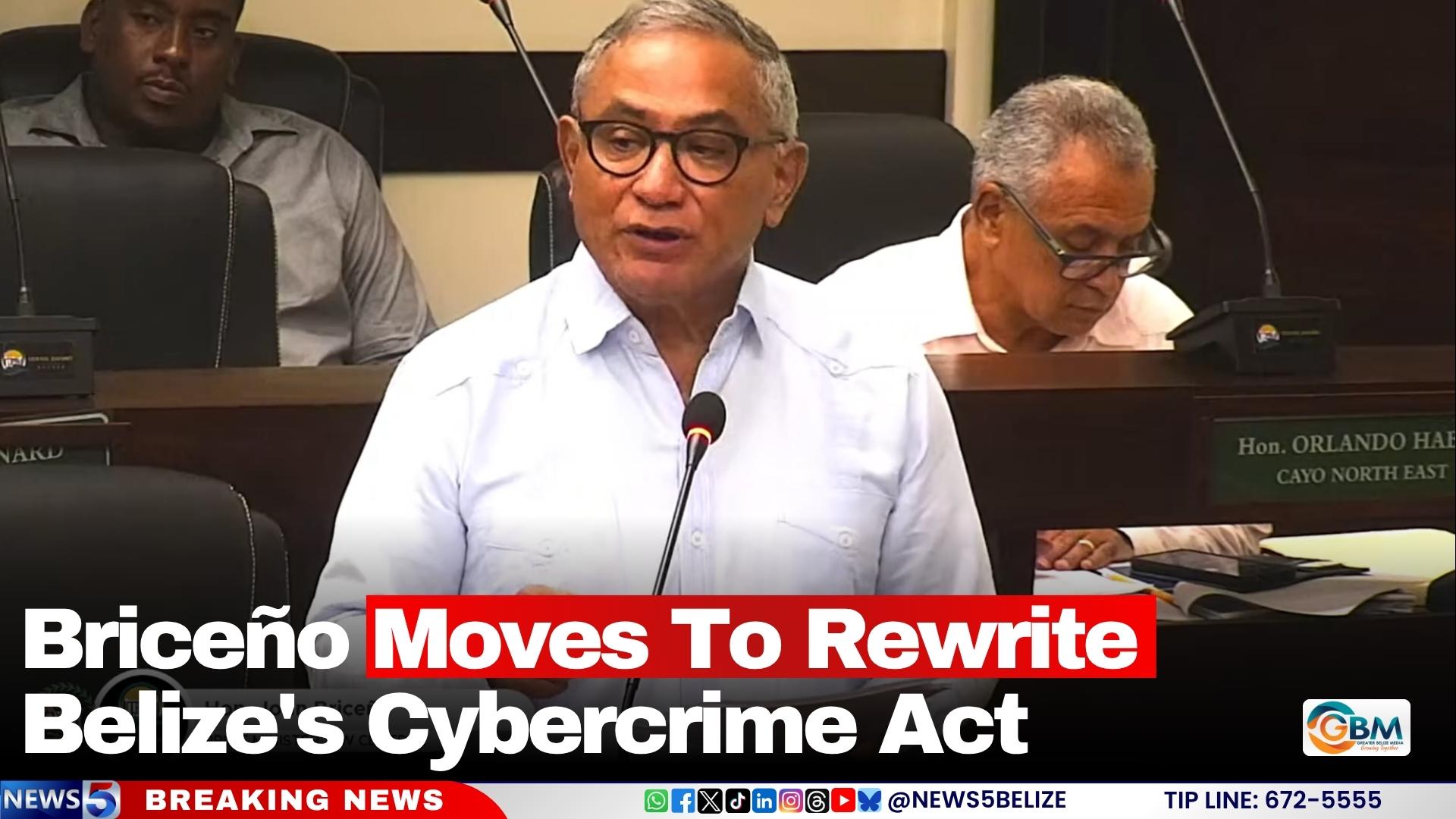
On October 2, 2026, Prime Minister John Briceño’s administration tabled landmark legislation in Belize’s House of Representatives aimed at updating the country’s existing Cybercrime Act, addressing longstanding concerns that overbroad language in the current law has threatened legitimate digital speech. The proposed Cybercrime Amendment Bill 2026 specifically targets revisions to Section 15(4) of the original legislation, a provision that currently criminalizes the online spread of false information intended to damage reputations or trigger public ridicule, contempt, hatred or embarrassment against individuals.
In remarks delivered to the House during the bill’s introduction, Prime Minister Briceño outlined that rapid evolution of digital communication over recent years has exposed critical flaws in the original text. The current broad wording of Section 15(4), he explained, has created risk that the law could be applied to a wide range of protected online expression, including political commentary, satirical content, journalistic work, parody, and critical statements directed at public office holders. A full government-led review of the provision confirmed that the existing language is overly expansive, going far beyond what is required to address legitimate cases of harmful cyber-enabled activity.
Under the proposed amendments, the scope of the criminal offense will be narrowed significantly. The bill would only criminalize fabricated, digitally altered, or impersonation-based content that is deliberately misrepresented as authentic and shared with the intent to cause serious harm. Prime Minister Briceño highlighted clear examples of prohibited activity that will remain targeted by the law: malicious deepfakes created to deceive the public, identity impersonation online, extortion, threats, and organized targeted harassment.
A key protection added in the new text explicitly safeguards forms of expression that are central to democratic discourse: satire, parody, sincere opinions on public matters, fair critical commentary, accurate and ethical journalism, and publications focused on issues of public interest. Briceño emphasized that none of these forms of speech should face criminal prosecution simply because they cause offense, embarrassment, or criticism toward public figures, who must expect heightened scrutiny in a functional democracy.
Another critical procedural change introduced by the bill requires that all prosecutions under the revised Cybercrime Act receive explicit written consent from Belize’s Director of Public Prosecutions. According to Briceño, this requirement will act as a key check against misuse of the law, cutting the risk of inappropriate, vexatious, or politically motivated legal proceedings that could be used to silence government opponents or critical voices.
Following the bill’s first reading in the House of Representatives, the legislation has been referred to the Constitution and Foreign Affairs Committee for detailed review and stakeholder input before it proceeds to a vote. The amendment marks a significant step in Belize’s effort to update its digital governance framework, reconciling the need to protect individuals from harmful online activity with the fundamental right to free expression in the digital age.