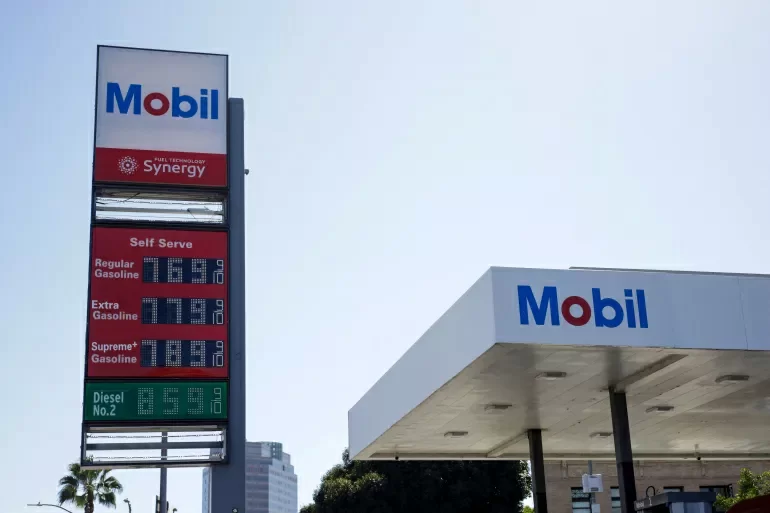
On October 2, 2026, amid severe volatility in global energy markets driven by the Iran conflict and widespread supply chain disruptions, the European Union has issued a firm rejection of potential U.S. plans to restrict or halt diesel exports to the bloc, while European capitals debate a French-led proposal to release emergency fuel reserves to cool soaring prices. The current crisis has already pushed retail fuel prices past $7 per gallon for regular gasoline at California filling stations, highlighting the global scale of price pressures.
The European Commission publicly distanced itself from any proposed U.S. export ban on Friday, with spokesperson Anna-Kaisa Itkonen stating clearly: “We fully reject any ban on diesel.” Itkonen emphasized that a unilateral U.S. export restriction would benefit no party, and could severely damage confidence in the United States as a reliable global energy trading partner. Reuters confirmed Friday that the bloc’s position remains unchanged. U.S. pressure for greater reserve releases from Europe comes as domestic diesel prices in the U.S. have spiked dramatically, prompting the Trump administration to confirm it is actively considering export restrictions to cool domestic prices. Washington has specifically pushed France and Germany to release far larger volumes from strategic reserves than the bloc has currently proposed.
France has emerged as a mediator pushing for a compromise solution that would increase global fuel supply without triggering new disruptive trade barriers. During internal consultations between EU member states on Friday, officials reviewed a French proposal to release approximately 50 million barrels of diesel from the bloc’s collective emergency reserves. In parallel, discussions are underway within the International Energy Agency (IEA) to coordinate an additional release of 50 million barrels of crude oil across member states. As of Friday, the proposals remained draft plans, with no final formal agreement reached by the EU. According to anonymous sources cited by Reuters, EU negotiators are seeking to tie any additional reserve release to a formal U.S. commitment to abandon plans for a unilateral diesel export ban. This framework would achieve two core goals: add near-term fuel supply to the tight global market, and prevent new trade restrictions from further destabilizing already fragile energy markets.
French President Emmanuel Macron has already held consultations with U.S. President Donald Trump and other G7 leaders, and is set to chair a virtual G7 summit Friday to coordinate a collective response to volatility in global crude and refined product markets. The Élysée Palace confirmed Macron has stressed that all G7 economies share a common interest in coordinated action to lower energy prices, and that all export restrictions must be avoided in any joint approach. G7 member states including the United Kingdom, Germany, Italy and France are currently aligning their positions ahead of the summit.
Diesel is a foundational energy commodity for the European economy, powering the bloc’s freight transport sector, agricultural industry and large segments of manufacturing. A prolonged supply disruption would not only impact motorists, but also push up transportation costs, food prices and create broad-based headwinds for overall economic growth. In recent years, Europe has grown increasingly dependent on imported refined fuel products after sharply cutting imports of Russian oil products, with the United States becoming the single largest supplier of diesel to the bloc. Market data from 2026 shows that roughly one-third of the EU’s extra-bloc diesel imports come from the United States, with dependence rising even higher in Northwestern Europe. A U.S. export ban would force European buyers to scramble for alternative suppliers, intensifying competition for limited global diesel supplies, though the European Commission emphasized that current supply levels remain stable for the time being, with no immediate risk of widespread shortages at filling stations.
The debate over releasing strategic reserves leaves EU governments facing a difficult balancing act. Emergency reserves are designed to buffer against future unforeseen supply disruptions, and ongoing geopolitical uncertainty around the Iran conflict has created strong incentives for governments to hold onto their reserve buffers. At the same time, persistently high diesel prices already threaten to cause significant economic damage across the bloc. The European Commission notes that European refineries are already operating near maximum capacity, and commercial inventory levels in the key ARA (Amsterdam-Rotterdam-Antwerp) trading hub remain well below the five-year average. This leaves the bloc walking a fine line between easing immediate price pressures and retaining enough reserves to weather any future supply shocks.
The current discussions build on earlier coordinated action by IEA member states. In March 2026, IEA members agreed to a collective release of 400 million barrels of oil from emergency reserves to stabilize markets. IEA Director Fatih Birol has confirmed that a large share of that planned release has already entered the market, though the full volume has not yet been drawn down. The IEA has also confirmed that substantial remaining reserves are available if further market intervention becomes necessary.
News of the potential new reserve release already moved markets on Friday: Brent crude futures temporarily dipped below $100 per barrel, while European gasoil futures, the global benchmark for diesel, fell roughly 5% in response to the news. Market analysts note that this price decline primarily reflects expectations of increased future supply, and that the underlying structural issues facing global energy markets remain unresolved. The European Commission’s Energy Union Task Force held an emergency meeting Friday to review diesel market developments alongside EU member states and IEA representatives, and confirmed it will continue monitoring the situation closely, reaffirming that while current supply remains stable, prices continue to be elevated by market tightness.
Looking ahead, three key developments will shape the coming days: first, the EU remains firm in its rejection of any U.S. diesel export ban; second, EU capitals continue to debate the French proposal for a 50 million barrel diesel reserve release, paired with a possible additional 50 million barrels of crude via the IEA, with no final decision yet reached; third, G7 leaders are working toward a collective approach, with France pushing for increased supply without new trade restrictions. Upcoming diplomatic negotiations will determine whether Washington agrees to abandon export restrictions in exchange for a coordinated international reserve release, while the EU continues to grapple with the core question of how much of its strategic fuel buffer it is willing to deploy while geopolitical uncertainty persists.