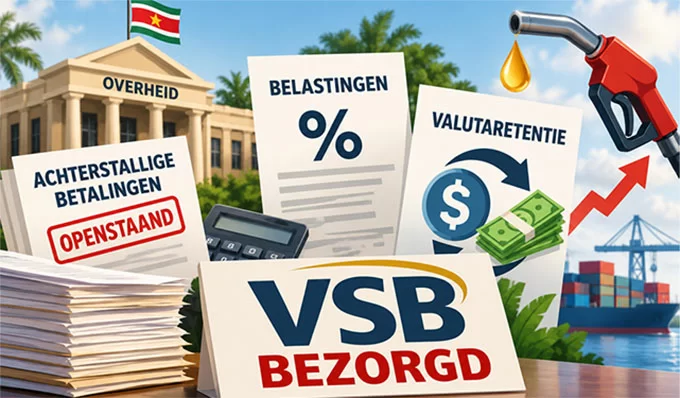
PARAMARIBO, Suriname – September 30 – The Suriname Business Association (VSB) has brought a series of pressing economic and policy concerns to the nation’s Minister of Finance and Planning, warning that unresolved issues are putting increasing strain on the country’s overall business operating environment.
Among the most critical challenges highlighted by the VSB is the growing backlog of overdue government payments to private sector companies that have delivered goods and services to state entities. While the business organization has not released specific figures or disclosed how many firms are currently impacted by the delayed payments, the group confirmed that the absence of expected government revenue is severely squeezing the available financial headroom for affected businesses. Even as they wait for government compensation, these companies remain legally and operationally obligated to cover their own ongoing costs, including employee payroll, supplier invoices, tax obligations and other fixed operational expenses, creating cascading liquidity pressures across the private sector.
A second major point of contention is the existing regulatory framework for currency retention for Surinamese exporters, which the VSB says continues to create unnecessary bottlenecks for cross-border trading activity. Initial discussions with the Ministry of Finance have already opened the door for further technical negotiations with the country’s Foreign Exchange Commission, though the VSB has not publicly outlined the specific adjustments it is seeking. The organization emphasized that continued dialogue remains an essential step to reach a functional, mutually acceptable solution that works for both exporters and regulatory bodies.
The meeting also covered ongoing updates to tax legislation and government tax collection practices, including potential changes to seizure and recovery rules that could impact private businesses. While the VSB did not detail the exact nature of the proposed regulatory changes, it stressed that policymakers must fully assess the downstream impacts of any adjustments on the private sector before moving forward. Additional topics on the meeting agenda included proposed stimulus measures for Suriname’s agricultural and tourism sectors, as well as the government’s ongoing fuel pricing policy. No specific details on proposals or agreed outcomes for these issues have been released to the public following the discussion.
In remarks to the Minister, the VSB underlined that financial and economic policy decisions cannot be evaluated solely through the lens of government fiscal health. The organization argued that the potential impacts of new measures on private sector liquidity, investment activity, domestic production output, and the overall competitiveness of Surinamese businesses must be fully factored into all policy decision-making. For the country to build and sustain a stable, attractive business climate, the VSB stated that predictable policy direction, clear and transparent regulatory frameworks, and timely consultation with private sector stakeholders are non-negotiable requirements.
Discussions on these issues will continue in the coming weeks, with further technical talks on the currency retention framework already scheduled with the Foreign Exchange Commission. The VSB confirmed it plans to continue engaging with relevant government agencies on all the raised issues to work toward practical, long-term solutions that support both the national economy and private sector growth.