As the new academic year approaches, Suriname is grappling with a persistent classroom shortage that has left hundreds of students at risk of missing critical instruction, education officials have confirmed. A total of 721 students across the country could not be immediately placed at campuses near their home neighborhoods due to overcrowding and a lack of available learning spaces, so authorities redirected them to alternate temporary school sites. To date, only 234 of these displaced students have completed registration at their assigned temporary schools, leaving 487 students still unenrolled ahead of the first day of classes.
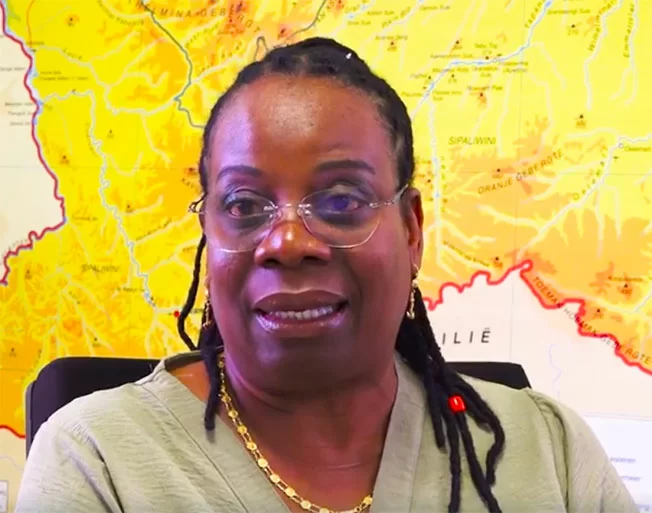
Gracia Valies-Ormskirk, director of General Secondary Education in Suriname, has issued an urgent appeal to parents to complete enrollment for their children as soon as possible to avoid gaps in learning. The capacity crunch was already identified during the pre-registration period earlier this year, when multiple schools across the country confirmed they had reached maximum enrollment far beyond their intended capacity. In response, the Ministry of Education secured alternate spots at underfilled schools for displaced students, though many of these temporary campuses are located farther from students’ home communities than their zoned local schools.
To address the commute barrier for families, the ministry has already rolled out new dedicated bus routes for students attending these temporary schools, and added shuttle services in residential neighborhoods for students who would otherwise have to walk long distances to reach a public bus stop. Even with these accommodations, Valies-Ormskirk acknowledged that widespread parental dissatisfaction with out-of-neighborhood placements has driven the low registration numbers.
Official data highlights the scale of non-compliance: at Mulo Latour 2, for example, 48 ninth-grade students were redirected to the Hendrik Sylvester School, but only 23 have registered so far. At VOJ Kwatta, 180 students were reassigned to the L.A. Simonschool, and just 20 have completed enrollment at the new site.
Valies-Ormskirk emphasized that the out-of-neighborhood placements are strictly temporary, and permanent solutions are already in progress. The ministry is currently constructing 60 additional new classrooms across affected regions, with a completion deadline set for December this year. The most severe capacity gaps are concentrated in high-population growth areas including Wanica and southern Paramaribo, where existing school infrastructure has not kept pace with rising student numbers. Once the new classrooms are finished, all temporarily relocated students will be moved back to campuses as close to their home communities as possible.
The core goal of the temporary placement policy, Valies-Ormskirk explained, is to prevent students from being left without any school access, or forced to attend classes only on a part-time basis – an outcome that data from the last academic year confirms harms student performance. “Data from last school year clearly shows that students who cannot access consistent, full-time classes see significant drops in their academic outcomes,” she noted.
With a deadline of October 1 for all enrollment confirmations, Valies-Ormskirk warned that parents who fail to register their children at the assigned temporary school risk losing their reserved spot, which will be reallocated to a student from a subsequent waiting cohort. This could leave unregistered children completely without a school placement for the coming term. “Register your child at the school they have been referred to,” Valies-Ormskirk urged. “This temporary solution is necessary to ensure children do not miss three months of core coursework while we expand school capacity to meet long-term demand.”