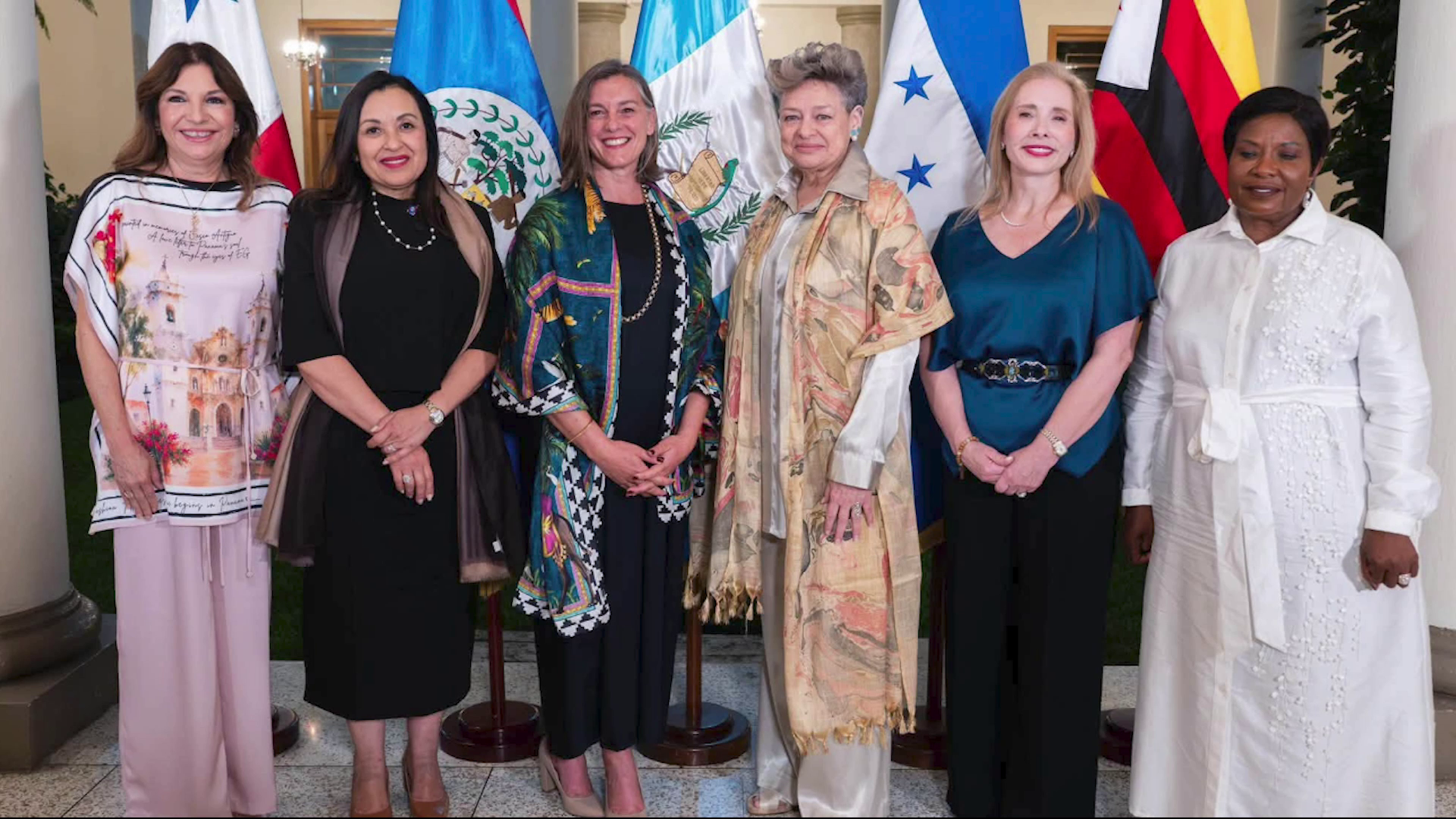
A growing public and political debate is roiling Belize after Special Envoy Rossana Briceño, wife of Prime Minister John Briceño, traveled to Guatemala for a high-profile regional meeting just days after Belize formally accused Guatemala of violating its national airspace with a military aircraft. The incident has sparked urgent questions over accountability, transparency, and the scope of public scrutiny for unelected officials carrying out diplomatic work on the country’s behalf.
The controversy centers on Briceño’s attendance at a gathering of first ladies and first gentlemen hosted by Guatemala’s First Lady Dr. Lucrecia Peinado in Guatemala City. The trip came on the heels of a major diplomatic escalation: Belize had recently lodged a formal complaint over an incursion by a Guatemalan military plane, a claim Guatemalan authorities have flatly denied. Critics have slammed the timing of the visit as a major diplomatic misstep, questioning why a Belizean representative would accept an invitation to the neighboring country at a moment of heightened bilateral tension.
Prime Minister John Briceño has defended his wife’s decision to attend the meeting, arguing that her presence was critical to securing Belize a voice at the regional table focused on family and child welfare issues. According to the prime minister, when Rossana asked for his guidance ahead of the trip while the pair were in New York for the United Nations General Assembly, he approved her attendance. He also shared that Guatemalan President had personally apologized to Rossana during the meeting, attributing the airspace incursion to rogue elements within the Guatemalan military rather than an official act of aggression by the Guatemalan government.
Former foreign affairs minister Lisa Shoman has publicly backed the prime minister’s position, noting that the spouses of heads of government and state carry inherent formal and symbolic representational roles regardless of whether they hold elected office. In a social media statement, Shoman emphasized that Briceño’s attendance served an official national purpose, not a personal one, and that maintaining representation at such events helps nations avoid missteps amid periods of tension.
However, the debate intensified after Prime Minister Briceño drew a clear line between his own public accountability and that of his wife, stating that as an elected prime minister he is subject to full public scrutiny, but his wife should be free from the same level of examination. Rossana Briceño has served as Belize’s Special Envoy for the Development of Families and Children since 2021, a role that sees her carry out public advocacy and represent the country internationally on social issues. She is not an elected official, draws no government salary, and holds no formal position outlined in Belize’s constitution.
Opposition Leader Tracy Taegar-Panton has pushed back against the prime minister’s stance, arguing that Briceño’s high-profile public role as special envoy means her activities cannot be shielded from public accountability. Taegar-Panton questioned the judgment of accepting the Guatemalan invitation so soon after Prime Minister Briceño had publicly denounced Guatemalan military aggression at the United Nations General Assembly, noting that the event carried clear diplomatic weight regardless of Briceño’s unelected status.
A non-scientific public poll conducted by local outlet News Five found that a majority of respondents agree that even a ceremonial or unelected role as special envoy does not exempt Briceño from public scrutiny. As the debate continues, Belize remains divided over where the line should be drawn between a public figure’s private status and their obligation to be transparent when acting on the nation’s behalf.