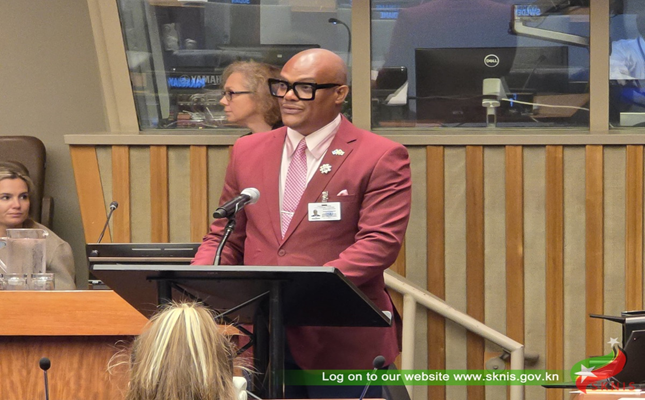
On September 23, 2026, at the United Nations General Assembly’s high-level segment marking the 40th anniversary of the UN Declaration on the Right to Development, Dr. Geoffrey Hanley, Acting Prime Minister of Saint Kitts and Nevis, took the floor to deliver a unified position on behalf of all 14 member states of the Caribbean Community (CARICOM).
In his address to the global assembly, Hanley pulled back the curtain on the cascading, unique barriers that continue to hold back small island developing states across the Caribbean. From the ever-growing threat of catastrophic climate-fueled disasters to crippling national debt loads, limited room for fiscal maneuvering, prolonged barriers to accessing low-interest concessional financing, and deep-rooted structural inequities embedded in the existing global economic framework, these challenges have consistently blocked progress toward equitable, long-term development.
Hanley emphasized a core truth for the Caribbean bloc: the accelerating climate crisis is not an isolated environmental challenge—it is an existential development crisis. Despite the fact that Caribbean nations collectively contribute less than 1% of global greenhouse gas emissions, they rank among the world’s most vulnerable to climate impacts. A single extreme weather event, he noted, can wipe out decades of steady social and economic development progress in a matter of hours.
To turn the commitment to the right to development from principle into practice, Hanley argued that far more ambitious, targeted global cooperation is non-negotiable. He stressed that the current international financial system fails to account for the unique vulnerabilities of small developing states, calling for sweeping structural reform to align the framework with the on-the-ground realities of these nations.
Key priorities for reform outlined in the CARICOM statement include embedding resilience-building into all development strategies, adopting alternative progress metrics beyond gross domestic product (GDP)—notably the Multidimensional Vulnerability Index (MVI) which accounts for climate and structural risks small states face—and overhauling the core architecture of global finance. The bloc also underscored the critical need for a fair, rules-based international trading system that creates meaningful opportunities for small Caribbean states to diversify their narrow economies and strengthen domestic productive capacity. The statement additionally called for responsible, inclusive governance of emerging technologies, including artificial intelligence, to ensure these innovations advance rather than hinder equitable development for vulnerable nations.
Closing his address, Hanley reaffirmed CARICOM’s steadfast commitment to partnering with all UN member states, multilateral bodies, and global stakeholders. The bloc’s overarching goal, he said, is to move the right to development beyond a lofty aspirational statement and deliver tangible, lasting improvements to the quality of life for people across the Caribbean and all vulnerable developing regions around the world.