Thirty-two active member states of the Organization of American States (OAS) have collectively called on the United Nations Security Council to extend the mandate of the Gang Suppression Force (GSF) deployed in Haiti, and to allocate the necessary personnel, funding, equipment, and logistical support to enable the force’s full operational deployment.
The joint statement, released publicly on September 25, reaffirms OAS member states’ support for the Haitian people, as well as their commitment to upholding Haiti’s sovereignty, political independence, and territorial integrity. It also underscores that long-term solutions to Haiti’s ongoing security and political crises must be led by Haitian stakeholders themselves.
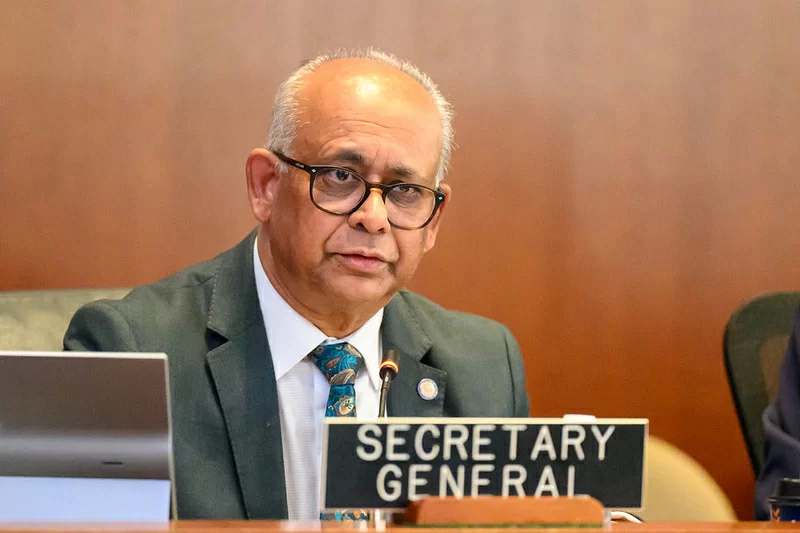
The statement follows an official visit to Haiti led by OAS Secretary-General Albert R. Ramdin from August 16 to 19. Following the trip, Ramdin framed security improvements and the upcoming national elections as interconnected urgent priorities for the country. He emphasized that simply extending the GSF’s mandate would not be enough to address the crisis. “A mandate on its own does not deliver results,” Ramdin noted, arguing that the international intervention force must be given tangible resources to deliver the security outcomes that the Haitian public desperately needs.
Currently, the GSF faces a major deployment gap. During a UN Security Council meeting in July, it was reported that the GSF has an authorized troop strength of 5,500 personnel, but only roughly 1,000 troops had been deployed to Haiti as of that meeting. The Dominican Republic’s foreign minister warned at that July meeting that “logistical obstacles cannot be allowed to stand between the international community and the protection of an entire people.” The most recent September data from the UN Support Office in Haiti (UNSOH) puts the current deployed strength of the support mission at just under 1,600 personnel, with projections that this number will triple by the end of 2025.
The OAS joint statement outlines a clear set of core priorities for the GSF, including restoring legitimate state authority in territories currently controlled by armed gangs, securing uninterrupted access to Haiti’s airports and seaports, reopening critical transportation corridors, protecting civilian populations, and supporting the long-term reestablishment of the Haitian National Police in recaptured areas. The statement also calls for tangible progress in the process of disarmament, demobilization, and reintegration (DDR) of former gang members, and stresses that all GSF operations must comply fully with international humanitarian law and global human rights standards.
Haiti’s upcoming electoral timeline is already under significant strain. The first round of presidential and parliamentary elections is scheduled for December 13 this year, marking the first national elections held in the country since 2016. However, during his post-visit remarks in August, Ramdin expressed deep concern that with only three months remaining before voting, voter registration is severely behind schedule. After nearly one month of registration operations, only roughly 260,000 Haitians had successfully registered to vote, and many gang-controlled municipalities lack any functional registration centers entirely. Compounding these challenges, an estimated 1.47 million Haitians have been displaced by ongoing gang violence, creating major barriers to running an inclusive, accessible electoral process.
The UN Security Council is expected to hold discussions on extending the mandate of both the GSF and UNSOH by the end of September. In his remarks, Ramdin urged OAS member states and international partners to follow through on their existing commitments to Haiti. “Now is the time to scale up international support for Haiti, not draw it down,” he said.