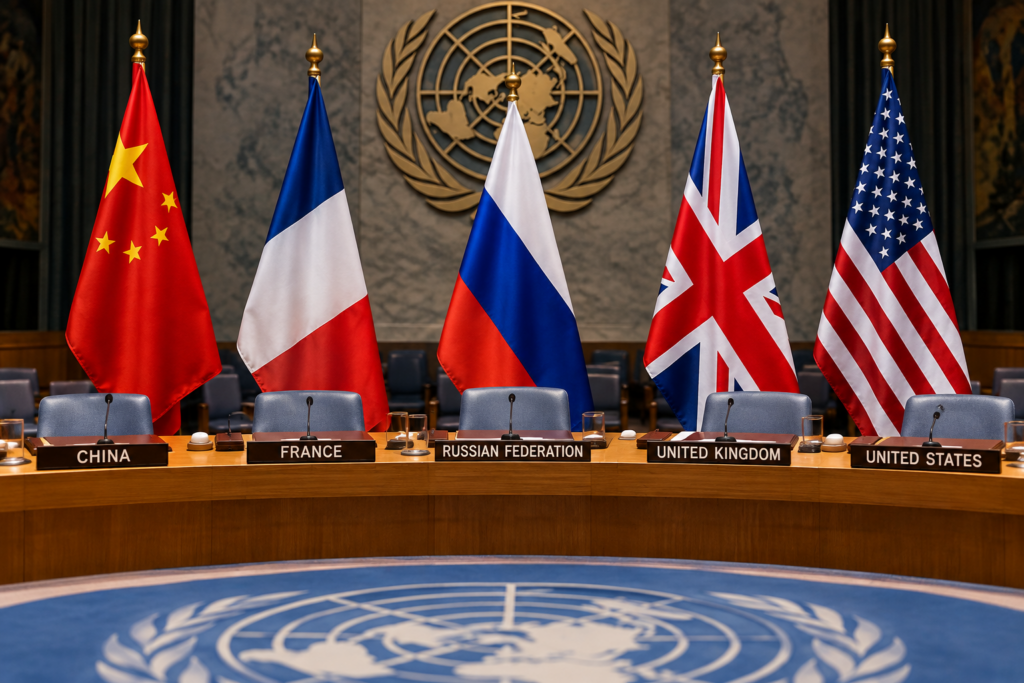
Against a backdrop of ongoing global discussions over updating decades-old United Nations governance structures, Antigua and Barbuda has put forward a bold demand to center the voices of historically marginalized small island nations in key global decision-making. Speaking during the General Debate of the 81st Session of the UN General Assembly on Monday, Ambassador Dr. Walton Aubrey Webson, the Caribbean nation’s permanent representative to the UN, formally called for Small Island Developing States (SIDS) to be granted a dedicated, guaranteed seat on a reformed UN Security Council.
Webson emphasized that any meaningful overhaul of the 15-member Security Council must tackle two core dimensions: the body’s operational procedures and its fundamental representation gaps. For small, vulnerable island nations that have long been sidelined in global power negotiations, an assured place at the Security Council table is non-negotiable, he argued. “Small Island Developing States must also have an assured voice at this table. Antigua and Barbuda calls for a dedicated SIDS seat on a reformed Security Council,” Webson stated during his address.
Beyond advocating for SIDS representation, Antigua and Barbuda also joined growing international calls to correct historical injustice by granting Africa permanent membership on the Security Council. Webson noted that the continent’s continued exclusion from permanent seats on the powerful body is an unacceptable wrong that demands immediate redress.
The Caribbean nation also threw its support behind a high-profile initiative led by France and Mexico, which calls on the Security Council’s five permanent members to voluntarily restrict their veto power. Under the proposal, permanent members would agree not to use vetoes to block council action in cases where mass atrocities are occurring. Webson confirmed that Antigua and Barbuda would add its name to the list of growing UN member states backing the initiative, stressing that the veto power should never be used to stop the Security Council from fulfilling its core mandate of upholding global peace and security.
The push for Security Council reform forms a central plank of Antigua and Barbuda’s broader argument that global multilateral institutions must evolve to better reflect and prioritize the interests of small, economically and militarily vulnerable states. Earlier in his address, Webson underscored that for small island nations like his country, multilateral cooperation and respect for international law are not abstract political goals—they are existential necessities. Unlike major global powers that wield significant military and economic clout to advance their interests, small developing island states rely entirely on the UN system to protect their sovereignty and security. “For us, the United Nations is not optional. It is essential to our survival,” he said.