Against a backdrop of growing public alarm over fatal and non-fatal shooting incidents across Antigua and Barbuda, the national government tabled sweeping legislative reforms on Monday that would introduce dramatically harsher penalties for a wide range of firearms-related offences, with top-tier charges carrying potential prison sentences of up to 30 years.
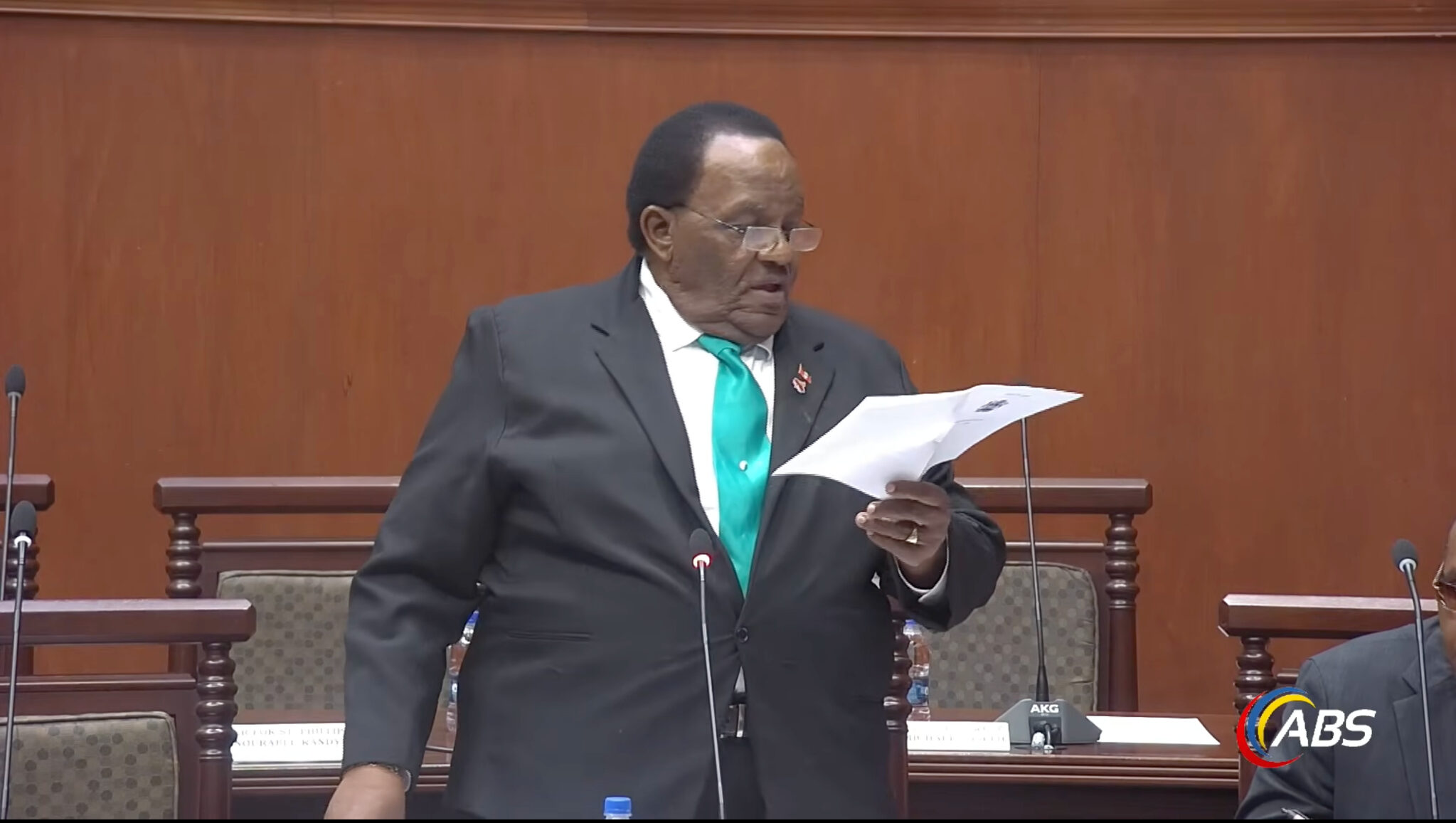
Attorney General and Minister of Legal Affairs Sir Steadroy “Cutie” Benjamin formally introduced the Firearms (Amendment) Bill 2026 to the House of Representatives, laying out a structured framework of new mandatory minimum and maximum sentences that cover every tier of illegal firearms activity—from simple unlicensed possession and public carry to illegal weapons trafficking, supply, and violent threats involving firearms. As of Monday, parliamentary debate on the proposed legislation remains ongoing.
The most severe sentencing guidelines outlined in the bill reserve 15 to 30 year prison terms for the most serious offences processed via indictment. Under the proposed rules, anyone convicted on indictment of illegally selling or transferring a firearm or ammunition will face a minimum of 15 years behind bars, capped at a maximum 30-year sentence. Addressing legislators, Benjamin emphasized that the new rules target all actors in the illegal gun supply chain, not just those who directly use weapons to commit violent crime. “If you’re selling it, if you’re transferring it, you’ll be dealt with,” he told the chamber.
The 15 to 30 year sentencing range also applies to convictions for possession of a firearm or ammunition with intent to endanger life, cause injury to people, or damage property. Benjamin clarified that this charge does not require actual harm to occur for a conviction to be handed down, pointing to cases where armed individuals pursue targets and fire shots as a key example of the conduct the provision is designed to penalize. The government’s core goal, he explained, is to proactively protect public life and property before violent harm occurs.
The bill also raises penalties for basic illegal possession of unlicensed firearms. For summary convictions in lower courts, the new guidelines set a five to 10 year prison term for unlicensed possession, while convictions on indictment will carry a steeply increased mandatory minimum of 15 years. Separately, the legislation sets five to 10 year sentences for anyone other than authorized law enforcement, military, or other approved personnel who carries a firearm or ammunition in a designated public space without legal authorization.
Benjamin referenced a recent shooting incident at a political rally that left attendees fleeing in panic as an example of why such restrictions are necessary, stating firmly: “We are not going to allow Antigua to become a gangster place.”
Additional provisions address irresponsible transfers of firearms to prohibited groups: anyone who transfers a weapon or ammunition to a person they know or have reason to believe is unfit to possess a firearm—including intoxicated people, those under the influence of drugs, people with mental health conditions that make weapons unsafe, and individuals under 18—will face five to 10 year prison terms if convicted.
The reforms also close gaps in regulation surrounding cross-border movement of firearms, covering importation, exportation, and transshipment of illegal weapons. Benjamin acknowledged that authorities are already aware of illegal gun flows into Antigua and Barbuda, and confirmed that investigators are actively building cases against those responsible. “We know the firearms are coming into this country,” he said, adding “authorities are getting the evidence.” He warned that anyone involved in cross-border illegal firearms activity will face prosecution once sufficient evidence is gathered, with convictions carrying five to 10 year prison terms under the proposed rules.
Benjamin framed the entire legislative package as a direct government response to rising public anxiety following a string of high-profile shootings. He specifically called out the recent fatal shooting in Bathlodge, which killed a pregnant young woman, left a 13-year-old boy with facial gunshot wounds, and injured another man, alongside increasing reports of drive-by and street shootings in residential communities that have left residents on edge. “This government must take a stand against what’s going on in this country,” Benjamin said, noting that the current Gaston Browne administration is committed to “fight fire with fire” against gun crime, and that existing sentencing guidelines are far too lenient to address the growing crisis.
Acknowledging that mandatory minimum sentencing remains a controversial policy, with many legal scholars and academics opposing rigid sentencing rules, Benjamin noted that the bill includes a carve-out to preserve judicial discretion in cases where a mandatory minimum would produce a clear injustice. Under the bill’s appeal mechanism, if a sentencing judge finds that the required mandatory minimum sentence is “manifestly excessive” or unfair given the specific circumstances of a case, the court will still issue the statutory minimum but can grant a certificate that allows the defendant to file an appeal against the sentence. The judge is also required to document their reasoning for finding the minimum unjust and state what sentence they would have issued in the absence of the mandatory minimum requirement.
Benjamin pointed to Jamaica, another Caribbean nation that has already implemented tougher firearms sentencing, as a model for the reforms, and added that the bill has been drafted specifically to anticipate and withstand potential legal challenges. The government had previously signaled its intent to introduce harsher sentencing for serious firearms offences, and confirmed ahead of Monday’s parliamentary sitting that the reforms would strengthen penalties across both lower magistrates’ courts and the High Court.
The legislative push comes as part of a broader government crackdown on gun violence. In the wake of the Bathlodge shooting, administration officials stated that illegal firearms could not be allowed to become normalized in Antigua and Barbuda, and pledged to expand both law enforcement action and legislative reform to address the crisis. Benjamin told legislators that lengthy prison sentences are a necessary deterrent to stop the spread of illegal gun possession, supply, and use, summarizing the government’s position with the blunt warning: “If you commit the crime, you do the extended time.” As of the close of Monday’s parliamentary sitting, the Firearms (Amendment) Bill 2026 remains open for debate.