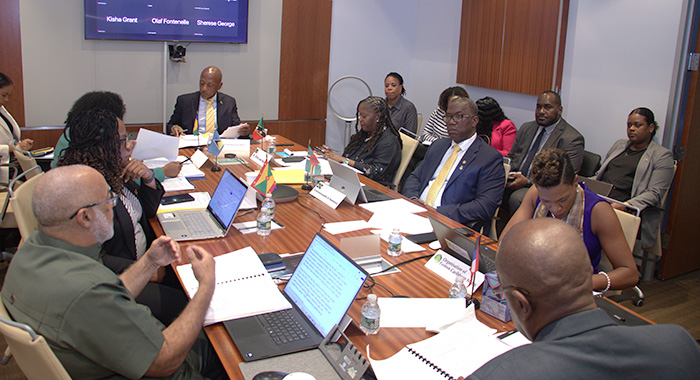
Against a backdrop of profound global geopolitical shifts and growing systemic pressures on small island nations, the 10th Meeting of the Council of Ministers for Foreign Affairs (COM:FA) of the Organisation of Eastern Caribbean States (OECS) convened in New York on September 20, held concurrently with the 81st Session of the United Nations General Assembly. The gathering centered on three core priorities: forging more robust collective diplomatic action, deepening cross-regional coordination, and aligning the bloc’s strategic responses to the rapidly evolving global landscape.
Opening the high-level meeting, which drew participation from foreign ministers, senior government representatives and diplomatic envoys from all OECS member states, Director General Didacus Jules underscored that sustained alignment among member nations is critical to ensuring the bloc’s diplomatic institutions remain agile and responsive to global change. “Our region’s strength has always been our capacity to act together, and this meeting reaffirms that our diplomatic architecture must keep pace with a world that is changing quickly around us,” Jules stated in his opening address.
Hosted by the Permanent Mission of Antigua and Barbuda to the United Nations, the meeting marked a formal handover of the Council’s Chairmanship. Outgoing chair Dwight Fitzgerald Bramble, Foreign Minister of St. Vincent and the Grenadines, passed the role to E.P. Chet Greene, Antigua and Barbuda’s representative to the body. In his farewell remarks, Bramble emphasized that the transition comes at a defining moment for the small island bloc, as long-held international norms and systemic certainties face unprecedented testing. “The minister’s assumption of the chairmanship comes at a moment when the established certainties of the international system are increasingly being tested, reinforcing the need for a more cohesive and strategically aligned OECS,” Bramble noted.
Accepting the chairmanship, Greene centered his agenda on addressing the unique structural vulnerabilities facing Eastern Caribbean small states, laying out a bold roadmap for intensified collective action across the sub-region. He highlighted that connectivity gaps remain a core barrier to inclusive economic growth, calling for cross-stakeholder collaboration to expand regional infrastructure. “We need stronger air links among our islands, regular sea transport for people and cargo, and new connections to nearby markets in Central and South America. Governments can create the policy framework, but carriers, ports, exporters, importers, financial institutions and investors must help design, finance and manage viable services,” Greene said.
Greene also argued that OECS foreign policy must be intentionally leveraged as a tool to advance the economic and development priorities of member states, proposing six targeted core objectives for the bloc to pursue during his tenure: safeguarding the integrity of the OECS Economic Union; securing fair, equitable treatment for the region’s Citizenship by Investment and financial services sectors; expanding equitable access to climate finance for vulnerable small island states; building more resilient and reliable air and maritime connectivity across the bloc; and upholding international law and multilateral governance frameworks.
Ministers across the bloc unanimously backed the new chair’s proposal to strengthen the diplomatic implementation capacity of the OECS Commission, agreeing that tighter coordination and more robust operational capacity would allow the bloc to project greater collective influence on the global stage. Following the handover, delegates held extensive, wide-ranging deliberations on pressing strategic issues impacting the sub-region, including diversification of the OECS’s external international partnerships, advancing trade and maritime connectivity integration, addressing regional developments with cross-cutting humanitarian and diplomatic implications, and further strengthening the bloc’s shared diplomatic and institutional infrastructure.
Delegates also reviewed progress on existing ongoing regional cooperation programs and reaffirmed their shared commitment to sustained, close consultation in the coming months. As part of efforts to refine the bloc’s collective strategic approach to a shifting global order, ministers agreed to host a dedicated foreign ministers’ retreat before the close of 2025. The closed-door retreat will create space for in-depth discussion of the OECS’s long-term strategic positioning and core priorities amid ongoing global change.
In a closing press statement following the meeting, OECS leadership reaffirmed the bloc’s unwavering commitment to a unified, forward-looking foreign policy agenda, and to strengthening the region’s collective capacity to advance and protect the shared interests of all member states in an increasingly complex and unpredictable international environment.