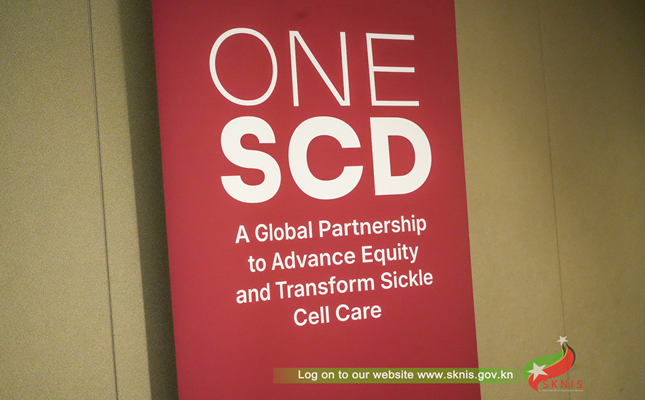
On September 23, 2026, a landmark new global initiative aimed at closing gaping disparities in sickle cell disease care around the world officially launched at a high-level event in New York, with the Federation of Saint Kitts and Nevis stepping into a leading role to drive forward this critical global health action.
Dubbed OneSCD: A Global Partnership to Advance Equity and Transform Sickle Cell Care, the initiative unites a broad coalition of international stakeholders, all bound by a shared goal: to expand universal access to high-quality care for people living with sickle cell disease and eliminate systemic gaps that leave marginalized communities underserved. Attendees at the launch included representatives from the World Health Organization (WHO), UNICEF, the Africa Centres for Disease Control and Prevention, St. Jude Children’s Research Hospital, frontline medical professionals, patient advocacy groups, and other global health partners. The Honourable Dr. Geoffrey Hanley, Acting Prime Minister of Saint Kitts and Nevis, led the federation’s delegation at the event, speaking on behalf of Prime Minister and Health Minister Dr. Terrance Drew.
In his address, Hanley emphasized that Saint Kitts and Nevis was proud to co-host an initiative dedicated to translating breakthroughs in medical research into tangible, life-changing improvements for the millions of people impacted by this genetic blood disorder. “No child’s opportunity to live a full and healthy life should be determined by the circumstances of their birth or the country they call home,” Hanley stated.
He went on to acknowledge that while medical science has delivered major advances in early detection, evidence-based treatment, and complication prevention for sickle cell disease in recent decades, access to these life-saving tools remains deeply unequal across regions and income groups. This global inequity is what the OneSCD partnership was designed to address.
Hanley also outlined the concrete steps Saint Kitts and Nevis has already taken at the national level to strengthen sickle cell care and broader hematology services. These investments include upgrades to the country’s national Blood Bank, expanded community blood donation programs, the reactivation of a centralized national blood donor registry, and financial support through the Children’s Medical Fund for eligible families whose children need specialized medical treatment abroad.
He further highlighted Prime Minister Drew’s long-standing, personal advocacy for improved sickle cell care across the Caribbean region. That advocacy includes ongoing collaborations with leading medical specialists in Germany, and a landmark call Drew made during his 2024 tenure as Chairman of the Organization of Eastern Caribbean States (OECS) Authority to establish regional centers of medical excellence, including a dedicated facility for sickle cell disease treatment and research.
For Hanley, OneSCD represents a rare, critical opportunity to scale up national and regional progress through coordinated global collaboration. By pooling shared expertise, directing targeted investment to under-resourced health systems, and centering equity in every aspect of its work, the partnership can turn fragmented local efforts into cohesive global action. “Through this partnership, let us move from fragmented efforts to coordinated action, and from unequal access to a future in which quality sickle cell care is available to every child and adult who needs it,” Hanley said.
The federation of Saint Kitts and Nevis has fully endorsed the OneSCD partnership, framing it as a transformative step toward uniting the global community behind a coordinated response to sickle cell disease. The initiative’s ultimate goal is to ensure that cutting-edge treatment and high-quality care finally reach the underserved people and communities that need it most.