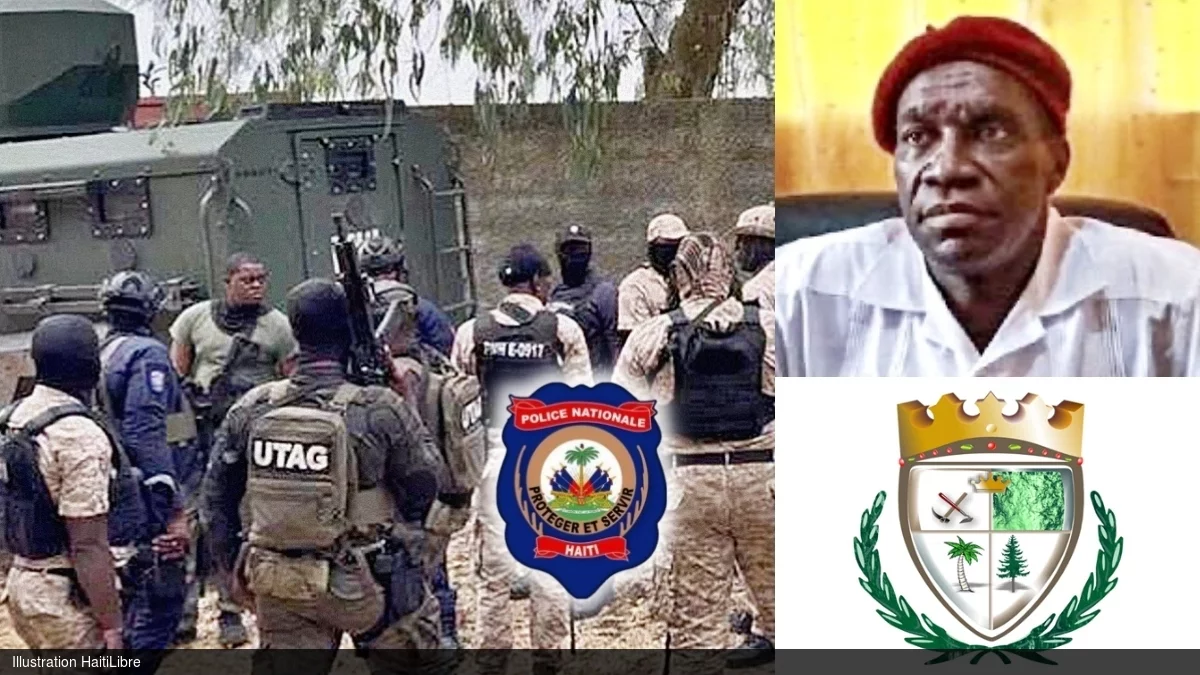
On September 27, 2026, local officials in Haiti’s mountain municipality of Kenscoff have publicly celebrated progress in recent anti-criminal security operations, while issuing a coordinated set of urgent requests to national government institutions to lock in hard-won security gains and support the return of displaced residents.
In an official statement, the Kenscoff City Hall extended profound gratitude and formal recognition to the Haitian National Police (PNH) for their relentless efforts to oust armed groups and retake control of multiple local territories. The municipal body highlighted the extraordinary courage and unwavering commitment of frontline police officers, who carry out their life-threatening missions under exceptionally harsh conditions, enduring significant personal sacrifices to restore safety for local communities. Kenscoff officials also praised the work of law-abiding local volunteers who have joined the collective security effort, and commended the resilience and patience of Kenscoff residents who have weathered the ongoing security crisis.
Despite the milestone of retaking contested areas, municipal leaders emphasized that territorial recapture is only the initial phase of securing the municipality. Long-term stability, sustained safety, and the gradual restoration of normal living conditions for residents depend on coordinated, sustained action from every branch of the Haitian national government, officials said.
To address this gap, the mayor of Kenscoff has outlined targeted requests for six different national bodies. To the Superior Council of the National Police (CSPN), the municipality asks for the development of a formal cross-institutional consolidation plan for recaptured areas, increased operational resources for deployed security forces, improved coordination between the PNH, the Armed Forces of Haiti (FAd’H) and other relevant agencies to eliminate post-recapture security vacuums, and the creation of a regular monitoring mechanism to track evolving security conditions in liberated zones.
For the General Directorate of the PNH, the mayor requests sustained permanent police deployment in retaken areas (based on operational needs), increased patrols and surveillance in high-risk zones, secured access to main roads leading into recaptured sectors, continued offensive operations to solidify gains, and regular information sharing with local authorities to keep the public updated on security developments, consistent with operational confidentiality requirements.
For the Armed Forces of Haiti, the mayor asks for operational support to consolidate and secure recaptured areas in line with national legal frameworks and government directives, increased troop presence in high-priority sectors, close coordination with the PNH to prevent armed groups from reoccupying liberated territories, and participation in cross-institutional territorial security planning mechanisms.
The Ministry of Public Works has been called on to prioritize urgent repairs for strategic Kenscoff roads, many of which are currently in such poor condition that they impede the movement of security forces. Requests to the ministry include an urgent technical assessment of priority routes, immediate rehabilitation, clearing and infrastructure upgrades, identification of road obstacles that block or slow the passage of armored security vehicles, and collaboration with the mayor’s office and security leadership to finalize a list of priority routes for intervention.
For the Ministry of the Interior, Kenscoff officials request institutional support for municipal consolidation efforts, facilitation of coordination between the local government and national state bodies, support to meet urgent essential service needs in newly secured areas, and backing for the process that will allow displaced residents to gradually return to their homes once security conditions are deemed safe.
Finally, the mayor’s office is calling on the Prime Minister’s Office and the full Haitian government to establish a dedicated special inter-institutional task force for Kenscoff, mobilize critical financial, logistical and material resources to support post-recapture efforts, coordinate interventions across all relevant national agencies, and accelerate work to restore public services and critical infrastructure in secured zones.
In an appeal to local residents, the Kenscoff City Hall urged the public to maintain caution, follow all instructions issued by security forces during ongoing operations, avoid entering areas still active combat zones, and refrain from resuming economic and daily activities in sensitive areas until formal authorization is granted by relevant authorities. Municipal leaders reiterated that while strengthening community security is a collective responsibility, formal security operations remain the exclusive mandate of legally authorized state forces.
Kenscoff officials framed the current wave of successful operations as a critical turning point for the municipality. They encouraged security forces to maintain their momentum, and called on all national institutions to work together to turn recaptured territories into permanently safe, accessible and progressively rehabilitated communities for returning residents. Leaders stressed that the fight for Kenscoff’s security does not end with territorial recapture – the next, equally critical phase is consolidation, permanent security, and rebuilding the conditions for residents to come home.