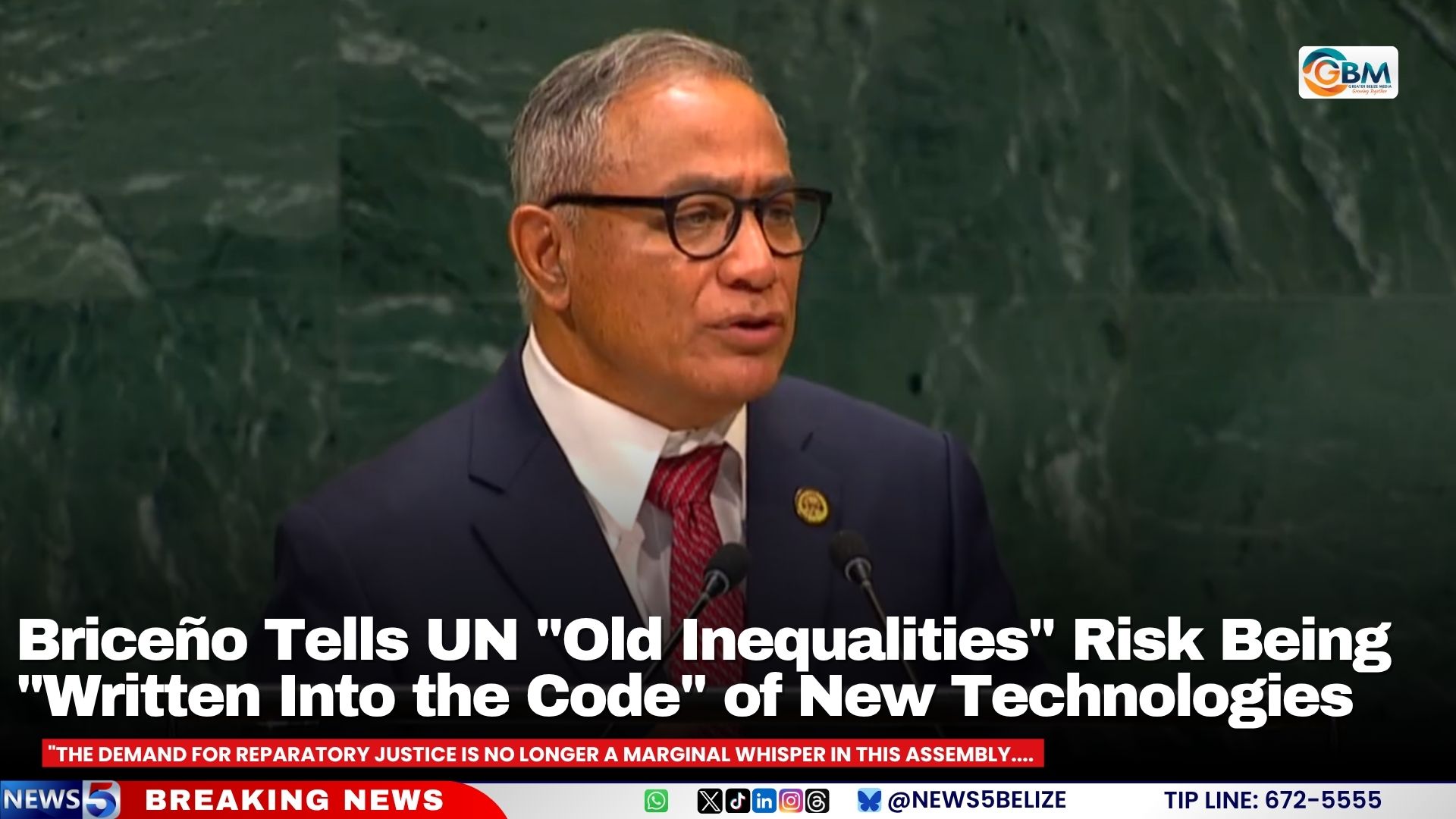
In a sharply worded address to the 2026 United Nations General Assembly, Belizean Prime Minister John Briceño has sounded a urgent alarm over the risk that centuries-old systemic inequalities born of colonial exploitation could be embedded into the foundational architecture of the world’s next-generation technology economy. Against a backdrop of growing global debate over reparations for the harms of slavery and colonial rule, Briceño framed his intervention as a critical call to reorient global development away from repeating the injustices of the past.
Briceño emphasized that the global movement demanding reparatory justice has shifted from the margins of international dialogue to the center of global policy discourse, noting that the UN General Assembly’s formal recognition of chattel slavery as humanity’s gravest crime marks only an initial step toward meeting the moral and practical obligations created by centuries of exploitation. “This recognition is only the beginning of an obligation, and the obligation is that we must not build the next chapter of development on the foundation of the last,” he told assembled world leaders.
The prime minister laid out a clear-eyed assessment of post-independence economic realities, arguing that formal political independence for former colonies did little to dismantle the exploitative economic systems imposed by colonial powers. He traced the massive accumulated wealth of the industrial era directly to the forced labor of enslaved people and extracted resources from colonized nations, pointing out that almost all of the economic gains from that exploitation never reached the communities that created them. “When independence came, the flags changed. The structures did not. The terms of trade did not change. The cost of capital did not change. Who sits at the table when the rules are written did not change,” Briceño said, adding that deep systemic imbalances were merely passed down to newly independent nations rather than being resolved.
Today, he warned, that same pattern of structural injustice risks repeating itself as the world undergoes a rapid technology-driven transformation. Global technological innovation is advancing far faster than the multilateral governance frameworks designed to regulate it, leaving the door open for historical inequalities to be codified into emerging systems. “Because the question before us is not whether any new inequalities may arise. It is whether the old ones will be written into the code, into who owns the data, who sets the standards, who captures the value, and who, once more, is left to carry the cost,” Briceño explained.
Despite the significant risk of repeating historical harms, Briceño stressed that a more equitable and just global system remains achievable, but only if global leaders make intentional, deliberate choices to center equity. “We do not have to accept that outcome. A development framework is a choice. It can be designed to serve the common good and measured against what our people actually need: dignity, opportunity, and a fair share in what they help to create. Or it can be left to reproduce what came before and call it progress. We have the knowledge to choose the first path. What is needed now is the will,” he said.
Beyond technology and reparations, Briceño used his address to push for urgent reform to how the international financial system assesses and supports small developing nations on the frontlines of the climate crisis. Speaking from his own experience leading Belize, a small Central American nation extremely vulnerable to climate disasters, he argued that current metrics used to determine access to concessional finance fail to capture the unique structural risks these nations face. “Belize does not seek special treatment; we seek accurate treatment. Income per capita does not reveal how much of an economy sits in a hurricane’s path, what it costs to serve dispersed communities, or how quickly a climate shock can reverse fiscal gains,” he said. Briceño called for the Multidimensional Vulnerability Index to be integrated across all international financial institutions, using it to shape eligibility for low-interest financing, debt sustainability assessments, and global capital allocation decisions.