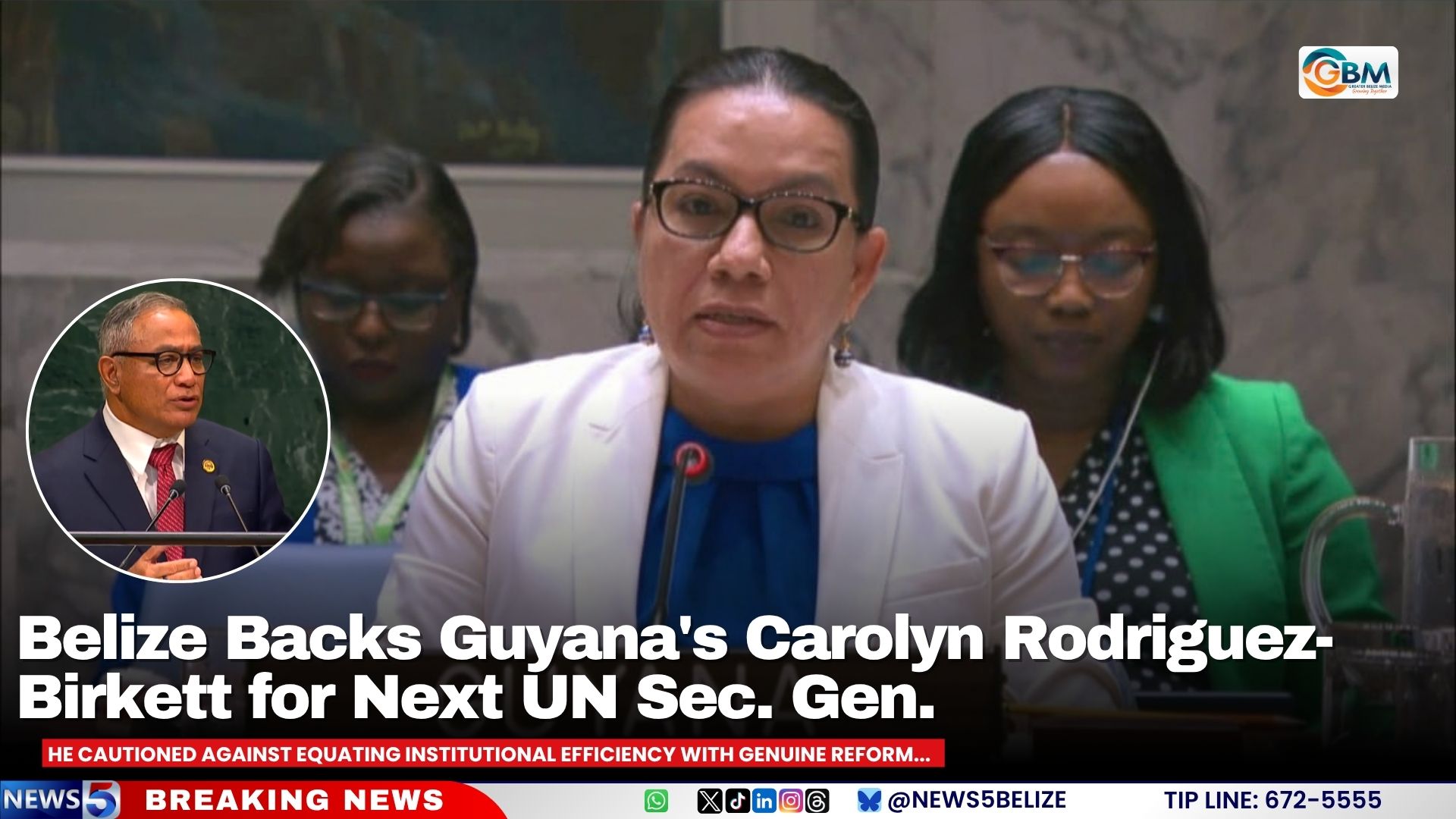
In a formal announcement made on September 26, 2026, Belizean Prime Minister John Briceño officially threw his country’s support behind Carolyn Rodriguez-Birkett of Guyana to become the next Secretary-General of the United Nations, framing the Caribbean diplomat’s candidacy as a milestone for the entire Caribbean region.\n\nThis year marks the selection of the 10th Secretary-General in the United Nations’ 81-year history, and Briceño emphasized that Belize stands firmly in support of Rodriguez-Birkett, whom he described as a distinguished leader with deep roots in the Caribbean. Beyond the symbolic weight of placing a Caribbean woman at the head of the world’s foremost multilateral institution, Briceño argued that Rodriguez-Birkett’s professional track record makes her the ideal candidate for the role.\n\nAddressing the core challenges that the next Secretary-General will face, Briceño stressed that small and vulnerable developing states must be elevated from the margins of global decision-making to the center of the United Nations’ core agenda. He noted that the incoming Secretary-General will inherit a multilateral system grappling with internal strains and a global community that is growing increasingly impatient for tangible progress on pressing global issues. For small island states and vulnerable economies like Belize and Guyana, decisions made at the United Nations directly impact national survival, making it critical that their perspectives are centered rather than sidelined. Briceño added that the United Nations must evolve to become more agile, inclusive, and effective in delivering outcomes that benefit all member states.\n\nBriceño also pushed back against common narratives that equate institutional reform purely with cutting budgets and streamlining operations. He warned that a smaller United Nations bureaucracy does not inherently equate to a better, more effective institution. Peace and security, he argued, cannot be treated as an afterthought in budget-cutting exercises. Furthermore, the United Nations cannot separate its work on human rights from its development agenda, nor can it achieve sustained development without a foundation of peace and security. Any meaningful reform of the institution must uphold all three interconnected pillars of the UN Charter – peace and security, development, and human rights – as a single, indivisible commitment to the global community.