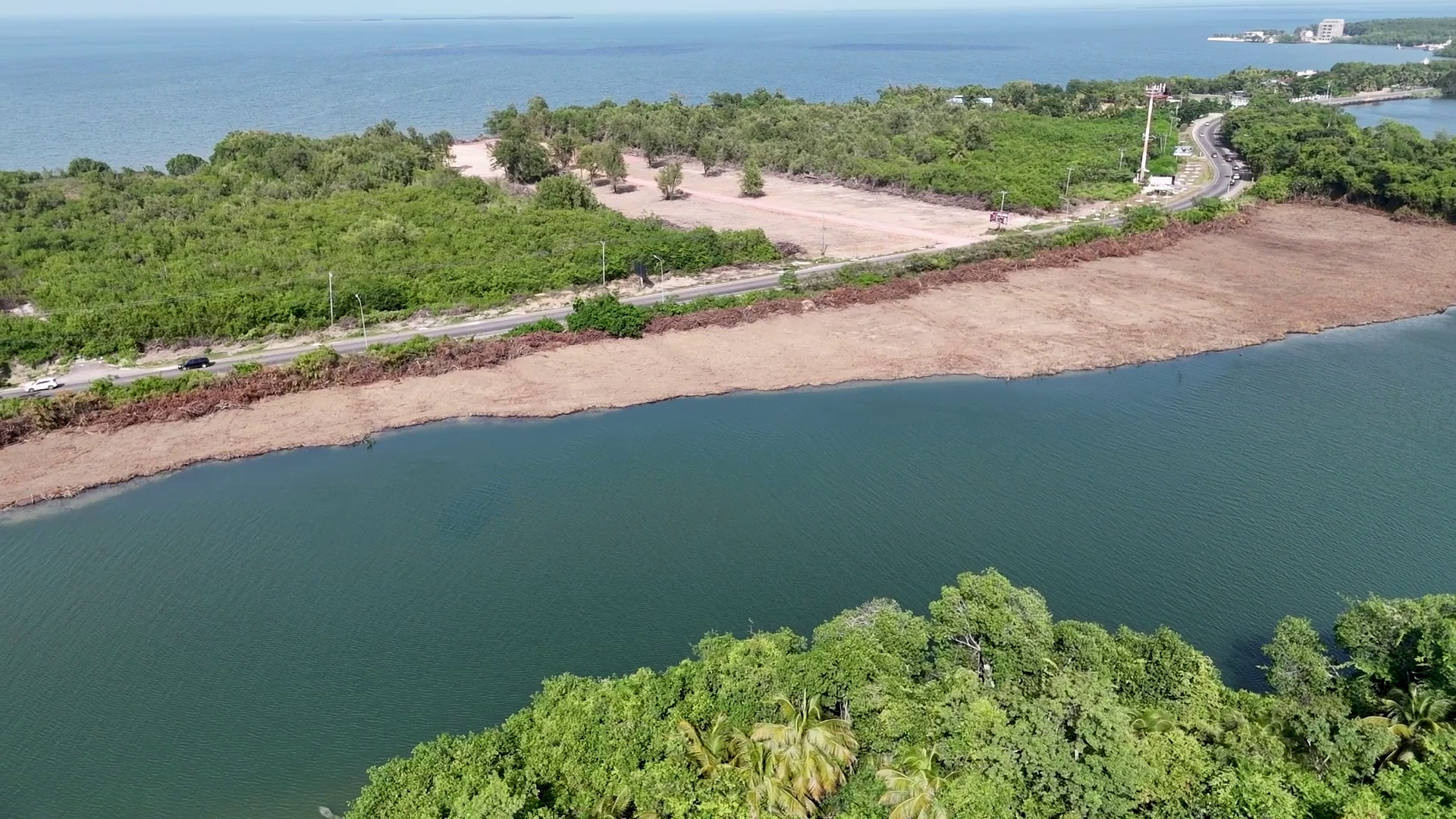
In a urgent public statement following a recent joint government inspection, prominent marine conservationist Jamal Galvez is calling for strict regulatory action after uncovering three acres of unapproved land clearing along the banks of Belize — the country’s largest and most critical source of freshwater.
The inspection confirmed that developers cleared all vegetation right up to the water’s edge on the stretch of river, a practice that predates modern protected area conservation regulations but remains an urgent threat to regional ecological and public health, according to Galvez, who serves as director of the Clearwater Marine Aquarium.
Galvez emphasized that the risks of this unregulated clearing extend far beyond violations of property or conservation rules. The affected cove along the Belize River has long been documented as a key habitat for a large local manatee population, a status marked by public conservation billboards placed intentionally at the site by Galvez’s team years ago. Destroying the riverbank vegetation eliminates the shelter and feeding grounds that these vulnerable marine mammals rely on for survival.
But the crisis is not limited to protecting endangered wildlife, Galvez stressed. The Belize River supplies drinking water to communities across the entire region, and unregulated clearing right up to the waterline dramatically increases the risk of harmful sediment runoff and pollution from adjacent agricultural activities. Just over the past month, Belize has already witnessed widespread ecological damage to the Belize River from similar clearing and agricultural runoff, making this new incident all the more disappointing to conservation advocates.
Galvez called on national and local authorities to take decisive, immediate action rather than delaying enforcement of existing environmental rules. This is no longer just a conservation issue, he argued: it is a matter of public livelihood and access to safe drinking water for ordinary Belizean residents. With no public information about what development is planned for the cleared site, Galvez warned that the risk of further damage remains high, and called on stakeholders to address the threat before irreversible harm is done to the river that forms the heart of the region’s water infrastructure.