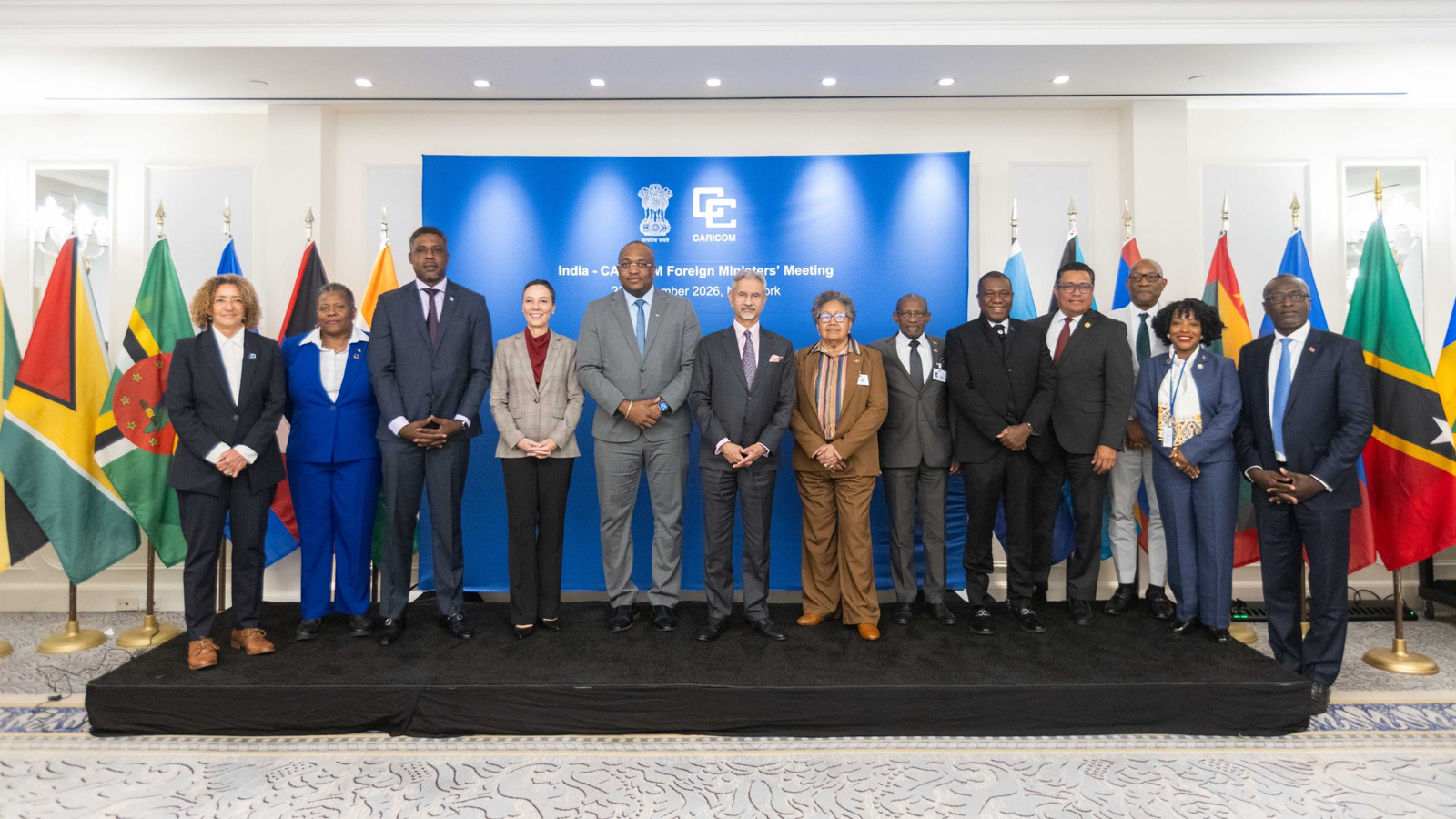
On September 23, 2026, a high-stakes gathering of the India-CARICOM Foreign Ministers’ Meeting took place in New York, convened on the sidelines of the 81st session of the United Nations General Assembly. Co-chaired by India’s External Affairs Minister Dr. S. Jaishankar and Suriname’s Minister of Foreign Affairs, International Business and Cooperation Melvin W. J. Bouva, the meeting brought together senior diplomatic representatives from 14 CARICOM member states alongside CARICOM Secretary General Dr. Carla Natalie Barnett. Attendees included foreign ministers from Barbados, Dominica, the Bahamas, Guyana, Jamaica, St Vincent and the Grenadines, Trinidad and Tobago, Haiti, St. Lucia, St. Kitts & Nevis, and Antigua and Barbuda, alongside Grenada’s finance minister and the chief executive officer of Belize’s Ministry of Foreign Affairs.
This diplomatic session was designed as a formal follow-up to the second India-CARICOM Summit, hosted in Guyana in November 2024 and led by Indian Prime Minister Narendra Modi and regional CARICOM heads of government. From the opening of discussions, both sides voiced clear satisfaction with the consistent, steady advancement of collaborative ties between India and the Caribbean Community bloc, laying out a broad agenda to expand partnership across multiple priority areas.
Dialogue covered multiple pillars of engagement, starting with deepening high-level political exchanges between the two sides. Participants also explored pathways to boost bilateral trade volumes and attract new cross-regional investment, while mapping out cooperative frameworks in critical sectors including agriculture and global food security, digital public governance, climate change resilience, and sustainable energy development.
CARICOM representatives used the meeting to publicly recognize the meaningful impact of India’s longstanding development partnership across the Caribbean region, and praised New Delhi’s ongoing efforts to strengthen collective South-South cooperation between emerging and developing economies. On the multilateral front, the two blocs aligned on priorities for joint collaboration in international forums, agreeing to continue coordinated action on core global challenges including comprehensive United Nations system reform, collective climate action, counter-terrorism efforts, and the fight against transnational organized crime.
A key announcement emerged from the session when CARICOM’s co-chair confirmed the bloc’s collective decision to formally back India’s candidacy for a non-permanent seat on the United Nations Security Council for the 2028-2029 term. In response, Jaishankar thanked CARICOM member states for their trust and public support, affirming that if elected, India will serve as a strong, unwavering voice for the entire Global South in the UN’s top security body.
In closing, the meeting underscored the shared commitment of both India and the CARICOM bloc to deepen their bilateral ties and advance coordinated action on global issues that impact developing nations across the Global South.