A major political clash has erupted in Trinidad and Tobago’s Parliament after all nine Independent Senate senators voted unanimously against the government’s controversial Special Operations Bill, triggering a sharp rebuke and permanent consequences from Prime Minister Kamla Persad-Bissessar.
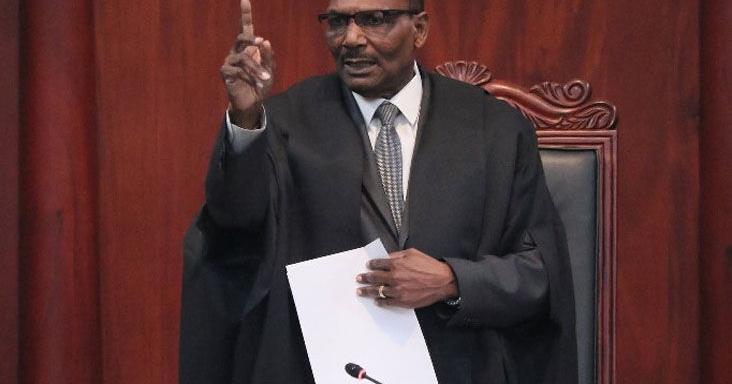
The contentious vote ended in a 15-15 deadlock early yesterday morning: all 15 government senators backed the legislation, while the six opposition members and entire Independent bloc stood in opposition. The tie was broken by Senate President Wade Mark’s casting vote in favor of the bill, pushing the final result to 16-15 and allowing the legislation to advance. Having already cleared the House of Representatives, the bill is now set to become law.
In the wake of the vote, Persad-Bissessar delivered a scathing attack on the Independent Senate bench, announcing her government would immediately cease accepting any amendments from Independent senators on all future legislation. She argued that the bloc’s unified opposition had effectively stripped them of any meaningful role in parliamentary lawmaking, relegate them to permanent irrelevance. Going further, the prime minister levied extreme accusations against the senators, claiming their vote amounted to siding with violent criminals and organized crime.
“They are satanic to vote to protect drug traffickers who poison our children, to protect rapists who rape mothers and daughters in their beds, to protect violent criminals who rob and beat our elderly,” Persad-Bissessar told reporters. “Those demons basically told the criminals to go rape, rob and murder with their vote.” She also referenced a past disagreement, noting the bloc had previously opposed expansions to the Children’s Life Fund, saying no better outcome could be expected from the group. “If they want to write legislation, they should fight elections to earn a seat in Parliament. Going forward, we will not take a single amendment from that bench on any bill,” she said. “They were relegated to uselessness in the Parliament yesterday to only bray and then have no effect on the legislation. That will be their role going forward, to bray and be ignored. My Government will not buy votes from anyone.”
Independent senators had raised a host of procedural and substantive concerns about the bill ahead of the vote, including issues around closed security zones, movement restrictions, expanded detention powers, and lack of sufficient legislative oversight. Bloc member Anthony Vieira had put forward multiple amendments during the committee stage of debate, including proposals to add a clear legal definition of “special operations” and revise rules for appointing heads of special operation units. None of these amendments were accepted by the government.
Alongside addressing the parliamentary fallout from the Special Operations Bill, Persad-Bissessar also pushed back hard against criticism of her government’s planned changes to the country’s public procurement rules. The Public Procurement and Disposal of Public Property (Amendment) Bill 2026 was introduced to the House of Representatives this Wednesday, but has already sparked controversy over changes that critics say will erode the power of the Office of Procurement Regulation (OPR) and open the door to no-bid contracts for government allies.
The debate comes after the OPR ordered a halt to a $3.4 billion Housing Development Corporation (HDC) procurement project in April, prompting the HDC to cancel the process entirely that June. Opposition figures have claimed the procurement amendments are retaliation for that intervention, designed to weaken the regulator to award contracts to government financial backers. Former prime minister Stuart Young has argued the changes would “gut” the OPR’s core regulatory authority.
Persad-Bissessar rejected these claims outright, instead accusing the OPR of abusing its power to harm small domestic businesses. “The Government is making it easier for the small business owners to access work from the State sector. The OPR has been weaponised to destroy the small man and to benefit the eat-a-food corrupt businesses,” she said. The prime minister also leveled counter-accusations of corruption, claiming the OPR is controlled by members of the opposition People’s National Movement (PNM) party who will face legal scrutiny over past contract awards, including the Citrus Close HDC development, a secondary roads construction project, pharmaceutical supply contracts to the National Procurement and Distribution Company (Nipdec), among other deals. “Very soon, the PNM party group inside the OPR will have to provide answers for those deals,” she said. “I hope the PNM comes to help them when they face justice before the courts.” Housing Minister David Lee has also denied the amendments are retaliation for the HDC procurement intervention.
In a final topic addressed yesterday, the prime minister commented on recent job cuts at global energy firm Proman, which has confirmed it will reduce its workforce in Trinidad and Tobago amid ongoing natural gas supply constraints and uncertainty. The company has noted that persistent supply shortages mean it cannot consistently run all of its local plants at full capacity. When asked if the cuts were a sign of broader systemic decline in the country’s critical energy sector, Persad-Bissessar declined to confirm that framing, noting both private firms and state-owned energy entities are responsible for managing their own operations. “Proman has to run their company as they see fit to maximise returns to their shareholders. NGC management will run their business to maximise returns to the people of Trinidad and Tobago,” she said.