A heated national debate has erupted in Suriname over top government and judicial officials’ salary increases ever since the November 2024 wage adjustment law came into effect, and a cross-party legislative push is now underway to address the fundamental structural and constitutional flaws at the heart of the controversy.
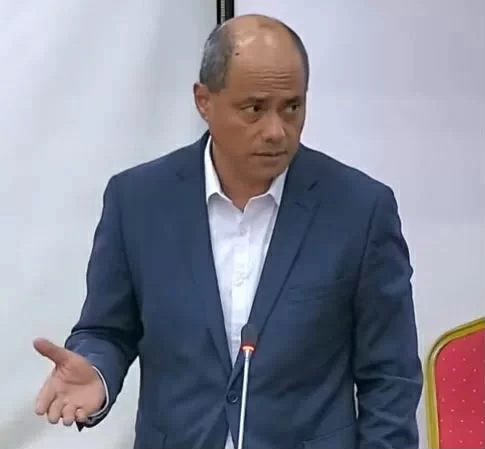
Jerrel Pawiroredjo, parliamentary faction leader of the National Party of Suriname (NPS), says public discussion of the issue is healthy, and it is critical that community concerns over the new salary framework are heard. What makes the current system problematic, he argues, is not just the total amount of compensation paid to senior officials, but the opaque, constitutionally questionable process used to set those salaries.
Under the 2024 law, the President’s salary is set indirectly, tied via a fixed multiplier to a base pay rate that is determined by state decree in line with the country’s Civil Service Law. This creates an automatic knock-on effect: any adjustment to the salary of a Director General of the General Service automatically changes the President’s own pay. Pawiroredjo explains that this automatic update triggers after every collective bargaining negotiation between public sector unions and the government, effectively allowing the President’s salary to change without a direct vote by the National Assembly.
This automatic linkage directly contradicts Article 112 of Suriname’s Constitution, which explicitly requires the National Assembly to set the President’s salary by law, Pawiroredjo says. The constitutional flaw has been thrown into sharp relief by the government’s upcoming 15 percent general pay increase for all civil servants. Under the current framework, that across-the-board raise would automatically boost the President’s salary, and through pre-existing legislative linkages, would also increase pay for members of the National Assembly, cabinet ministers, and senior judicial officials.
Pawiroredjo notes that public opinion on the appropriate level of senior officials’ compensation is deeply divided, making the ongoing societal debate entirely understandable. “It is of great importance that the objections raised by communities are heard,” he says.
Earlier attempts to address public dissatisfaction date back to February 23, 2026, when Pawiroredjo and fellow lawmaker Poetini Atompai submitted separate legislative proposals to bring senior officials’ salaries more in line with public expectations. But those bills did not resolve the core constitutional issue around how salaries are set, so Pawiroredjo has partnered with Asis Gajadien, a lawmaker from the ruling coalition’s VHP party, to submit a new, targeted initiative that would set the President’s salary directly, in full compliance with the Constitution.
An initial calculation error was identified in the draft text, but Pawiroredjo confirms the error has now been corrected. The core policy priority of the bill — decoupling the President’s salary from civil service pay scales — remains fully intact. Pawiroredjo says the proposal also addresses urgent concerns raised by other public figures, including Jennifer Vreedzaam, over the current flawed system.
Under the proposal, once this fundamental constitutional issue is resolved, lawmakers can open debate on other outstanding questions, including potential adjustments to salary levels for the President, judiciary, and other independent state bodies.
Pawiroredjo also pointed out that while the executive branch has temporarily paused the scheduled salary increases for the President and other senior political and judicial officials, the pause lacks a clear legal foundation. If the underlying legislation is not amended to fix the structural flaw, the higher salaries will eventually have to be paid out by law, he said.
The NPS leader emphasized that the bill’s cross-party sponsorship — pairing an opposition lawmaker with a coalition legislator — underscores the broad consensus that fixing this fundamental flaw in the country’s salary-setting framework is a critical national priority.