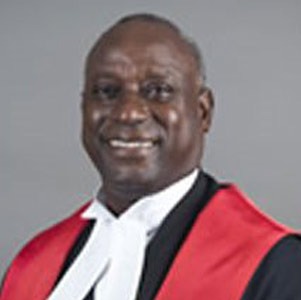
On Wednesday, September 23, 2026, a prominent Caribbean legal scholar with deep roots in Guyana delivered a stark warning to delegates at the Commonwealth Magistrates and Judges Association (CMJA) Annual Conference in Kingston, Jamaica. Retired Belize High Court judge Courtney Abel, who currently heads the University of Guyana’s Department of Law and has previously led two of the region’s most influential bar associations, argued that the recent United States decision to block serving Guyanese judge Gino Persaud from transiting through Florida en route to the conference has far-reaching ramifications for judicial independence across small and postcolonial states.
The incident dates back to last Saturday, when Persaud was barred from boarding his connecting flight by commercial airline staff after his US visa was flagged as under active review. Persaud has remained silent on the episode, but context surrounding the visa move has sparked widespread concern among legal professionals.
Persaud made a recent high-profile ruling against the Guyana Revenue Authority (GRA) in a tax evasion case centered on an under-reported luxury Lamborghini import connected to Azruddin Mohamed, Guyana’s current Opposition Leader and a vocal critic of the ruling People’s Progressive Party Civic. The Mohamed family, including Azruddin and his father Nazar “Shell” Mohamed, are already the target of US sanctions over allegations of unreported tax on gold exports to the US, and face an 11-count federal grand jury indictment in Florida on charges of wire fraud and mail fraud linked to the Lamborghini scheme. According to the indictment, the Mohameds arranged to falsify the vehicle’s value on customs documents, listing it at $75,300 instead of its actual $680,000 price tag to evade more than $1 million in Guyanese taxes. Persaud ruled against the GRA in the case, and the authority has since appealed the decision. Guyana’s Attorney General Anil Nandlall confirmed Tuesday that the government was dissatisfied with Persaud’s ruling.
Abel framed the unexplained visa restriction as a de facto sanction against a sitting judge for a politically sensitive ruling. “The United States has not publicly called the measure a sanction. Yet an unexplained restriction imposed by a foreign power upon a serving judge, preventing him from travelling, operates as a sanction in practical effect. A sanction need not announce its name,” Abel told attendees during a panel session focused on growing pressures facing judicial independence and the rule of law.
While Abel acknowledged that there is no concrete proof linking the visa review to Persaud’s ruling on the Mohamed case, he noted that the timing, political context, and lack of official explanation raise unavoidable questions. “Suspicion is not evidence, but silence is not an answer either,” he said. “The action affecting the judge therefore lies at the meeting point of domestic politics, judicial decision-making and American executive power.”
In a press briefing Wednesday, US Ambassador to Guyana Nicole Theriot clarified that a visa marked “under review” means federal officials in Washington received new information prompting a re-evaluation of an applicant’s eligibility. When asked about the Persaud case, Theriot stated that the US Embassy in Georgetown was not aware of the specific action prior to it being reported.
In his keynote presentation titled *Who writes the judgment. The Airport Gate The Acting Appointment The Algorithm*, Abel drew on decades of experience as a legal practitioner and judge across Caribbean jurisdictions to outline how subtle pressures on judicial independence operate. He noted that coercive power rarely announces itself openly: instead of overt threats or direct removal, actors often reshape contexts to erode judicial confidence, leaving formal structures of independence intact while quietly shifting outcomes. In the case of visa restrictions, he added, this form of pressure exposes a unique vulnerability for judges in small postcolonial states.
“A constitution may protect a judge from the executive at home. Who protects the judge from the collateral power of an executive abroad?” Abel asked. He explained that small states operate within a deeply unequal global order, where their judges often rely on transit through major global hubs like the US to attend international legal conferences, professional development, or personal travel. While such immigration actions may be technically lawful under a country’s border rules, and judges do not receive diplomatic immunity for routine travel, the context and silence around the decision create a chilling effect that extends far beyond Persaud himself.
“The question is larger than Justice Persaud. It concerns the judge who comes next. What message does the unexplained closing of one gate send to every judge who must later approach another?” he said. “When an unexplained exercise of foreign executive power materially affects a serving judge after politically sensitive decisions, at what point does a private immigration matter become a public question of judicial independence?”
Abel’s remarks have sparked debate among conference delegates over how the global judicial community can protect judicial independence from transnational executive pressure, with many calling for a formal CMJA statement on the incident.