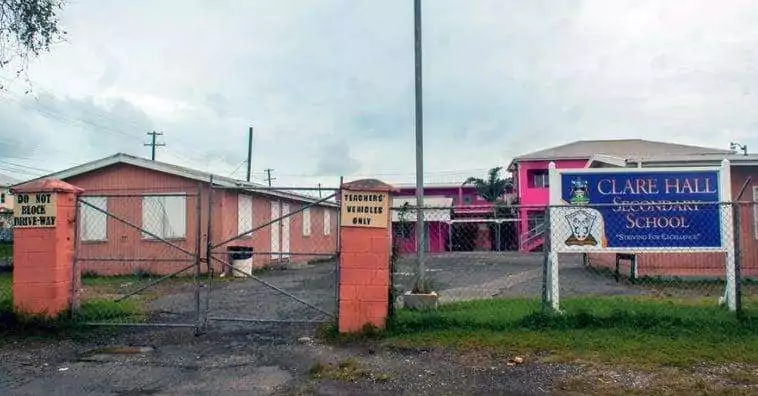
To the Editor:
As a parent of a student at Clare Hall Secondary School, I feel it is necessary to bring forward multiple unresolved concerns about institutional decision-making and daily practices that have left a large group of caregivers questioning whether students are receiving equitable treatment and whether the core mission of public educational initiatives is being upheld. These issues touch on accessibility, student welfare, and institutional transparency – all foundational to a functional learning environment that serves every family equally.
The first issue centers on a government-funded free eye-screening program recently rolled out for all school-aged children across the region. Designed as a public health initiative to guarantee every student access to vision testing and subsidized corrective care for detected issues, the program aims to eliminate barriers to care that might otherwise hold students back academically. However, at Clare Hall Secondary, program consent forms were only distributed to parents who attended a scheduled Parent-Teacher Association (PTA) meeting. Caregivers in attendance were required to fill out and submit the forms on-site during the gathering, and no provisions were made to send forms home with students or provide alternate access to forms for parents who were unable to attend.
This exclusionary distribution practice raises significant red flags. PTA meeting attendance should never be a prerequisite for accessing government-supported public health programming. There are countless valid, unforeseeable reasons a parent may be unable to attend a single meeting: work shift conflicts, childcare responsibilities for other children, medical emergencies, or transportation breakdowns, to name just a few. In one documented case, a parent missed the meeting because another of their children was receiving urgent care at Sir Lester Bird Medical Centre. There is no justification for penalizing that parent’s child at Clare Hall Secondary for circumstances entirely outside the family’s control. The entire point of the initiative is to extend care to every student who needs it, not to reward parent attendance at school events or punish those who cannot attend. If the program’s goal is to reach 100% of eligible students, school leadership should be making every possible effort to ensure consent forms reach all parents, regardless of their ability to attend a single PTA gathering.
A second pressing concern involves the school’s newly implemented ban on students bringing bicycles onto school grounds. For generations, cycling has been a primary mode of transportation for Clare Hall Secondary students, and many still rely on it to get to and from campus every day. Family financial situations can shift over the course of a student’s enrollment, and some students may move further from campus after enrollment than when they first started attending. Not every family can afford a private vehicle for daily drop-offs and pickups, and not all students live near convenient public transit routes or have access to school bus service.
The current policy requires students to leave their bicycles locked outside the school gate, and the school explicitly disclaims any responsibility for theft or damage that occurs while the bikes are left unsecured off campus. This places an unfair, unnecessary financial and logistical burden on low-income students and families who depend on cycling for transportation. Instead of discouraging bicycle use, the school should be exploring options to create a secure, monitored on-campus storage area where students can leave their bikes during school hours. This would support active transportation, reduce student stress, and align with the school’s responsibility to protect student property.
A third unresolved issue involves inconsistent application of hair policy guidelines for student leadership positions. According to parent accounts, when questions were raised about whether a specific hairstyle – which was explicitly permitted under national Ministry of Education guidelines – would disqualify a student from a leadership role, school leadership did not provide a clear answer. The question was dismissed, with leadership claiming that a full explanation would require too much time to address. This lack of clarity is unacceptable. If a hairstyle meets national ministry standards, parents and students are fully entitled to a transparent explanation of any school-level restrictions and the rationale behind them.
These interconnected concerns demand immediate attention from the national Ministry of Education and the Office of the Director of Education. All stakeholders – parents, students, teachers, and school administrators – share the same core goal: to create the strongest possible learning environment for every child. Open, constructive dialogue and transparent decision-making are critical to addressing growing concerns and rebuilding trust where uncertainties have emerged.
This open letter is not a personal attack on any individual administrator or staff member at Clare Hall Secondary. It is a public call for greater accountability, fair policy implementation, and clear communication from school leadership. Parents have a fundamental responsibility to advocate on behalf of their children when policies or daily practices appear to have unintended negative consequences for students. In turn, educational leaders have a matching responsibility to ensure that all decisions are made transparently, implemented equitably, and always centered on what is best for the students they serve.
Our children deserve no less than the fair, inclusive, student-centered education they were promised.
Sincerely,
A Concerned Parent