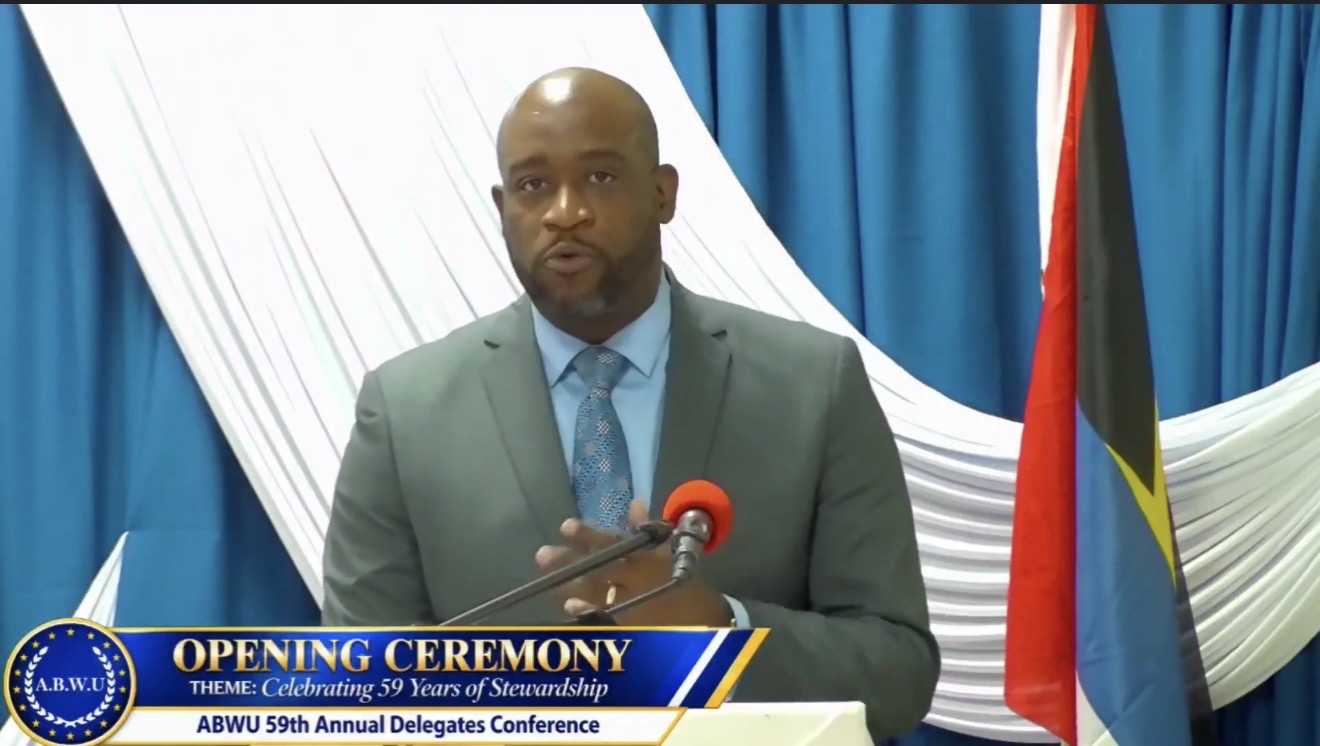
At the opening of the Antigua and Barbuda Workers’ Union’s 59th Annual Delegates Conference, opposition United Progressive Party (UPP) Senator Ashworth Azille delivered a stark, urgent warning about the growing threat of artificial intelligence and automation to widespread employment across the country. Speaking to union delegates gathered under the conference theme “Celebrating 59 Years of Stewardship: Embracing the Changes and Preparing for the Future World of Work,” Azille emphasized that rapid technological transformation is already reshaping workplaces both in the twin-island nation and across the globe, leaving millions of routine positions vulnerable to elimination.
Azille outlined which roles are most at risk of displacement: clerical workers, customer service representatives, data entry personnel, entry-level bookkeepers, and staff performing routine tasks in the hospitality, banking, and public sectors are all facing growing exposure to obsolescence. Crucially, he highlighted that the majority of these at-risk positions are held by women, who form the economic and social backbone of countless households across the Caribbean. “These jobs are now all exposed to obsolescence,” Azille told delegates, “Many of them are held by you, the very members of the Antigua and Barbuda Workers’ Union.”
The senator pushed back against the common union tendency to downplay the speed of technological change, warning that inaction would leave labor organizations fighting to protect roles that no longer exist. “If we pretend that this is not happening, I dare say that we will be negotiating for jobs after they would have long disappeared,” he said.
Yet Azille stressed that AI should not be painted as an entirely negative force. When workers receive targeted training to integrate the technology into their workflows, AI can boost individual productivity and raise a worker’s value to their employer. “A trained worker who knows how to best utilise AI is worth more to an employer than an untrained worker without it,” he explained.
To protect workers while embracing technological progress, Azille laid out a clear policy and bargaining agenda. He called on trade unions to make technological adaptation a central pillar of collective bargaining, requiring employers to consult with union representatives before rolling out large-scale automation that could displace staff. He also pushed for mandatory advance notice for workers whose roles will be eliminated or significantly restructured.
Beyond collective bargaining, Azille called for coordinated action from government, private employers, and national training institutions to expand access to continuous upskilling and retraining opportunities for all workers. Every employee, he argued, deserves the chance to learn how to operate new tools and collaborate with emerging technology, rather than being cast aside by innovation.
Azille closed by emphasizing that technological progress must never come at the cost of workers’ livelihoods or human dignity. “Technological advancement without consideration for human dignity is immoral and must be rebuffed,” he said. “Humans must always be at the centre of development.” He added that the global labor movement must update its negotiating strategies to address AI and automation, while continuing its core mission of defending fair wages, workplace safety, job security, and workers’ right to collective representation.