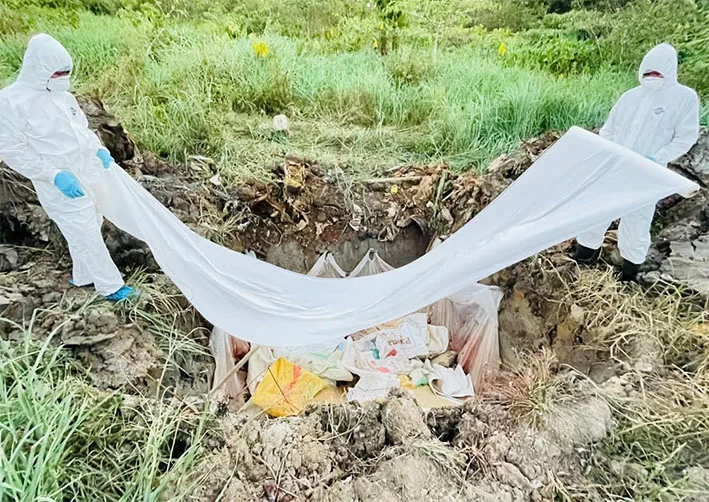
A case of avian influenza has been officially confirmed at a poultry operation in Suriname, according to an announcement from the country’s Ministry of Agriculture, Livestock and Fisheries (LVV). As of 22 September, officials are still awaiting further testing to identify the specific viral strain and determine whether it is a low-pathogenicity or high-pathogenicity variant of the disease.
To complete the necessary detailed analysis, collected samples will be shipped to international laboratories for testing. The distinction between strain types is a critical priority for public and animal health authorities: high-pathogenic avian influenza is known to cause mass mortality in poultry flocks, posing a far greater threat to the local industry. The LVV has committed to sharing all test results promptly with the Association of Poultry Sector Suriname (APSS) once they are finalized.
During a coordinating meeting held Monday between LVV officials and APSS leadership, two key agreements were reached to strengthen the response. First, all poultry operations across the country will be required to upgrade existing biosecurity protocols to reduce the risk of viral spread. Second, direct communication channels between the ministry and independent poultry farmers will be expanded to enable faster reporting of potential cases. Farmers have been explicitly ordered to immediately report any unusual symptoms, abnormal flock behavior, or unexpected spikes in poultry mortality, so that response teams can intervene at the earliest possible stage.
Guilliano Jodhabier, chair of the APSS, has pledged the industry body’s full cooperation to the national response effort. He has issued a direct appeal to poultry farmers across Suriname, urging them not to conceal suspicious symptoms out of concern for potential regulatory or operational impacts. “Do not be afraid if you see something wrong in your coops. Report it, come forward immediately,” Jodhabier stated in his address to producers.
Suriname’s LVV Minister Mike Noersalim emphasized that coordinated cross-sector collaboration is the only way to stop the virus from spreading further beyond the initial affected farm. The response effort is being run as an interdepartmental initiative, with multiple national and international stakeholders joining the LVV in the work. These partners include the Ministry of Public Health, the National Coordination Center for Disaster Management (NCCR), the Bureau for Public Health (BOG), and the Pan American Health Organization (PAHO).
Minister Noersalim also acknowledged that preventive measures to stop a large-scale outbreak can place significant burdens on poultry producers. If culling of affected or exposed flocks becomes necessary, he noted, the impact extends far beyond major financial losses for business owners – the process can also take a heavy emotional toll on farmers and workers who have cared for the animals. In recognition of this hardship, the LVV has already begun conducting assessments to map the full extent of economic damage for the affected farm. Officials will use these assessments to design targeted support packages for impacted producers, though full details of the support framework have not yet been released to the public.
Despite the confirmed avian influenza case, the Surinamese government remains committed to its long-term goal of expanding domestic poultry production. Current data shows that only around 35 percent of the country’s domestic demand for chicken is met by local production, with the remaining 65 percent sourced from international imports.
The BOG has issued public guidance for people working in the poultry sector, stressing that all protective protocols must be strictly followed. This includes requiring the use of appropriate personal protective equipment when interacting with potentially infected birds, and maintaining rigorous hand hygiene standards at all times. For the general public, officials have stressed there is no reason for panic around chicken consumption: properly cooked chicken that has been sufficiently heated poses no risk of avian influenza transmission to humans.