After four months of heightened security measures and two parliamentary extensions, the state of emergency first declared in Trinidad and Tobago earlier this year officially expired at midnight yesterday. First proclaimed on March 2, 2026, and implemented the following day, the emergency order has been a core national security strategy aimed at curbing crime across the twin-island nation, with its scope extended twice by lawmakers – first for an initial short-term extension on March 13, followed by a further three-month extension granted on June 10.
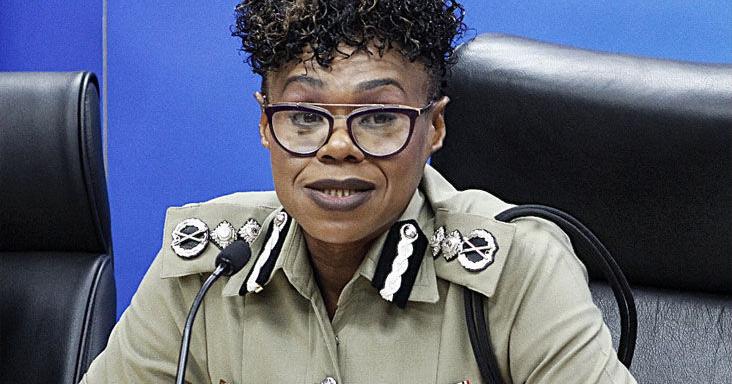
In an official audio address released immediately following the expiration, Deputy Commissioner of Police (Operations) Suzette Martin moved quickly to reassure residents that the end of the emergency declaration does not signal a retreat from the Trinidad and Tobago Police Service’s (TTPS) core mission of protecting the public.
“With the conclusion of the state of emergency, I want to be clear to all people of Trinidad and Tobago: the TTPS remains ready, visible, and fully responsive to community safety needs,” Martin stated. “The end of this emergency order is not the end of our commitment to public safety. It simply marks a transition to a long-term, sustainable policing model that is led by intelligence and centered on community partnerships.”
The new policing framework, which carries forward under the ongoing Operation Watchtower 2026, will be anchored by three newly commissioned micro police units, launched yesterday at strategic locations: Tarouba, Grand Bazaar, and the Eddie Hart Ground in Tacarigua. These small, agile units are designed to boost uniformed police presence across high-traffic areas, cut response times to emergency calls, strengthen targeted intelligence gathering, deepen local community engagement, and enable focused operations against criminal activity.
“Our guiding principle is straightforward: we must maintain a visible presence, we must remain alert to emerging threats, and we must always be ready to act,” Martin added.
Emphasizing that sustainable public safety cannot be delivered by law enforcement alone, Martin issued a public call for ongoing collaboration between the TTPS, ordinary residents, civil society groups, and other key stakeholders. “Building safer communities requires shared responsibility and active partnership,” she noted. “We need members of the public to keep engaging with our officers, sharing vital information that helps us disrupt criminal activity, and working side-by-side with us to protect our neighborhoods. We also need continued collaboration from our national security partners, government agencies, local authorities, private sector leaders, and community organizations to sustain this progress.”
Martin also extended formal gratitude to the rank-and-file officers of the TTPS and partner agencies for their relentless work throughout the state of emergency. “To every man and woman serving in the TTPS, I offer my deepest appreciation for your service, your unwavering commitment, and the personal sacrifices you made throughout the state of emergency. I also thank our core partner agencies, the Trinidad and Tobago Prison Service and Trinidad and Tobago Defence Force, along with every stakeholder that stood with us in this national security effort. Your service matters, your partnership matters,” she said.
Concluding her address, Martin reaffirmed that the TTPS’s new approach will remain rooted in the rule of law, evidence-based practice, professional standards, and respect for the communities the force serves. “The state of emergency may have drawn to a close, but our responsibility to protect the public never ends. The watch continues. And working together – police and community – we will keep pushing forward to build a safer Trinidad and Tobago for all,” she said.