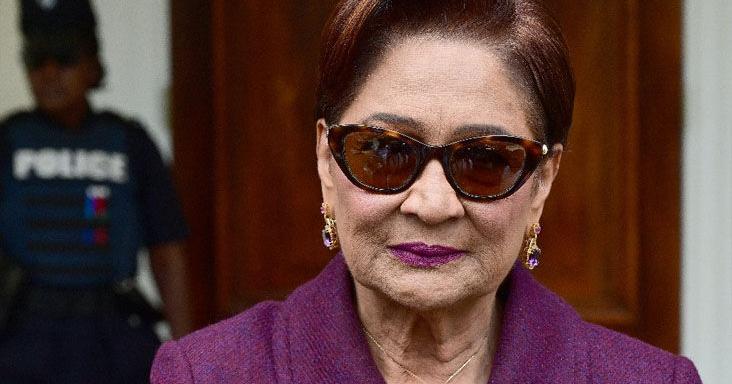
As Trinidad and Tobago moves forward with a landmark national security plan to confront rising violent and gang-related crime, Prime Minister Kamla Persad-Bissessar has moved to reassure compliant residents that the sweeping new seven-district security framework poses no threat to ordinary citizens. The new framework, formalized under the proposed Special Operations Bill 2026, will deploy specialized dedicated police units across the country authorized to carry out targeted crackdowns against organized gangs, armed suspects and violent criminal networks, and parliamentary debate on the legislation is scheduled to kick off at 10:30 a.m. local time today ahead of a final vote.\n\nThe Prime Minister confirmed that all outstanding questions about the new legislation will be addressed during floor debates in both the lower and upper houses of parliament, emphasizing that the bill is expected to pass successfully, with daily life across the country continuing largely uninterrupted for law-abiding residents. Drawing on past policy success, Persad-Bissessar pointed to the previously implemented state of emergency, which she described as highly effective at curbing crime, and expressed confidence that the new Special Operations strategy will deliver equally strong results. When asked about the bill’s provision for establishing restricted “closed areas” in high-crime hotspots, the Prime Minister noted that policymakers will rely on empirical data to guide any such designations, adding that it remains too early in the process to determine how long any potential closed area would remain in effect.\n\nA review of the legislation by local outlet *Trinidad Express* confirms that the bill will remain in force for a full two years starting from the date it is officially proclaimed by the President. Structurally, the new bill draws heavily from the earlier Zones of Special Operations (ZOSO) Bill, which failed to gain enough parliamentary support to pass earlier this year. Unlike the previous proposal, however, the current iteration does not require a special supermajority to pass, meaning it can be approved with a simple majority of sitting lawmakers.\n\nThe legislation divides the entire country into seven distinct special policing districts, covering every populated region of both Trinidad and Tobago. District 1 includes Port of Spain, Diego Martin and San Juan/Laventille; District 2 covers Arima and Tunapuna-Piarco; District 3 encompasses Sangre Grande and Mayaro-Rio Claro; District 4 includes Chaguanas and Couva-Tabaquite-Talparo; District 5 covers San Fernando and Princes Town; District 6 includes Point Fortin, Siparia and Penal-Debe; and the entire island of Tobago makes up the seventh district.\n\nEach of the seven districts will be led by a dedicated Head of Special Operations, selected by the Commissioner of Police from officers holding at least the rank of Superintendent. Before formalizing the appointment, the Commissioner is required to consult with the Prime Minister, who retains the power to reject a candidate after consulting with relevant cabinet ministers and the Chief of Defence Staff. All personnel selected for special operations duties, including both police officers and participating military personnel, must complete mandatory training in human rights protocols, rules governing the use of force, community engagement practices and conflict de-escalation strategies.\n\nThe legislation also allows for the Trinidad and Tobago Defence Force to support police operations, though any military deployment must be formally requested by the Commissioner of Police. Each district receiving military support will have a Head of Military Assistance, appointed by the Chief of Defence Staff from officers holding at least the rank of Major. Similar to the police appointment process, the Chief of Defence Staff must consult the Prime Minister before making the appointment, and the Prime Minister can reject the nomination after consulting relevant ministers and the Commissioner of Police.\n\nTo ensure accountability and coordinated action, the Commissioner of Police and Chief of Defence Staff are required to develop joint formal protocols governing police-military collaboration, including clear systems for verifying the identity of all participating personnel. Separate standard operating procedures (SOPs) must also be created for both police special operations and military assistance, with any personnel found violating SOPs facing disciplinary action.\n\nClocked in at 26 clauses plus a formal schedule, the bill authorizes targeted special operations that can be carried out by police alone or with military backup, and grants authority to declare areas facing extreme criminal activity as closed areas. Within these designated zones, police receive expanded powers to conduct warrantless searches, seize evidence, and make arrests and detentions. Authorities are also permitted to implement cordons and curfews, and require any person entering or exiting the area to hold a valid entry/exit permit.\n\nThe President holds the sole authority to declare a zone within a special operations district a closed area, and can only do so if presented with reasonable evidence that escalating violent crime – including homicides, shootings, kidnappings and gang activity – or the widespread possession of illegal firearms, ammunition, explosives or other weapons poses a direct threat to public safety and peace. The power can also be invoked if gangs have seized control of, or are actively intimidating, a local community, and only after ordinary law enforcement measures have proven unable to restore public safety and order.\n\nAny closed area declaration is issued as an executive Order that is subject to negative resolution by the House of Representatives, meaning lawmakers can vote to annul the order if they choose. Within seven days of issuing the declaration, the President must provide the Speaker of the House with a formal statement outlining the specific justifications for the order. While the House can annul the declaration at any time, no annulment motion can be introduced more than once every three months.\n\nOnce a closed area is declared, the district’s Head of Special Operations can implement physical access restrictions via barriers, roadblocks and other containment measures. With the exception of a small group of explicitly exempted officials, no person may enter or exit a closed area without a valid permit. Exempted individuals include the President, Prime Minister, cabinet ministers, members of parliament, Tobago House of Assembly members, municipal councillors, the Chief Justice and sitting Supreme Court judges, the Commissioner of Police, Chief of Defence Staff, district special operations commanders, and on-duty police and military personnel traveling to or from their assignments.\n\nViolating the permit requirement, or failing to comply with permit conditions without a reasonable excuse, carries a maximum penalty of a TT $50,000 fine and one year of imprisonment. Police may also establish internal and perimeter cordons around specific sites within closed areas using roadblocks and barriers; the Head of Special Operations is required to issue immediate public notice of any cordon, clearly marking its boundaries and outlining requirements for people inside and those seeking entry, with formal notice published in the official government Gazette within three days.\n\nThe President also holds authority to impose a curfew within a closed area, requiring all residents to remain inside their properties during specified hours unless they qualify for an exemption or hold a valid curfew permit. Breaching a curfew order carries the same maximum penalties as violating permit rules: a TT $50,000 fine and one year of imprisonment.