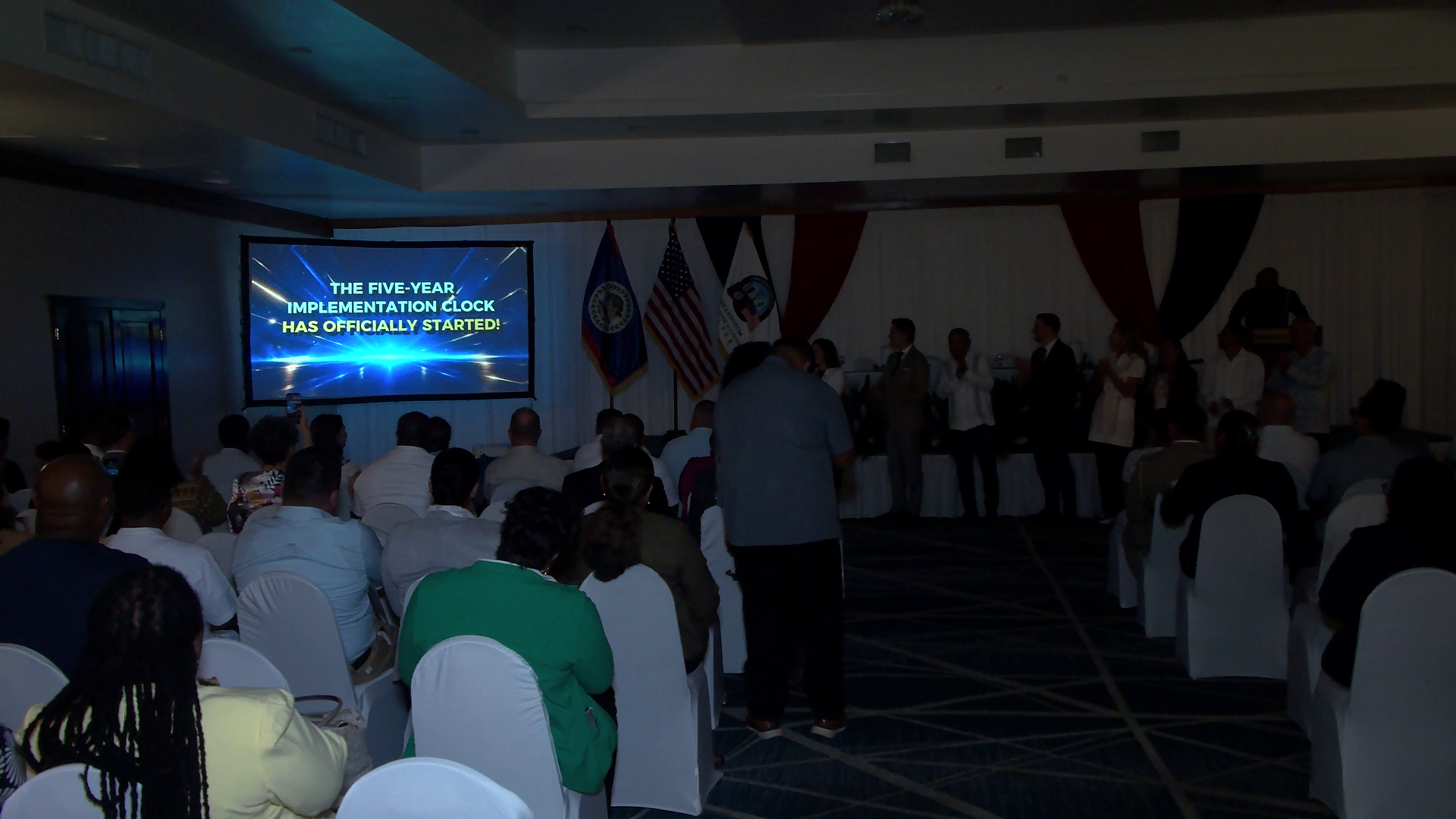
After years of negotiation, revision, and stakeholder debate, one of the largest development grant initiatives in Belize’s modern history has officially entered its implementation phase. On September 18, 2026, the Government of Belize and the United States government, through the U.S. Millennium Challenge Corporation (MCC), formally launched the five-year Belize Compact, a combined $180 million investment pairing a $125 million U.S. grant with $55 million in counterpart funding from Belize’s national government. The initiative will target two high-priority sectors for the Central American nation: upgrading secondary and technical vocational education, and modernizing national energy infrastructure including expanded electricity transmission to the popular coastal destination Ambergris Caye.
Dr. Marcia Bouloy, executive director of MCA-Belize, the local entity tasked with overseeing the compact’s rollout, emphasized that the program’s value extends far beyond its total monetary commitment. “The U.S. 125 million Belize Compact represents a significant investment in our country, but its importance extends beyond its dollar value. At its heart, this compact is an investment in people, opportunity, and Belize’s future,” Bouloy said in remarks at the launch event.
Belize Prime Minister John Briceño clarified for local residents the structure of the funding, noting that the $125 million MCC commitment is a no-repayment grant. Briceño outlined the core goals of the education portion of the compact, explaining that the investment will add new resources, technical support, and targeted infrastructure to strengthen secondary schooling and vocational training programs. “Our goal must be to ensure that Belizeans leave the education system with strong literacy and numeracy skills, critical thinking abilities, technical competencies, and the confidence to adapt to a changing world of work,” Briceño stated.
Addressing widespread public concern over recent widespread blackouts that have disrupted daily life and business operations across the country, the prime minister expressed confidence that the energy sector upgrades will resolve persistent reliability issues. “I know Belizeans are looking at me skeptically, especially after the blackouts that we’ve been having over the past few weeks. I don’t think we’re going to be having blackouts after this,” he said.
U.S. Ambassador to Belize Andre Bauer echoed the cross-cutting goals of the compact, framing the investment as a catalyst for long-term inclusive growth rather than a narrow infrastructure project. He noted that upgraded education will equip a new generation of Belizean workers with the in-demand 21st century skills that global employers seek, while more reliable energy infrastructure will create a stable operating environment for both domestic and foreign businesses. “We’ll support key reforms that make Belize an even more attractive place where people wanna invest and build and hire,” Bauer added.
MCC officials outlined that the success of the five-year initiative will not be measured by spending totals, but by tangible improvements to education outcomes, energy reliability, and broad-based economic opportunity for Belizean communities. Jason Small, acting vice president of compact operations at MCC, framed the partnership as a mutually beneficial effort to unlock shared prosperity between the United States and Belize. “MCC is proud to mark this historic day in our partnership with Belize, where together we will unlock growth and create mutual prosperity for our two nations. And five years from now, we will celebrate the completion of this compact just in time to celebrate the 50th anniversary of Belize’s independence,” Small said.
With the official launch complete, the five-year countdown to deliver tangible results from the $180 million investment is now underway. Project leaders and government officials expect the reforms and infrastructure updates to create lasting ripple effects across Belize’s economy, supporting local business growth, attracting new foreign direct investment, and expanding long-term opportunity for all Belizeans.