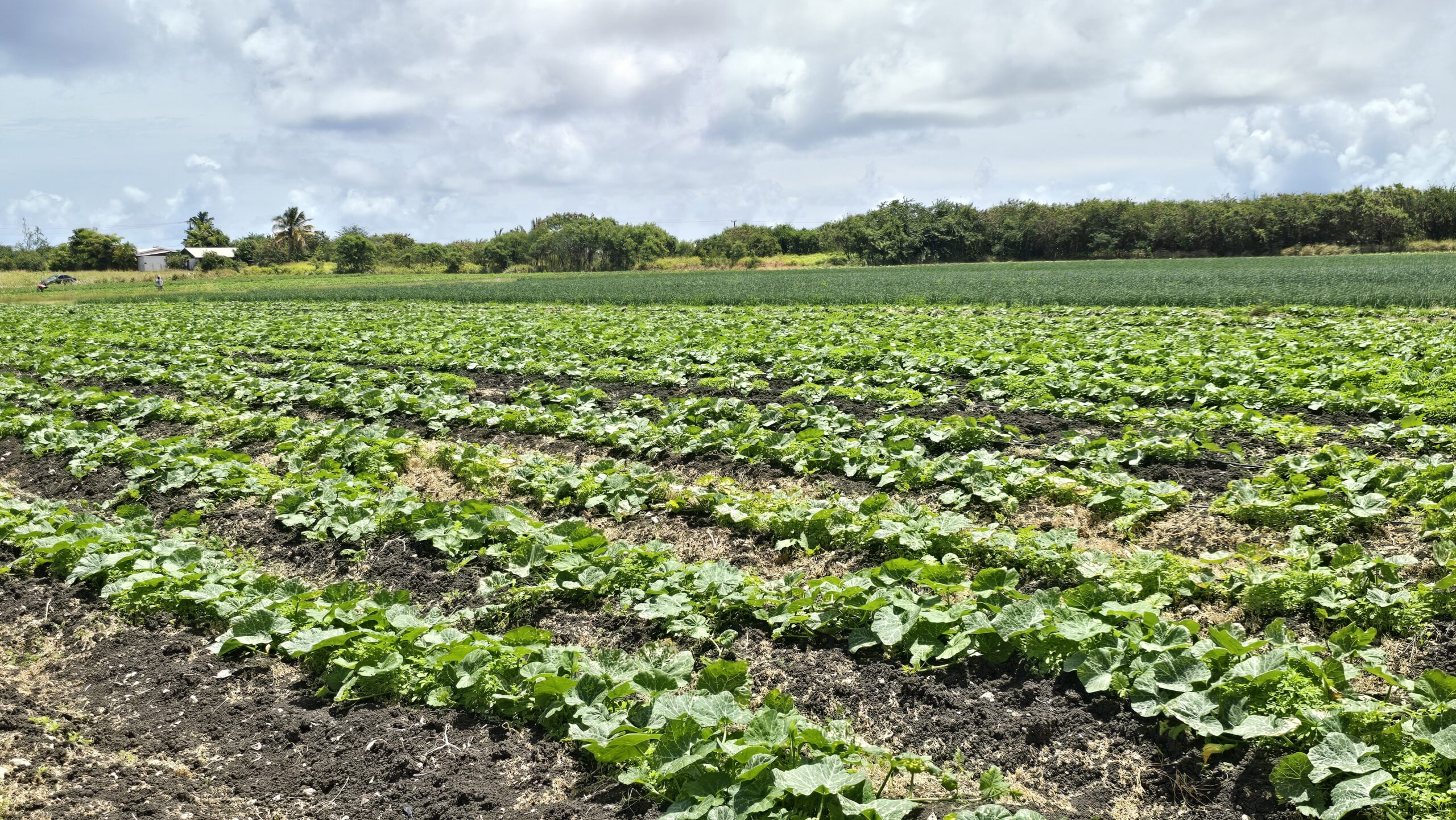
A groundbreaking UNICEF-commissioned climate report has delivered a stark warning for the Caribbean nation of Barbados, projecting that by the middle of this century, the island could face extended stretches of moderate to severe drought lasting up to four months every year. This looming climate shift threatens to intensify the mounting pressure on local food production, compounding the water scarcity, extreme heat damage, and declining harvests that Barbadian farmers already grapple with on a daily basis. What is more alarming is that on-the-ground conditions reported by local producers already align with the study’s dire mid-century forecasts, signaling climate change is progressing faster than many anticipated.
The analysis, officially titled *Child-Centred Climate Analysis for Building Resilience*, was commissioned by the UNICEF Eastern Caribbean Area Office and carried out by independent sustainability research firm Meru Labs. The study covered Barbados and five other neighboring Eastern Caribbean island nations, with researchers identifying Barbados and Grenada as the two most vulnerable to worsening drought patterns. Current baseline data shows moderate to severe drought occurs 21% of the time annually, but the report projects that by 2050, that figure will rise enough to bring three to four months of such dry conditions each year on average.
The ramifications of this shift for Barbados’ agricultural sector and overall national climate resilience are severe. The study cites existing research showing major, repeated drought events can cut total national food production by between 20% and 40%, a drop that would directly compromise the Caribbean region’s already precarious food security. Beyond agricultural and economic impacts, the report also warns that recurring climate shocks carry unique long-term risks for children, including higher rates of malnutrition and widespread disruptions to education caused by failing school water and sanitation systems.
Local farming leaders have already confirmed that the negative impacts outlined in the report are no longer a distant future threat. Ronald Moore, secretary of the St George Farmers Cooperative, explained that member producers have already seen dramatic production declines driven by unrelenting heat stress and inconsistent, scattered rainfall. “Production has clearly reduced,” Moore explained in an interview. “There’s a big difference between groundwater and rainwater. From the time the rain falls, you see the plants perform way better, the growth is faster, and you get a more solid structured fruit or vegetable. We are seeing smaller yields for sure, and in some cases, you are getting a lot of heat damage.” Moore added that even with consistent groundwater irrigation, extreme atmospheric heat negates any benefits, saying: “No matter how you water, it is just the humidity that you’re experiencing that causes the plants to wither and sometimes cook.” He recounted the story of one local grower who lost an entire two-acre tomato crop to heat stress: the plants reached maturity without producing any flowers at all, a total failure directly tied to above-ground temperatures that are too high for reproductive growth.
These worsening growing conditions have forced many small-scale producers to completely overhaul their planting strategies, with many abandoning water-intensive vegetable crops entirely. “Root crops are definitely down, tremendously down,” Moore noted. “Things like beets and carrots are, to some extent, almost non-existent because carrots especially need a lot of water. A lot of people are not planting carrots at all.” Smallholders that rely entirely on rainfall for irrigation are being pushed to the edge of financial viability, with scattered short downpours offering only temporary relief that is not enough to sustain steady crop growth. “The downpours we’re getting don’t last for very long and aren’t consistent,” Moore said. “Even if you get a heavy downpour for a few hours and then get periods of days afterwards with little to no rain, it puts the plant in a lot of stress, and you’re not getting the yield that you want.”
Other producers say operational cost increases have compounded the challenges of adapting to harsher weather patterns. Hamilton Corbin, a small-scale producer operating as Samuel Corbin by His Precious Hands, noted that irrigation costs naturally spike during extended dry periods, and argued that long-term proactive moisture conservation strategies are needed to adapt to increasingly unpredictable rainfall. “When temperatures increase, we have to try to look at doing a bit more mulching,” Corbin said. He expressed frustration with the nation’s reactive approach to recurring dry seasons: “We usually wait till we have these drier conditions to try to put things in place to mitigate it. When we have good rains, we usually forget about droughts. I think we’ve got to be a little bit more proactive and show more urgency about this matter.” Corbin is calling on local authorities to speed up development of long-discussed agricultural water catchment infrastructure, warning that without reliable water storage systems, producers will remain completely vulnerable to the whims of a changing climate.
Peter Alleyne, president of the Fruit and Vegetable Division at the Barbados Agricultural Society (BAS), echoed this call, noting that consistent access to irrigation water remains the top priority for producers in major farming districts including St Lucy, St Philip, and Gibbons in Christ Church. “The farmers are crying out for more water,” Alleyne said. “The government is doing what it has to do to help farmers, but the wells can only give so much water at present. If they have a desalination plant, they could be pumping water from the sea, or using brackish water for irrigation.” Alleyne also recommended that farmers immediately adopt protective practices such as mulching with organic grass and leaf matter to cool soil and support healthy germination and growth, noting that even recent scattered rains that replenish underground aquifers are quickly evaporated by extreme post-storm sunshine. “The sun comes out double hot afterwards and dries out the earth really, really fast,” he explained.
Right now, the Barbados Water Authority and the Ministry of Agriculture are exploring long-term recycled water initiatives for agricultural use, but farmers still face a highly uncertain future. As Moore observed, if water supplies tighten further under prolonged climate stress, national water priorities will inevitably prioritize domestic human consumption over agricultural use. “Domestic use is going to be looked after first because it’s all about people’s survival,” Moore reflected. “Something will have to give, and we have to wait and see how it plays out.”