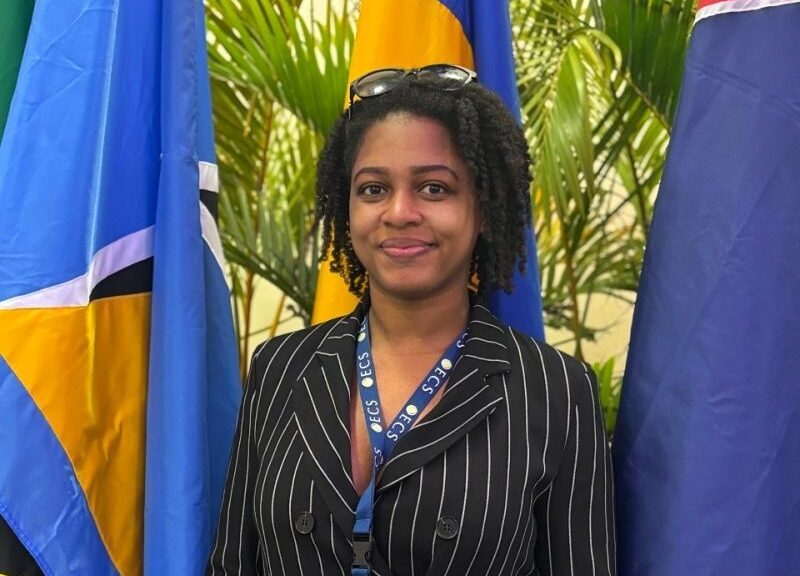
On a Wednesday morning at Rodney Bay’s Bay Gardens Hotel, a prominent young climate leader from Saint Lucia made a forceful call to redefine how young people are included in global and regional climate action, arguing that token representation at decision-making tables is no longer acceptable. Kezia St Brice, president of the regional youth organization Climate and Health Action for the Rising Generation (CHARGE), delivered her remarks during the official launch of a new UNICEF-commissioned report, the *Child-Centered Climate Analysis for Building Resilience*, which focuses on climate vulnerability across six Eastern Caribbean nations: Barbados, Dominica, Grenada, St Kitts and Nevis, Saint Lucia, and St Vincent and the Grenadines.
St Brice pushed back against the common practice of inviting young stakeholders to climate discussions only after major policy decisions have already been finalized, emphasizing that young people are already navigating the daily harms of climate change and actively developing community-level solutions. “They must be part of the conversations from the start. Our responsibility is to ensure that the participation is meaningful, not just a seat at the table, but a voice at the table, not just a voice, but influence, and not just influence, but action,” she told attendees. Unlike older generations that have contributed most to greenhouse gas emissions but will not live with the long-term impacts, young people are already bearing the brunt of climate breakdown today, she noted.
Across Eastern Caribbean communities, St Brice pointed out, young people are already leading the way: organizing local climate action campaigns, educating their peers about climate risks, designing context-appropriate solutions, and holding decision-makers accountable by asking tough questions that older leaders often avoid.
The youth advocate also highlighted that children and young people experience climate disasters differently than adults, with impacts that extend far beyond the immediate event itself. A single flood, for example, can force students to miss days or even weeks of school; a hurricane-damaged home can leave families displaced; disrupted local livelihoods can push households into food insecurity; and repeated climate shocks erode children’s long-term sense of safety, harm their educational progress, limit future opportunities, and shape the trajectory of their entire lives. These disparities, she argued, mean climate action cannot be separated from conversations about global development, equitable opportunity, and intergenerational justice. “The child who has the least ability to influence a climate crisis can often be amongst those who experience its greatest consequences,” she said.
The landmark UNICEF report underscores this vulnerability: its analysis finds that more than one-third of all children, schools, and healthcare facilities across the six study countries are already located in zones exposed to at least three separate climate hazards, including hurricanes, flooding, and sea-level rise. By the middle of the 21st century, that share is projected to grow dramatically as climate change accelerates. To address this growing risk, the report outlines a framework for action across four core priority areas: anticipatory pre-disaster action, shock-responsive social protection systems to support vulnerable families after disasters, structural investments in long-term community resilience, and systemic fiscal transformation to fund climate adaptation.
For small island developing states like those in the Eastern Caribbean, which are on the frontlines of climate change despite contributing almost nothing to global emissions, resilience cannot be an afterthought added to policy plans at the last minute, St Brice stressed. Instead, it must be embedded into every level of governance, community planning, public investment, education systems, and national development strategy. She also pushed back against the misconception that proactive climate preparedness is a form of defeatism. “Preparedness is not pessimism,” she said. “Preparing our young people for climate-related challenges does not mean we are giving up on their future. It means we believe their future is worth protecting.”
With the report now published, St Brice emphasized that tangible action must follow, warning that data and recommendations on a page cannot deliver real change on their own. “A report cannot strengthen a school. A statistic cannot feed a family after a disaster. A recommendation cannot protect a child unless it is translated into action,” she said. She went on to challenge regional governments and global stakeholders to turn the report’s findings into policy, rather than letting it collect dust on a shelf. “Will this study sit on a shelf? Or will it sit at the table when policies are developed, budgets are prepared, programmes are designed, and decisions are being made?” she asked. “The greatest value of this work will not be measured by the number of pages in the reports. It will be measured by what we do with what we have learned.”
Shifting focus to long-term impact, St Brice noted that climate action must center on empowering the next generation, not just preparing for the next storm. “What can we teach today that will empower a young person to become part of the solution tomorrow?” she asked. Following the official launch of the report, UNICEF and the Caribbean Disaster Emergency Management Agency (CDEMA) hosted a two-day workshop for regional journalists, designed to strengthen media coverage of climate change, disaster risk, and the specific impacts of these crises on children.