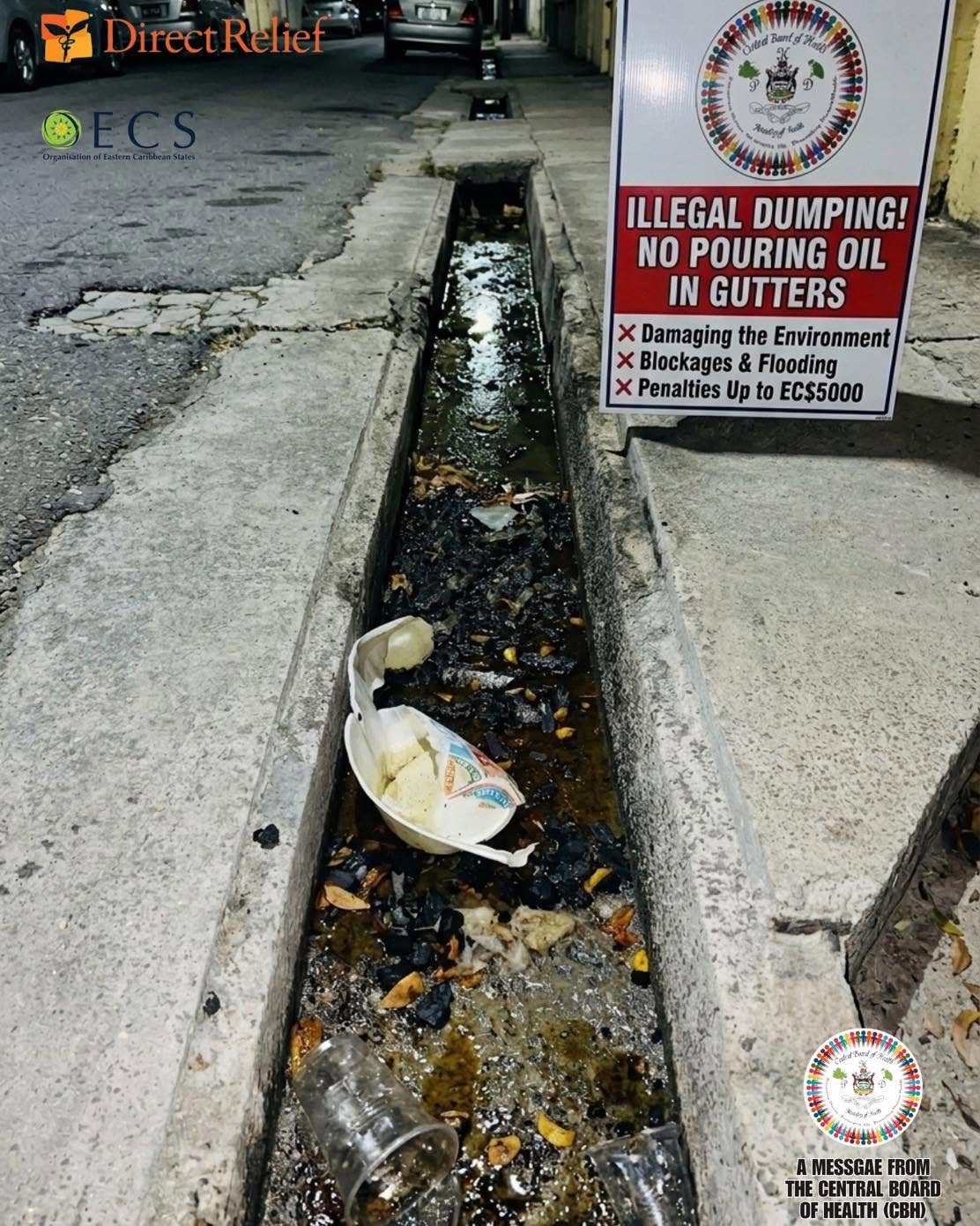
Antigua’s Central Board of Health (CBH) has issued a critical public advisory urging local residents to stop pouring used cooking and automotive oil down household and municipal drains, highlighting a cascade of environmental, infrastructural and public health risks tied to this illegal disposal practice. The agency explains that used oil does not break down easily in drainage networks, and instead coats pipe walls, accumulates over time, and creates stubborn, persistent blockages that restrict the free flow of stormwater. During periods of intense or prolonged rainfall, these blocked drains cannot carry excess water away from populated areas quickly enough, significantly elevating the risk of dangerous and destructive flash flooding across residential and commercial communities. Beyond infrastructure damage and flood risks, improper oil disposal creates secondary public health hazards that impact both residents and local business owners. Discarded oil that lingers in drainage systems acts as a powerful attractant for pest populations including rats and cockroaches, which can spread disease, contaminate food supplies, and create unsanitary living and working conditions. Even more concerning for the island’s ecosystem is the long-term environmental damage caused by oil that makes its way through drains and out into surrounding coastal and marine waters. Once introduced to oceans, bays and nearshore habitats, oil disrupts the marine food chain, contaminates the living spaces of wild fish, coral and other aquatic organisms, and threatens the long-term survival of vulnerable marine populations native to the region. To mitigate these risks, CBH is calling on all residents to adopt safe disposal habits: store any used oil in firmly sealed, leak-proof containers that can be transported to authorized waste collection facilities for proper processing. The agency also reminded the public that illegal dumping of used oil through drains or other unapproved channels carries legal penalties, including a maximum fine of 5,000 Eastern Caribbean dollars. In closing, CBH encouraged collective action across the island, urging every resident to take simple, responsible steps to keep Antigua’s communities, public streets and natural waterways clean, safe and ecologically healthy for current and future generations.