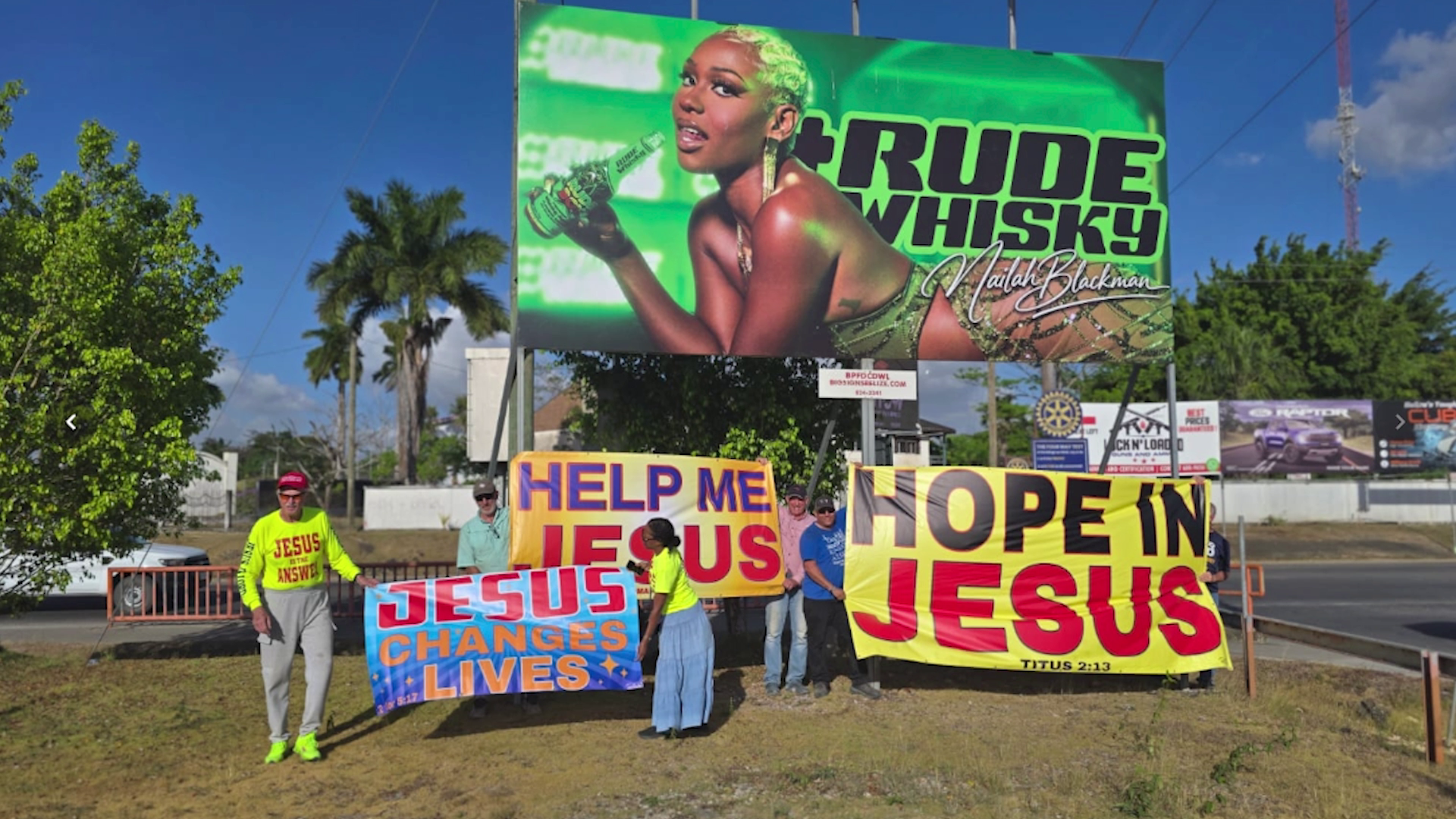
In the small Central American nation of Belize, two separate back-to-back disputes over public outdoor billboards have ignited a widespread national conversation about the boundaries of commercial speech, public acceptability, and freedom of expression, touching on everything from alcohol marketing to tourism promotion and long-standing national identity tensions. The first controversy broke out in the country’s capital city of Belmopan earlier this year, when local church leaders and a segment of residents mobilized in opposition to a billboard featuring popular Soca musician Nailah Blackman alongside a promotional advertisement for an alcoholic beverage. Just a few months after that initial uproar, a second, far more politically charged controversy emerged over a set of tourism billboards placed by Guatemalan tourism authorities, throwing into sharper relief the unwritten rules governing public messaging in the country.
In a on-the-ground report for local outlet News Five, investigative journalist Shane Williams broke down the overlapping threads of both disputes, arguing that the core of the conflict is not the content of the two controversial campaigns themselves, but rather the unresolved question of who gets to define what counts as offensive or unacceptable in public space — and which campaigns might be targeted next. “In truth, the issue may not be about the Rude Boy alcohol ad, nor about the Guatemala sign, but about who determines what is acceptable and what is offensive, and which billboard will be targeted next. Will it be these ‘Jesus is the answer’ billboards that we see popping up across the country?” Williams noted in his reporting.
For the Belmopan alcohol advertisement, which promoted the Rude Boy beverage brand in partnership with Blackman, religious leaders have been unflinching in their criticism, arguing that the content of the billboard crossed lines of public decency. Church Senator Louis Wade laid out the group’s position in comments recorded in mid-2026, referencing existing Belizean law to back up their demand for the ad’s removal. “The criminal code speaks specifically to indecent exposure of photographs, pictures or so on in public space. And so we want to do the right thing first. And so that’s the process we are taking,” Wade explained. Ultimately, the advertising company paused the contract for the Belmopan location, pulling the billboard from the capital — though the exact same advertisement remains displayed in Belize City months later, with no public action taken against it.
The second dispute over the Guatemalan tourism billboards carried far greater stakes tied to long-standing territorial tensions between the two neighboring nations. The campaign, run by the Guatemalan Institute of Tourism, placed four “Guatemala Welcomes You with Open Arms” billboards across Belize, designed to encourage cross-border travel from Belize into Guatemala. But the messaging sparked immediate backlash from many Belizean citizens, who interpreted the slogan as a subtle claim to Guatemalan sovereignty over Belize, a sensitive topic that has persisted for decades after Belize gained full independence. The controversy grew heated enough that Belizean Prime Minister John Briceño publicly waded into the debate, calling for the messaging to be revised to ease public fears. In comments that reflected the depth of national feeling on the issue, Briceño stated, “Maybe the billboard owners should ask them to, if they could reword it to remove that kind of fear or phobia as if we’re saying, as Guatemala is saying, where Belize, we welcome them to be a part of Guatemala. Oh, we no. We would never be a part of Guatemala.”
Following the public outcry, all four of the Guatemalan tourism billboards were removed. The original campaign was scheduled to end on August 30, and officials with Belize Signs, the local company that hosted the billboards, confirmed the contract would not be renewed. Prior to the official removal, one of the billboards in Sandhill was also damaged by vandals, according to local reports.
Beyond the immediate removal of the two controversial sets of billboards, the disputes have opened up larger, unresolved questions about how Belize will balance public pressure with the right to freedom of expression in public spaces going forward. For example, religious groups currently operate a widespread network of billboards across the country displaying Christian messages such as “Jesus is the answer,” but no comparable public movement has formed to demand their removal. That double standard raises urgent questions: if religious groups can place their messaging in public space, what would happen if members of other faiths, or secular groups, objected to those messages? In the end, after two high-profile examples of public outcry leading to immediate removal of unpopular content, the central question remains unanswered: who ultimately gets the final say on what Belizeans see in their public spaces?