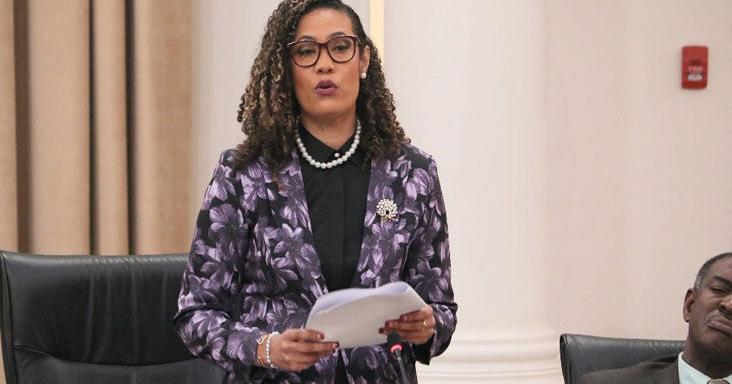
In a pointed address to the Senate during debate on the 2026 Public Health (Amendment) (No. 2) Bill, Trinidad and Tobago’s Minister of Rural Development and Local Government Khadijah Ameen has sounded the alarm on widespread graft among building and public health inspectors, calling on ordinary citizens to bring forward evidence of bribe-taking to law enforcement for investigation.
Ameen opened her remarks by unpacking the systemic roots of the corruption crisis facing the country’s development approval system, noting that long-standing staff shortages, created by the previous administration’s failure to fill vacant inspector positions, have created critical openings for unethical conduct to flourish. In conversations with a former local government minister, Ameen confirmed that understaffing has allowed corrupt actors to exploit gaps in oversight, with bribe-taking becoming so normalized that many developers now build these illicit payments into their project overhead costs as an expected “cost of doing business.”
She emphasized that corruption penetrates every stage of the development approval process, where project sign-off is increasingly granted based on personal connections or illicit payments rather than compliance with building and public health standards. This pattern of graft has severely eroded public trust in the approval framework, she argued, allowing non-compliant projects to move forward while leaving honest developers at a disadvantage. Pointing to visible signs of illicit enrichment, Ameen noted that many corrupt inspectors maintain lavish lifestyles far beyond what their public service salaries can support, including owning multi-million dollar mansions, luxury vehicles, and multiple residential properties across the country. While public conversation about corruption often focuses on elected officials, Ameen stressed that cleaning up the public service requires rooting out bad actors at every level, including front-line inspection roles.
Looking ahead, Ameen issued a clear warning to all new applicants for recently opened inspector positions: corruption will not be tolerated under the current government. The administration is already moving to fill long-vacant inspector and engineering roles to address the staffing shortages that enabled graft, she confirmed. For members of the public who hold information about bribe-taking, Ameen urged immediate reporting to local police, noting that formal processes are already in place to remove proven corrupt officials from their posts.
Beyond addressing corruption, Ameen laid out the core policy goals of the Public Health (Amendment) (No. 2) Bill, which aims to cut through bureaucratic red tape and streamline the country’s construction approval process by removing the County Medical Officer of Health (CMOH) from routine stages of the building permitting workflow. The legislation, which already passed the House of Representatives last Friday, is designed to eliminate redundant approval requirements that have delayed thousands of development projects across the twin-island nation.
Official data presented by Ameen shows that between 2021 and 2026, more than 9,100 development applications were submitted to the CMOH for approval, even though regional municipal corporations already employ public health inspectors authorized to sign off on the same projects. This duplication has created a massive backlog: as of the Senate debate, 790 applications remain pending CMOH review. To address concerns over the fate of these backlogged requests, Ameen confirmed that the Ministry of Health will issue a formal directive transferring all pending applications to the relevant municipal corporations. Applicants will not be required to resubmit documentation or restart their approval process, as both agencies already hold full copies of the submitted materials, and all transitional arrangements will be finalized before the legislation takes effect.
Currently, four municipal corporations – the Port of Spain City Corporation, San Fernando City Corporation, Arima Borough Corporation, and Point Fortin Borough Corporation – already maintain in-house public health inspection teams to conduct project assessments. If passed, the bill will extend this full approval authority to all 14 of Trinidad and Tobago’s municipal corporations, creating a consistent, more efficient approval framework across the country. Coupled with ongoing recruitment of new inspectors and engineers, the legislative change is expected to cut administrative delays, remove overlapping agency requirements, and support faster delivery of new construction and development projects nationwide.