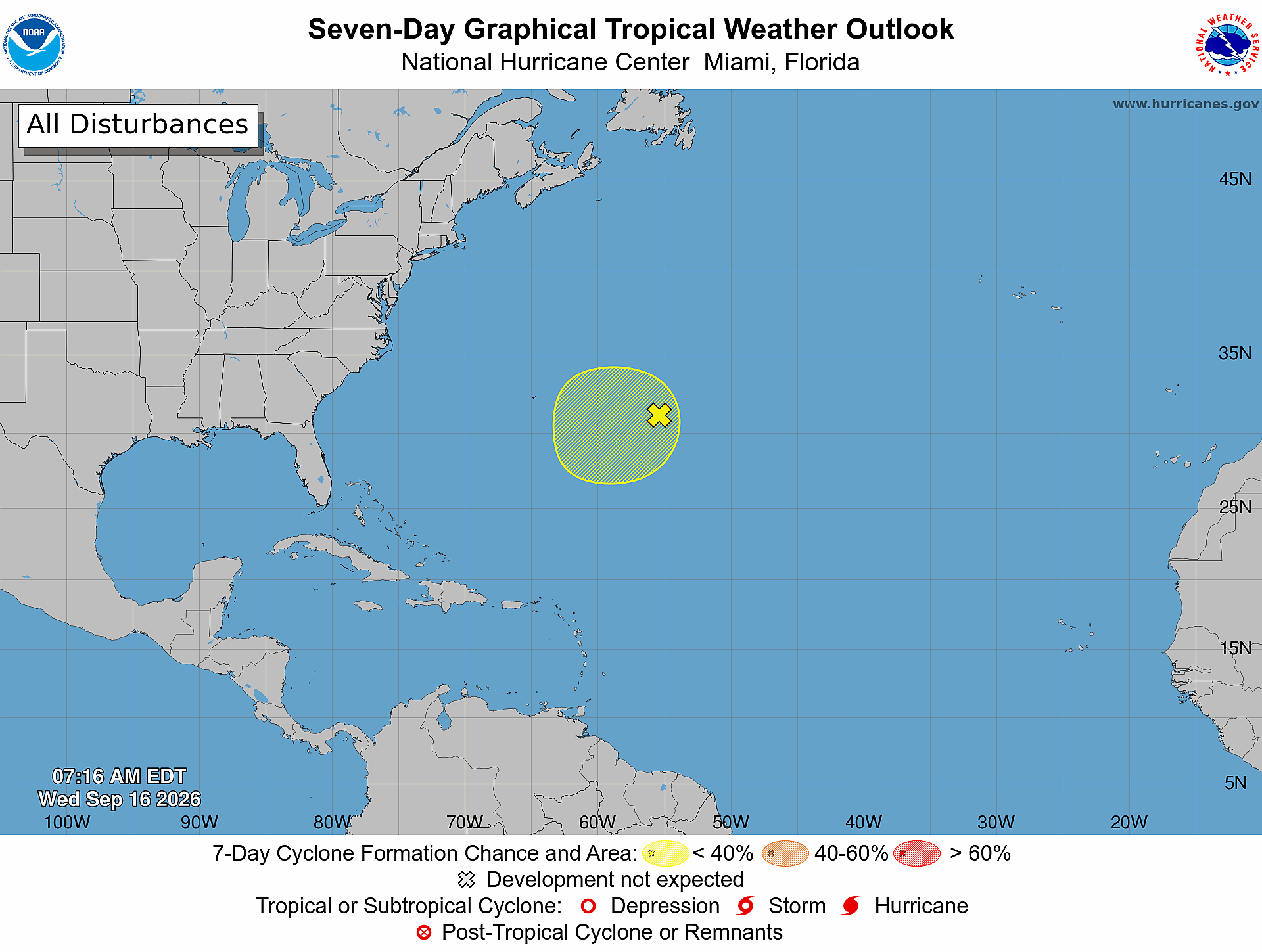
The 2026 Atlantic hurricane season has delivered a highly unusual pattern at its traditional peak point: not a single hurricane has formed, a lull directly tied to the influence of a powerful El Niño event that has dramatically suppressed tropical storm development across the basin.
To date, only five short-lived tropical storms have emerged across the Atlantic. This marks the longest delay for the first hurricane formation in the basin since consistent satellite monitoring of hurricane activity was introduced in the 1960s, according to meteorological data.
Phil Klotzbach, a leading hurricane researcher at Colorado State University, reported that overall storm activity in the Atlantic so far this season measures at just 7% of the average activity recorded for this point in a typical year.
Meteorologists from the National Oceanic and Atmospheric Administration (NOAA) and other leading institutions explain that El Niño has triggered an extreme increase in wind shear across the stretch of ocean between West Africa and the Caribbean. This sharp difference in wind speed and direction at different atmospheric altitudes tears apart nascent tropical weather systems before they can consolidate and strengthen into organized storms or hurricanes. El Niño’s influence has also created broader unfavorable conditions: dry atmospheric layers, wind-carried Saharan dust, and sinking air masses have all combined to further block the formation of new tropical cyclones.
While the basin has seen an unprecedented lull in activity, forecasters are urgently warning residents of Antigua and Barbuda, as well as communities across the wider Caribbean and Gulf of Mexico, against dropping their guard. Even one late-season hurricane can cause catastrophic damage to coastal and island communities, they emphasize, and the official Atlantic hurricane season does not conclude until November 30, leaving a window of several weeks for unexpected storm development.
In a striking reversal of the Atlantic pattern, El Niño has had the opposite effect on the Eastern and Central Pacific. The climate pattern has amplified conditions favorable for tropical cyclone development, leading to a far more active season than normal in that basin, matching typical El Niño impacts.