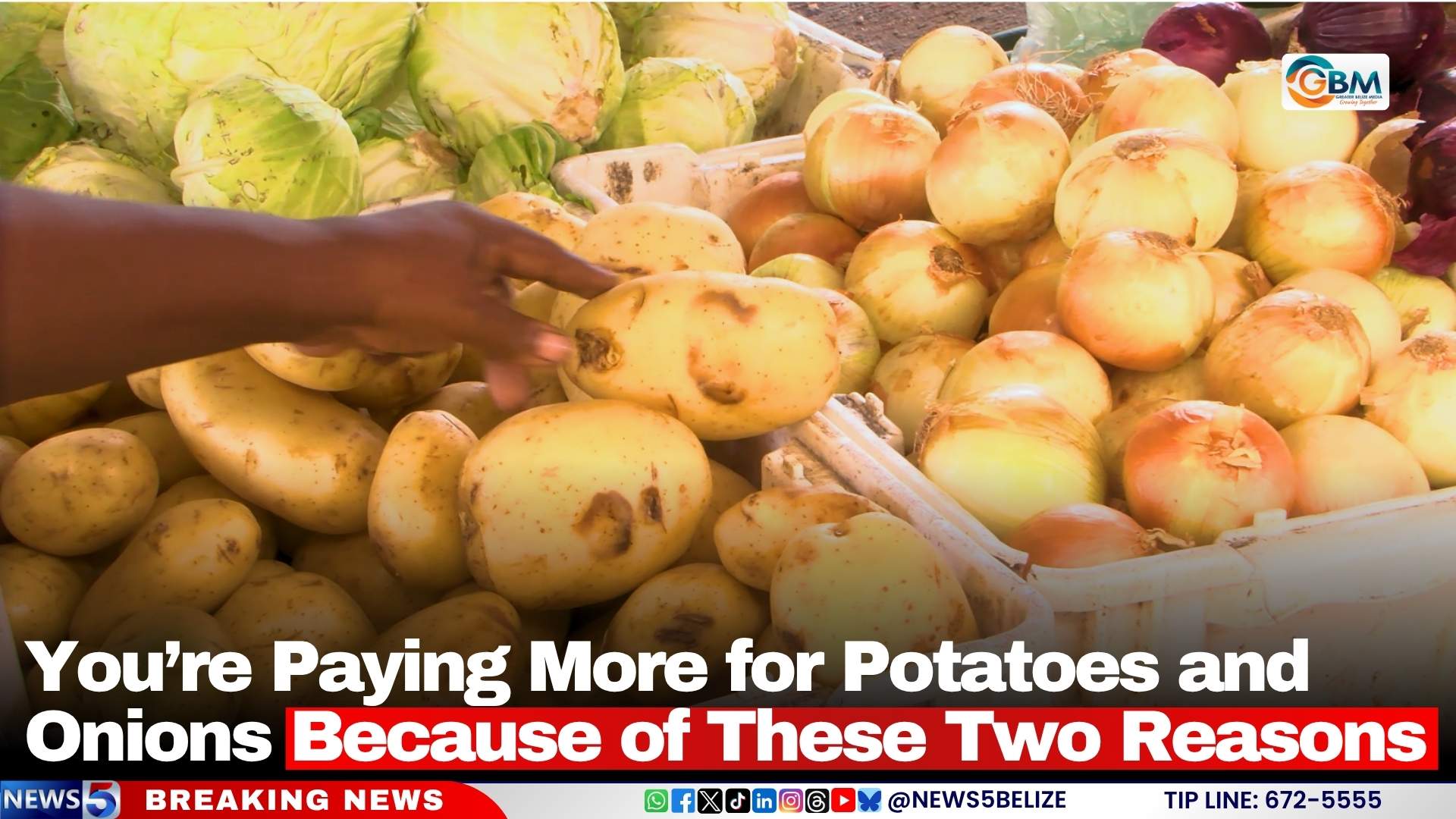
Belize consumers and local produce vendors are facing mounting financial strain as the cost of staple vegetables including potatoes and onions has jumped sharply, driven by two interconnected factors: a shifting exchange rate with Mexico and climate-driven increases in agricultural production costs, the Belize Marketing and Development Corporation (BMDC) has confirmed.
Local vendors operating at Belize City’s busy Michael Finnegan Market told local outlet News Five on Monday that wholesale price hikes from the BMDC have been so severe that many potential customers leave without making purchases, leaving small sellers fighting to cover monthly rental costs and earn a livable income. One vendor shared that after covering all expenses, a 250-dollar sack of potatoes generates barely 37 dollars in profit when sold to shoppers at retail prices.
In an official response to these concerns, BMDC Administrator Valentin Carillo explained that the state-owned corporation, which handles the bulk of Belize’s produce imports from neighboring Mexico, is already paying far more to source these commodities from Mexican suppliers than it did just 12 months prior.
“From the start of this year, we’ve observed that import prices for key commodities are noticeably higher than they were last year, and this boils down to two main driving factors,” Carillo stated.
The first factor is a dramatic shift in the exchange rate between the Mexican peso and the US dollar. Last year, the exchange rate hovered around 8.50 pesos to one US dollar; as of 2026, that rate has fallen to roughly 7.80 pesos per dollar. That 70-cent shift per dollar translates to an almost 10 percent increase in total import costs for the BMDC, Carillo confirmed.
Climate change is compounding this cost pressure, he added, cutting across-the-board crop yields for Mexican farmers and driving up the cost of core agricultural inputs from fertilizer to water on both sides of the Belize-Mexico border. “When you have smaller harvest volumes and higher costs to grow crops in the first place, that inevitably pushes final sale prices upward,” Carillo explained.
Carillo also addressed frequent public complaints about inconsistent produce quality from BMDC imports, noting that the corporation schedules cargo shipments twice per week specifically to ensure that produce remains fresh when it reaches consumers. However, Belize’s persistent extreme heat, which regularly hits 38 degrees Celsius, undermines this effort even when produce is kept in shaded storage during distribution. By the time vegetables reach open-air market stalls, the warm temperatures have already shortened their shelf life and damaged quality, Carillo said.