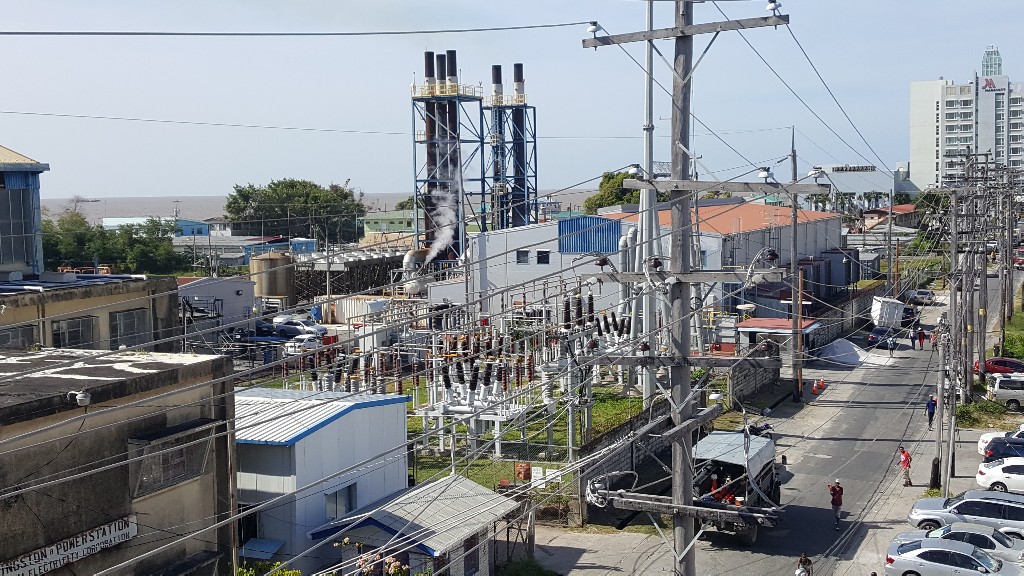
On Monday, September 14, 2026, Guyana’s President Irfaan Ali publicly admitted that state-owned utility Guyana Power and Light (GPL) has failed to expand its infrastructure fast enough to match the country’s rapid economic and population growth, one day after former electricity minister David Patterson publicly slammed the administration for its mismanagement of the national power sector.
Patterson, a critic of the current government, delivered his scathing rebuke over the weekend, arguing that the ongoing electricity shortages plaguing commercial and residential consumers across the country are entirely preventable. He pointed out that officials have long known that each new hotel coming online adds roughly 1.5 megawatts of extra demand to Guyana’s aging transmission network, yet the government failed to proactively expand capacity to stay ahead of growing needs.
The former minister also criticized the administration’s lopsided focus on the long-delayed 300 megawatt natural gas-fired power plant, which has remained under construction for five years. In the interim, the government has relied on a costly temporary fix: two rented power ships from Turkish provider Karpowership, costing taxpayers more than $200,000 per day. Patterson argued that instead of wasting funds on long-term rentals, the government should have purchased and installed additional permanent generators years ago to meet rising demand.
Responding to the criticism, President Ali confirmed the severity of the gap between supply and demand, citing data from an independent assessment carried out by InterEnergy, a private energy firm headquartered in the Dominican Republic. The assessment found that electricity demand on Guyana’s main Demerara-Berbice Interconnected System (DBIS), which serves roughly 230,000 customers, has jumped 18 percent since 2024 – rising from 205 megawatts to 242.6 megawatts by August 2026. For context, this growth rate is far above the regional average of just 4 percent across Latin America and the Caribbean. Looking ahead, InterEnergy projects that total demand will surge 138 percent by 2029, meaning Guyana will need double its current generation capacity within five years to keep up with its development trajectory.
Ali stressed that the status quo of an unreliable, underbuilt power grid is no longer acceptable. “We cannot continue with an unreliable system and a system that is not designed to do what the country wants it to do, what the development requires,” he said, noting that growing demand is being driven by a wave of new industrial operations, hotels, residential housing developments and commercial ventures connecting to the grid. The president added that an estimated 62,000 new customers are expected to connect to GPL’s network in coming years as growth continues.
The Guyanese government has contracted InterEnergy at a cost of $650,000 per month to oversee upgrades to GPL’s transmission and distribution network, as well as works tied to the delayed Wales natural gas power project. Following its assessment, the firm has put forward a series of key recommendations to address the crisis. These include the creation of an independent task force focused on grid reliability, a full rollout of smart metering and digital system upgrades, the addition of substantial new generation capacity, and targeted investment in both transmission and distribution infrastructure. InterEnergy specifically emphasized that GPL cannot focus solely on expanding transmission lines while neglecting distribution, given the changing makeup of demand – including large-scale new housing developments, multi-unit apartment buildings, expanded industrial zones, and mixed commercial-residential areas.
Recently returning from an official visit to Qatar, Ali also confirmed that the Middle Eastern nation has expressed readiness to partner with Guyana to upgrade and expand the country’s electricity sector. The president emphasized that only large-scale, long-term investment will solve the current crisis, rather than quick, temporary fixes. “We have to bite the bullet, make the investment, and this is what the report is saying – it’s not a short-term fix, and we have to, of course, hold people accountable in this process,” he stated.
When asked about potential leadership changes or a restructuring at GPL, Ali declined to comment. He did note that the government currently provides heavy subsidies to cover GPL’s rising fuel costs, to avoid passing the full burden of higher prices onto consumers. Right now, the Minister of Finance is actively working to secure billions of additional Guyanese dollars to cover these fuel cost increases, a measure the president said is designed to protect consumers’ disposable income. GPL is currently in the midst of an $800 million project to build new high-voltage transmission lines and substations across the DBIS to expand network capacity.