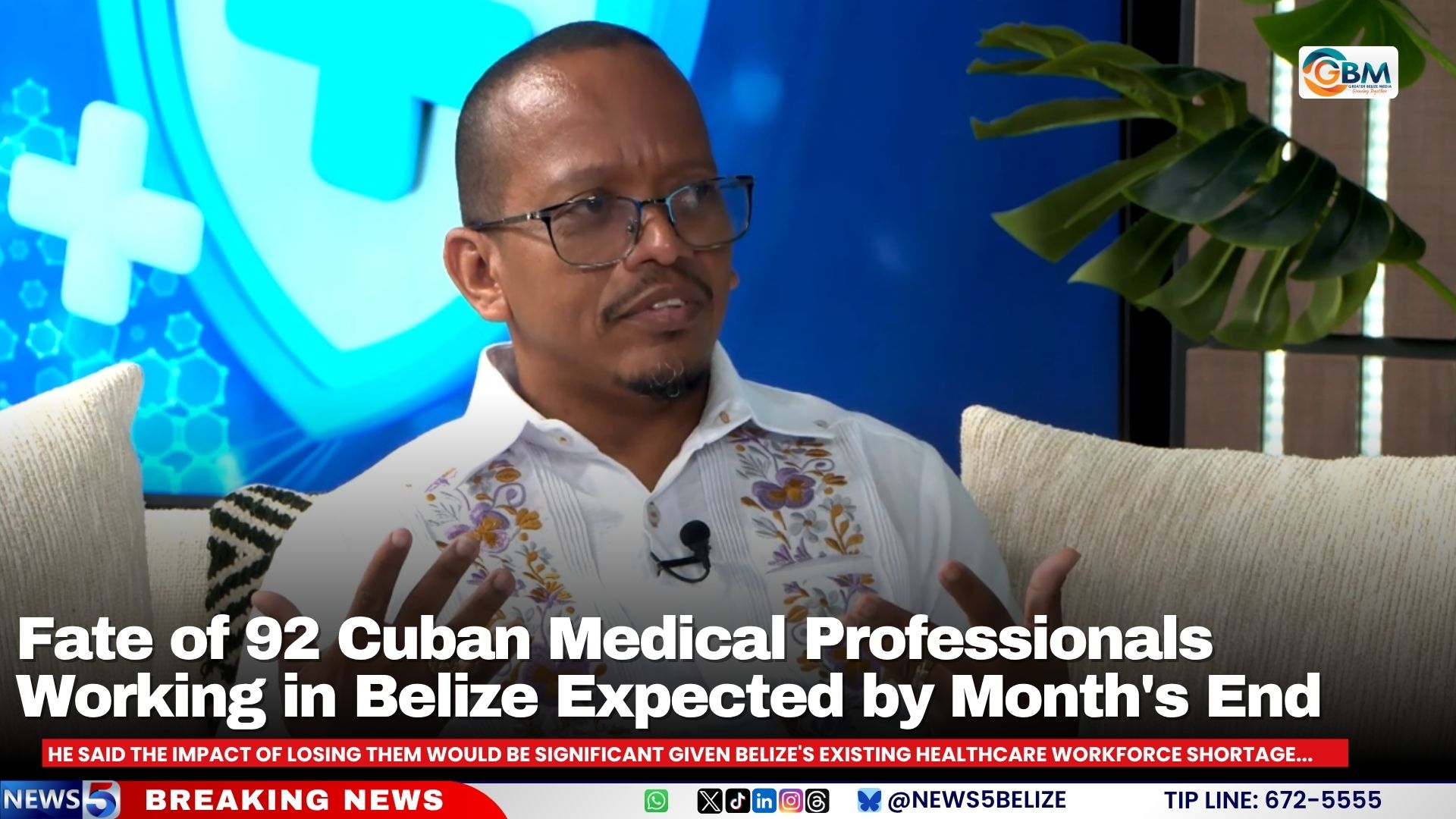
In a public announcement made on the local program *Open Your Eyes*, Belize’s Minister of Health and Wellness Kevin Bernard has confirmed that a final decision on the continued employment of 92 Cuban medical professionals currently serving across the Central American nation will be reached by the close of September 2026.
The Cuban medical brigade covers a wide spectrum of critical healthcare roles, ranging from tertiary-level specialists and general medical officers to diagnostic technicians, radiologists, and rural community nurses. Per Bernard’s breakdown, a small cohort of these specialists is based at the country’s main tertiary care hub, the Karl Heusner Memorial Hospital (KHMH), while the majority are deployed to underserved rural communities that have long struggled to attract domestic healthcare workers. The brigade also includes Belize’s only currently serving Cuban psychiatrist, filling a key gap in the country’s mental health services.
Bernard emphasized that any departure of the Cuban professionals would place unprecedented additional strain on Belize’s already overstretched healthcare system, which is grappling with a persistent nationwide workforce shortage—a challenge the minister noted is not unique to Belize, but a global crisis hitting small developing nations particularly hard. Worldwide, wealthier countries actively poach trained medical personnel from lower-income states, leaving small nations like Belize unable to fill critical frontline and specialist roles.
He highlighted the southern Toledo District as a stark example of how integral the Cuban medical staff are to local care delivery. Of the 16 doctors serving the district, fully half are Cuban nationals. For years, Belize has faced consistent difficulty recruiting local doctors to work in remote southern communities, and the Cuban professionals have stepped in to close that critical gap. Removing them from the system would immediately collapse access to routine and emergency care for thousands of rural residents, Bernard warned.
Discussions around the future of the medical arrangement are being coordinated through Belize’s Ministry of Foreign Affairs, with Bernard confirming that early talks have been productive, even as he acknowledged he does not have access to all details of bilateral diplomatic negotiations. The Belizean health ministry has submitted detailed input on the country’s staffing needs, mapping the distribution of Cuban professionals and outlining the gaps that would open up across the country—particularly in rural southern regions—if the workers depart. Officials are currently restructuring the bilateral medical worker agreement, with the goal of wrapping up negotiations and resolving the status of the 92 professionals by the end of September. Bernard’s statement also directly refuted unsubstantiated earlier claims that the Cuban doctors were already set for imminent departure.