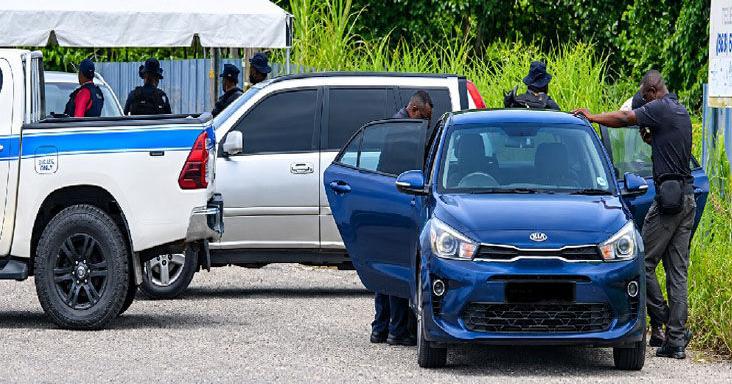
As the Government of Trinidad and Tobago prepares to wrap up a six-month state of emergency (SoE) on September 17, Prime Minister Kamla Persad-Bissessar has made public previously classified operational data to demonstrate what she frames as the security initiative’s success.
In a social media post published this week, Persad-Bissessar published the full contents of an internal document marked “SECRET”, which lays out the most granular breakdown of arrests, charges, and preventive detentions recorded during the operation to date. The dataset covers the full operational period from March 3 through September 10, 2026, with cumulative figures updated through day 192 of the SoE. The document was reportedly compiled in response to an urgent request for updated statistics on detained and charged individuals, though the identity of the requester has been redacted in the version released by the Prime Minister.
According to the declassified figures, law enforcement arrested a total of 5,802 people between the launch of the SoE and September 10, with 3,552 of those detainees — 61.2% of the total arrested population — formally criminally charged. This total marks an increase from the previously reported 5,767 arrests, with 35 additional people taken into custody on day 192 of the operation.
Of the 3,552 total charges, more than 60% (2,154 cases) were classified as Serious Reported Crimes (SRCs), with the remaining split between 816 Minor Crime charges (23%) and 582 Minor Offence charges (16.4%). The report explicitly notes that serious offences make up the majority of all charges filed during the SoE.
Within the Serious Reported Crimes category, charges related to illegal possession of firearms and ammunition were the most common, with 558 people facing these charges alone — accounting for more than a quarter of all serious offence charges. Following firearms charges, the most common serious offences were robbery (246 charges), general larceny (238), breaking and entering offences (225), narcotics possession with intent to traffic (214), fraud (140), other serious crimes (135), sexual offences (118), wounding or shooting offences (69), home invasion (66), motor vehicle larceny (48), murder (46), kidnapping (41), serious indecency (5), and larceny of a dwelling house (5).
For the 816 Minor Crime charges, possession of narcotics was the most frequent offence, with 494 people charged. Other minor crime charges include 82 for unspecified other offences, 79 for possession of drug paraphernalia, 39 for fraud and related minor financial offences, 38 for minor larceny, 30 for assaulting a police officer, 18 for malicious wounding, 13 for unlawful possession of contraband, 10 for praedial larceny, eight for possession of housebreaking tools, four for indecent assault, and one for minor larceny of a dwelling.
A further 582 people were charged with Minor Offences, the lowest-level classification in the report. Of these, 216 fell under the “Other Minor Offences” grouping, with 129 charged with breach of the peace, 115 charged with assault on police, 54 charged with assault, battery, or criminal threats, 39 charged with unlawful weapon possession, 23 charged with gambling or betting offences, four charged with malicious property damage, and two charged with loitering or public vagrancy.
The classified report also includes contextual data on home invasion trends, clarifying the difference between the 66 people charged with home invasion during the SoE and the 238 total home invasion incidents recorded nationwide in 2026 to date. Long-term trend data shows that national home invasion incidents fell roughly 42.6% from 535 incidents in 2024 to 307 in 2025. While associated murders rose slightly from 28 to 31 over that period, burglary (down from 179 to 79), robbery (down from 295 to 177), and shootings/woundings (down from 33 to 20) all recorded sharp declines.
The document also details the use of Preventive Detention Orders (PDOs), a special power granted under the SoE’s emergency regulations. As of day 192, authorities had recommended 801 PDO applications, with 702 (87.6% of recommendations) approved by relevant bodies. Of those approved, 574 PDOs were executed, after one additional detention was carried out on day 192.
Of the 574 people detained via PDO, 240 (41.8%) have been formally charged with criminal offences, while the remaining 334 (58.2%) do not currently appear on the charged list. The report explicitly warns against interpreting this to mean the uncharged detainees are innocent, noting that “investigations may remain ongoing” for those not yet charged.
Persad-Bissessar’s decision to release the sensitive security data comes just days before the SoE’s authorized mandate expires on September 17. Last Friday, Minister of Homeland Security Roger Alexander confirmed to Parliament that the government would not seek an extension to the emergency period, confirming the operation will end as scheduled.