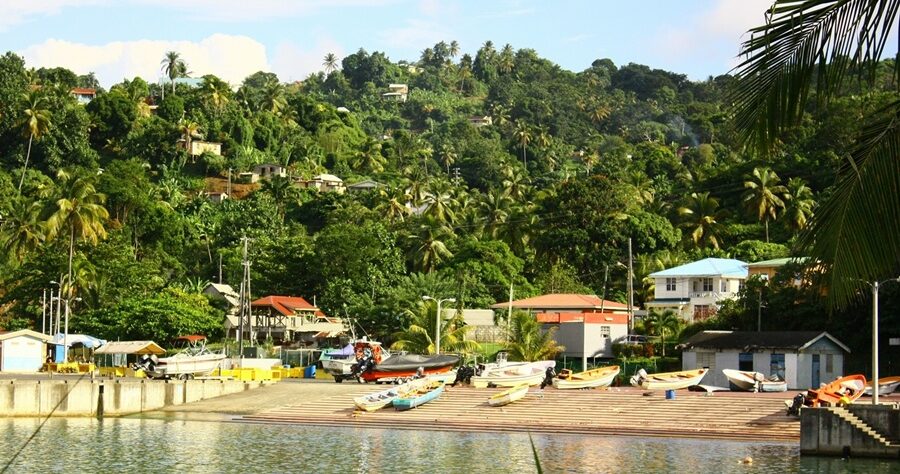
Prime Minister Roosevelt Skerrit of Dominica has formally confirmed that the national government is pressing ahead with long-planned initiatives to convert the existing Marigot Fisheries Complex into a fully functional port of entry for the island. The announcement came during a recent press briefing held last week, where Skerrit outlined that earlier concerns raised by local fishing communities have now been successfully addressed, removing the last major barrier to advancing the project.
With stakeholder disagreements reconciled, government agencies and the Dominica Air and Sea Ports Authority (DASPA) can now begin installing the operational infrastructure, regulatory systems, and supporting facilities required to open the new port to international traffic. Skerrit emphasized that the local project coordinator has made significant progress on pre-operational preparations, and responsibility now shifts to state bodies and DASPA to bring the initiative across the finish line.
When completed, the new port of entry will be able to receive incoming vessels traveling from nearby French territorial jurisdictions in the Caribbean. Beyond streamlining cross-border maritime travel, the development is projected to unlock widespread commercial opportunities for local businesses, including new customer bases for neighborhood shops, coastal restaurants, local transportation providers, and a wide range of other service-focused enterprises.
Skerrit framed the port conversion as a transformative economic catalyst for not just Marigot, but the entire northeastern corridor of Dominica, stretching from Marigot through surrounding communities to Calibishie and the Kalinago Territory. The project is also integrated into a broader suite of regional development initiatives for Dominica’s northeast, which includes the construction of a new international airport and a proposed redevelopment of Douglas-Charles Airport. Once the new international airport becomes operational, the Douglas-Charles site is set to be repurposed into a dedicated cargo hub and multi-use alternative sports facility that can host motor racing competitions, car shows, motorcycle rallies, and other large public events.
Additional complementary components of the regional development strategy include expanding access to agricultural land leases and scaling up domestic food production across the northeast. Skerrit noted that the overarching goal of linking these interconnected projects is to generate sustained, broad-based economic growth and activity across Marigot and all adjacent communities, unlocking new livelihood opportunities for local residents and supporting long-term regional development.