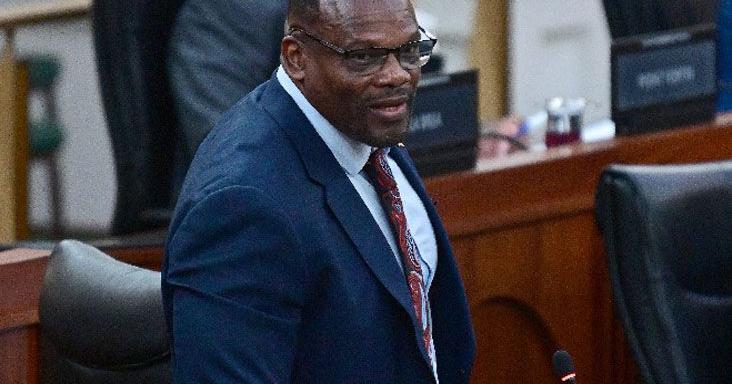
Trinidad and Tobago’s government is preparing to bring the controversial Zones of Special Operations (ZOSO) legislation back before parliament, following a formal announcement that it will not extend the national state of emergency (SoE) set to expire on September 17, 2026. The confirmation was delivered by Minister of Homeland Security Roger Alexander during an address to the House of Representatives Wednesday night, coming one day after Prime Minister Kamla Persad-Bissessar convened a meeting of the National Security Council—including Police Commissioner Allister Guevarro—at the St Ann’s Diplomatic Centre.
Alexander framed the impending expiration of the state of emergency as a natural transition point to advance the ZOSO framework, which he positioned as a core component of the administration’s broader multi-pronged anti-crime strategy. Unlike the temporary SoE, the ZOSO legislation creates a permanent statutory mechanism to designate geographically bounded areas as special security zones, where the state can deploy enhanced law enforcement measures paired with targeted community development interventions. “Its importance lies in its combined approach,” Alexander told lawmakers. “ZOSO is not simply about entering a community with law enforcement—it is about security and community development operating hand in hand. It allows the State to concentrate resources in an area affected by serious crime, while also addressing the underlying conditions that criminal organisations exploit.”
Under the proposed legislation, any area designated as a ZOSO would remain active for a maximum period of 180 days. Within these zones, the framework calls for coordinated, robust action against gang activity, illegal firearms, and violent crime, paired with improved delivery of public services, expanded community outreach, and targeted social programs to address root causes of criminality.
This reintroduction marks the government’s second attempt to pass the bill in 2026. The Law Reform (Zones of Special Operations) (Special Security and Community Development Measures) Bill was first introduced to the Lower House by Attorney General John Jeremie, SC, on January 16, and passed the following day by a 27-11 vote. However, the legislation required a three-fifths special majority to advance, and it was ultimately defeated in the Senate on January 27 after four days of debate. The governing party holds only 15 of the Senate seats, meaning it needed at least four additional votes from opposition or independent lawmakers to reach the required threshold of 19 votes. When the final vote was called, all 15 government senators supported the bill, while all 14 non-government senators—six from the official opposition and eight independents—voted against it. One independent senator abstained, leaving the bill far short of the required support.
The first attempt at the legislation drew widespread criticism over concerns that it would grant overly broad powers to the state to declare special security zones and deploy expanded security resources in local communities. Ahead of the new vote, Alexander pushed back against these concerns, emphasizing that the framework’s dual focus on security and development sets it apart from traditional heavy-handed policing approaches. He also issued a appeal to cross-party lawmakers, urging them to set partisan interests aside when considering the bill. “When that bill returns to this House, every member will have a responsibility to judge it on whether it gives vulnerable communities stronger protection and better State support,” Alexander said. “Public safety should not become a partisan casualty.”
In addition to announcing the ZOSO reintroduction, Alexander outlined the broader range of investments the administration is making to bolster national security as the country transitions away from the state of emergency. He stressed that the SoE was never positioned as a standalone solution to rising crime, but rather one temporary tool within a long-term national security strategy that includes expanding law enforcement manpower, improving police mobility and public presence, updating outdated security legislation and technology, strengthening border controls, cracking down on human and drug trafficking and cybercrime, and addressing the social and behavioral risk factors that push young people into criminal activity.
To address longstanding staffing gaps in the country’s protective services, Alexander confirmed that 233 new police recruits are currently completing training and are on track to graduate and enter service soon. “That means more trained officers preparing to serve the people of Trinidad and Tobago,” he said, adding that recruitment efforts will continue long-term, as sustained policing depends on sustained investment in personnel. The Cabinet has also approved a plan to absorb 800 currently serving Special Reserve Police officers into the regular Trinidad and Tobago Police Service (TTPS). Alexander noted that these officers already bring years of frontline experience to the force, and their absorption will close critical manpower gaps, boost divisional operational capacity, and add more personnel for patrols, criminal investigations, community policing initiatives, and specialist operations.
The expansion of protective services extends beyond law enforcement, Alexander added. Prison Service recruitment and training is also being accelerated: 250 new prison recruits entered training by July this year, as part of a planned target to recruit 800 new full-time prison officers by 2027. “We are rebuilding the front line across the protective services,” he said.
To improve public access to visible security, Alexander also announced that six joint mobile units staffed by police and Defence Force personnel have already been positioned across the country and will begin operational duties in the near future. Another 24 units will be deployed to strategic locations across Trinidad and Tobago based on ongoing operational assessments and input from local communities on their security needs. “Visible security must not remain concentrated in offices and compounds. It must be present where people live, work, travel, study, and conduct business,” Alexander said. “We are taking security closer to the people.”