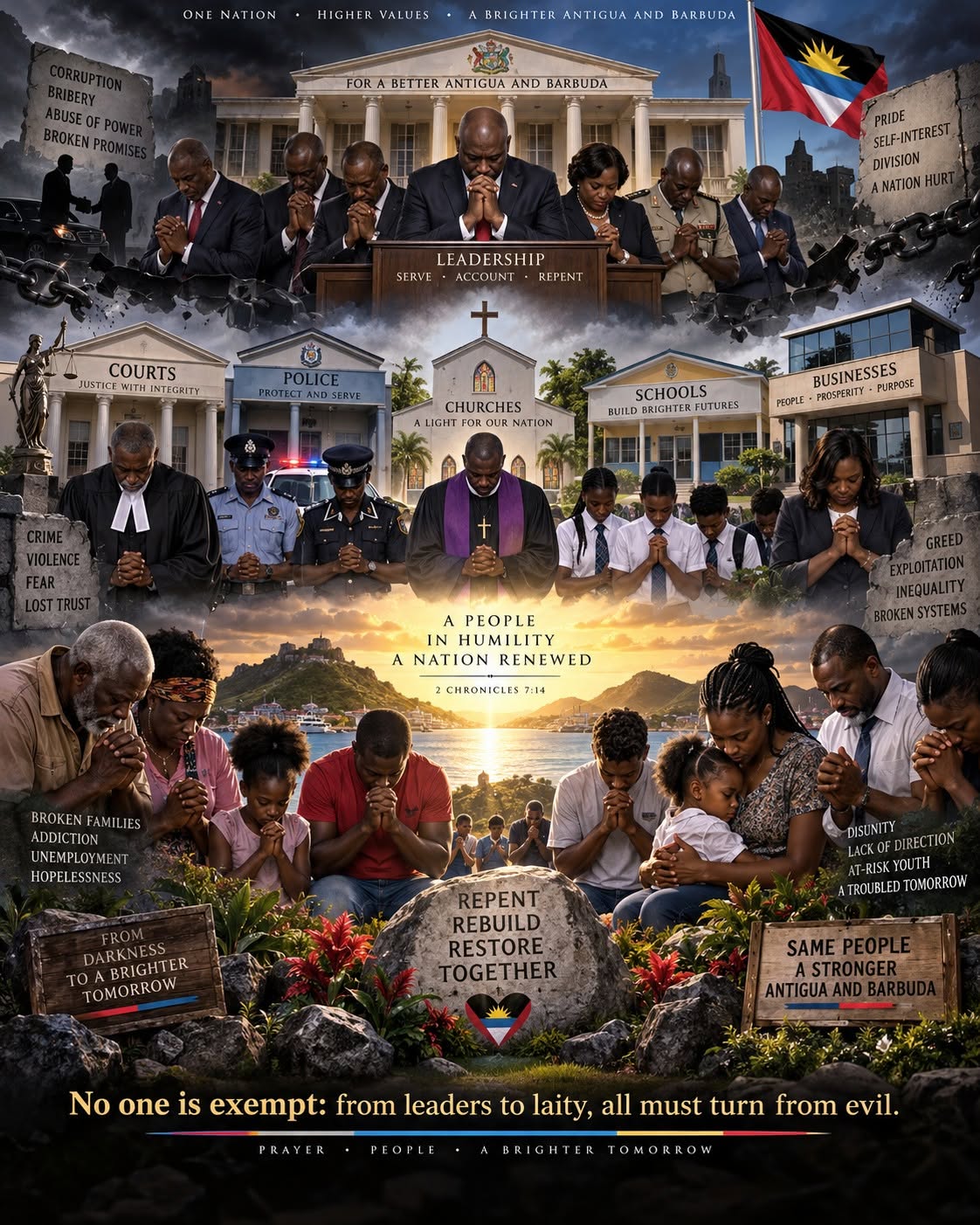
Drawing parallels between the ancient biblical story of Nineveh and the modern social and political landscape of Antigua and Barbuda, opinion writer Yves R. Ephraim issues a stark call for nationwide reflection and repentance amid a growing tangle of social ills plaguing the Caribbean nation.
The story of Nineveh, as recounted in the Book of Jonah, sets the foundation for Ephraim’s argument. In that ancient narrative, God condemned the widespread, egregious wickedness that had taken root across the entire society, from the ruling throne to the most humble household, and sent the prophet Jonah to warn the people of coming destruction. The tale has two defining turning points: Jonah’s initial disobedience to God’s command, and the unexpected unified repentance of all Nineveh’s people, who humbled themselves immediately after hearing the warning and turned away from their harmful practices.
Ephraim argues that no fair observer can deny that Antigua and Barbuda is currently engulfed in its own crisis of pervasive wrongdoing, with a surging crime wave serving as the most visible recent symptom. He outlines a long list of interconnected social and institutional failures that he frames as moral evils eroding the nation’s foundation:
Rising rates of violent gun crime and child sexual assault have left the country reeling, while high-level government corruption has gone largely unchecked. The criminal justice system, he contends, acts as a revolving door that hands down minimal punishments to offenders and quickly returns them to communities to reoffend, undermining public trust in the rule of law. Public officials regularly engage in indecent speech and open disrespect for norms and citizens, while the state has seized private property from ordinary people. The electoral system, he argues, has been captured by special interests, turning a blind eye to open bribery and questionable distribution of state resources, with the hidden cost of these handouts ultimately passed to all citizens in the form of a higher cost of living.
Even cultural institutions are not spared criticism. Ephraim calls out lewd public displays during the annual carnival, which he says are not only endorsed by national leaders but actively participated in by them, alongside the rapid proliferation of adult entertainment venues. He connects these cultural shifts to a broader breakdown of personal respect among the nation’s youth. Compounding these issues is a staggering social statistic: more than 80% of children in the country are born to unmarried parents, a trend that deprives many young people of the stable, supportive environment they need to thrive, and has contributed to a growing mental health epidemic among youth that pushes many toward drug abuse, gang involvement, and antisocial behavior.
Ephraim pushes back against the common habit of ranking wrongdoing, framing some acts as major evils and others as minor, acceptable flaws. All wrongdoing, he argues, is equally corrosive, and all demands accountability. The nation has set aside a national Day of Prayer to appeal for divine intervention to rescue the country from the grip of crime and violence, but he stresses that prayer alone will be meaningless if the people of Antigua and Barbuda are not willing to change their behavior. Just as in Nineveh, repentance must be universal, sweeping from the highest government leaders down to every ordinary citizen, if there is any hope of turning the nation around.
He also challenges the Christian community in the country to step into its role, asking whether self-identified Christians are living as faithful examples, speaking out clearly against the evils plaguing society, or falling into the same disobedience that initially kept Jonah from delivering God’s warning. If Christians abandon their mandate to stand for righteousness and speak truth to power, Ephraim argues, the nation has little hope of change – just as Nineveh would have been doomed without Jonah’s message.
No segment of society is exempt from this call, he emphasizes. Every person, from top government officials to ordinary laypeople, must confess wrongdoing, seek mercy, and turn away from harmful practices. Echoing the biblical narrative, which emphasizes that God desires repentance rather than destruction, Ephraim notes that Jonah’s call was a legitimate act of criticism meant to give Nineveh a chance to change. The ancient city was corrupt from top to bottom, just as Ephraim argues Antigua and Barbuda is today. The only path from national brokenness to restoration, he concludes, is to hear that godly criticism, accept it with humility, and choose to turn away from wickedness. The piece closes with a prayer for a full national revival that can heal the nation’s divides and restore its moral foundation.