A heated regional debate over how to address escalating school violence in the Caribbean has gained new traction after the prime minister of Antigua and Barbuda publicly threw his support behind a controversial proposal put forward by his counterpart from Trinidad and Tobago.
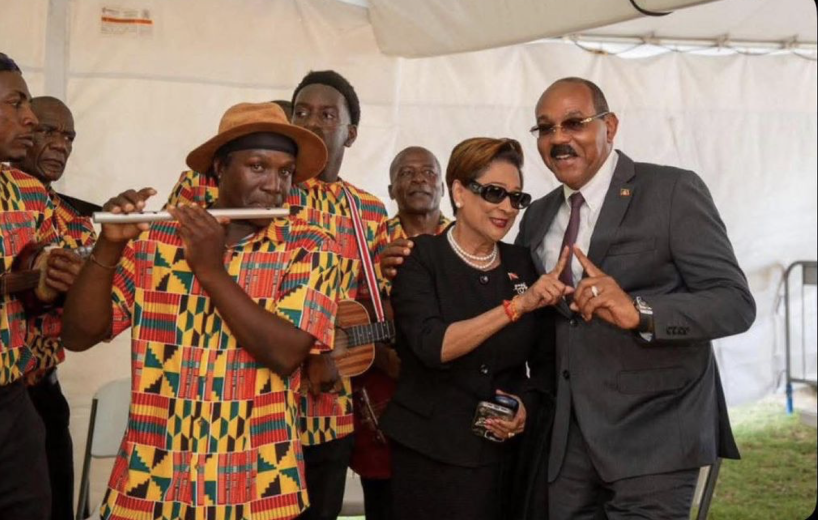
Gaston Browne, leader of Antigua and Barbuda, shared a local media report covering the ongoing controversy and echoed Kamla Persad-Bissessar’s call to remove chronically violent and disruptive students from mainstream school campuses. Beyond endorsing the plan, Browne shifted much of the accountability for youth misbehavior to family households, arguing that greater scrutiny and pressure should be placed on parents who fail to guide their children appropriately. “Endorsed. Send them to hot up those parents who are raising criminals [in their] homes instead,” Browne wrote in his public comment on the proposal.
Persad-Bissessar, who first tabled the plan, has stood her ground against mounting pushback from educators, parent groups and former education officials. She argues that the fundamental right of well-behaved students to learn in a safe environment cannot be sacrificed to accommodate students who continually threaten harm. Under her framework, school leaders would adopt a strict zero-tolerance policy for persistent violence and disruption: when parents repeatedly fail to address concerns about their child’s behavior, the offending student would be sent home to remain with their family until meaningful intervention can occur. This approach, she insists, protects both students and staff from daily risk of assault, robbery, and harassment.
Critics have pushed back hard against the proposal, however. The Trinidad and Tobago Unified Teachers’ Association, the National Parent Teacher Association, and former Education Minister Dr Nyan Gadsby-Dolly all argue that removing disruptive students without targeted, supportive intervention fails to address the root causes of aggressive behavior. They question whether simply excluding students from school will improve long-term outcomes, warning that it may exacerbate behavioral issues and push vulnerable youth further into destructive patterns.
Undeterred by the criticism, Persad-Bissessar has accused her opponents of failing to put forward viable alternative solutions that guarantee the safety of educators and the broader student body. The current debate has emerged against a troubling backdrop of rising school-related violence in the region. Official police data shows that reported fights involving school-aged children have jumped sharply year over year: authorities recorded at least 27 such incidents in 2025, and that number has already climbed to at least 36 in 2026 with months still remaining in the year. This sharp uptick has amplified pressure on political leaders and education stakeholders to find a consensus on how to reverse the trend and restore safety to school campuses.