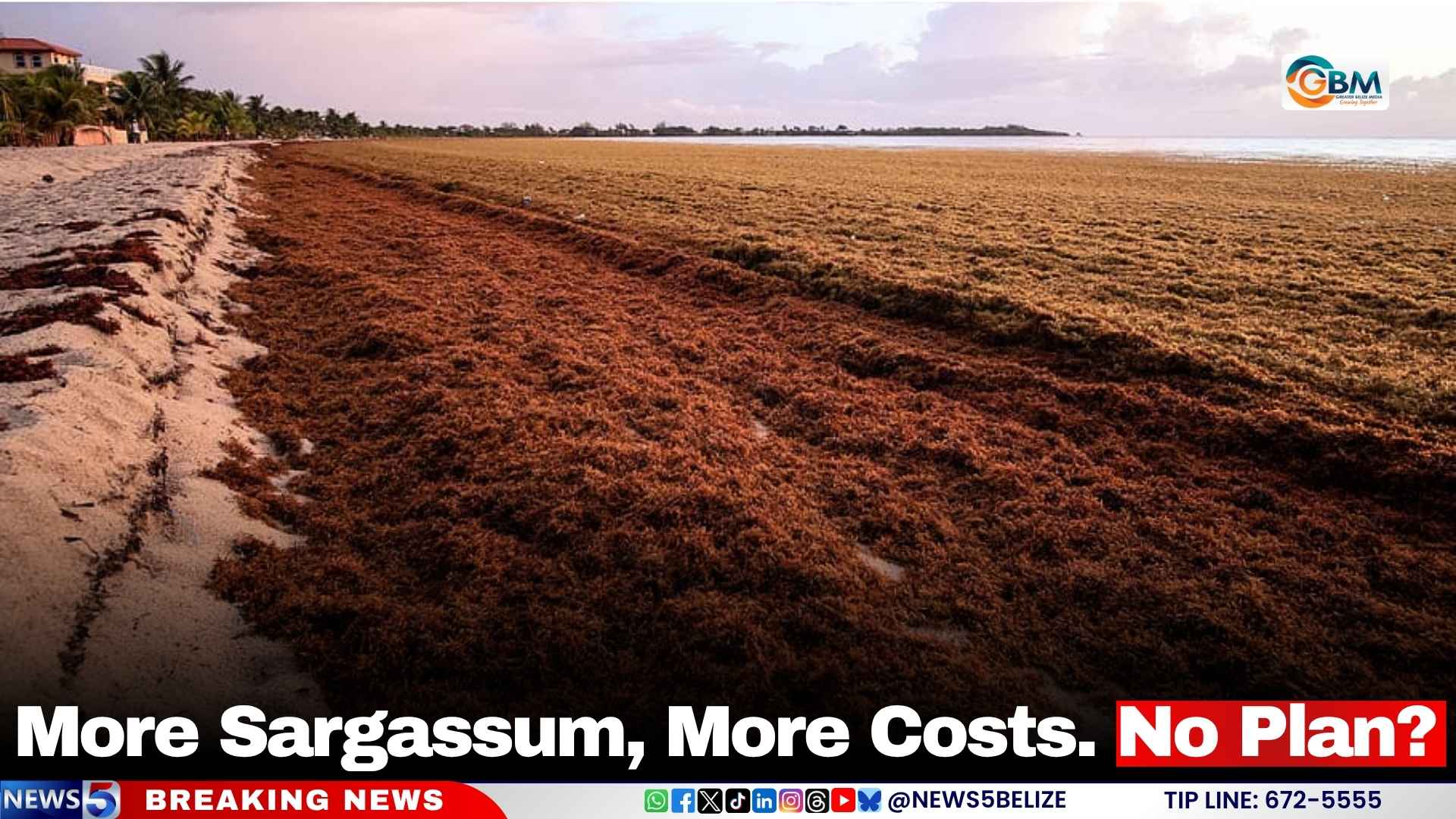
By 2026, the persistent influx of sargassum along Belize’s coastlines has evolved from an occasional environmental nuisance to a crippling, recurring financial burden for the country’s coastal tourism sector. For hotels, tour operators, and small coastal businesses, routine seaweed removal is no longer an unexpected cost—it has become a permanent line item on every annual operating budget.
Reynaldo A. Malik Jr., president of the Belize Hotel Association (BHA), explains that certain coastal geographies have exacerbated the crisis, with the Placencia Peninsula hit particularly hard. The peninsula’s natural coastal formation creates natural traps that allow massive volumes of sargassum to accumulate along its shorelines, far beyond what private properties alone can manage consistently.
Malik emphasizes that the responsibility for clearing national coastlines cannot rest exclusively on private industry. While BHA members acknowledge their obligation to maintain the beach segments directly fronting their properties, he argues that public and undeveloped coastal areas—including government-owned crown land—must be managed by state and local authorities. What is needed, he stresses, is a formal public-private partnership built around a actionable, long-term strategy to address the crisis. It is this lack of a functional, coordinated plan that has frustrated industry leaders the most, Malik says.
“You can allocate any amount of public funding to this problem, but without a clear implementation plan, that money is simply wasted,” Malik noted, comparing unplanned spending to throwing cash into the wind. His critique extends to some parts of the tourism industry as well: he acknowledged that not all hotel operators are holding up their end of mitigation efforts, with some properties allowing massive piles of sargassum to build up on their stretches of beach without intervention, worsening the problem for neighboring businesses and the wider coast.
The conversation around sargassum mitigation has become tied to recent tourism policy changes: Minister of Tourism Anthony Mahler has framed the recent increase in hotel occupancy tax, from 9% to 12%, as a mechanism to generate dedicated funding for sargassum response efforts. Malik confirmed that BHA has been holding ongoing exploratory talks with the Ministry of Tourism, the Ministry of Finance, and the Office of the Prime Minister, with a formal negotiating meeting still scheduled for a future date.
Given tourism’s outsize role in Belize’s national economy, any disruption to the coastal tourism sector ripples through the entire country’s financial health. “Impacts to our industry, whether positive or negative, create direct ripple effects for Belize’s overall economy,” Malik said. Despite the current frustration over the lack of a clear plan, he remains optimistic that stakeholders will reach a collaborative solution that works for all parties involved.