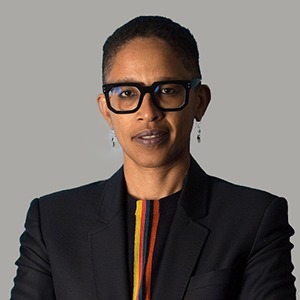
On Tuesday, 8 September 2026, a landmark legal action targeting historical transatlantic chattel slavery entered a new phase when a team of three high-profile lawyers led in part by Ulele Burnham submitted an unprecedented reparations petition on behalf of the Jamaican government to King Charles III.
Ulele Burnham carries deep regional political heritage: she is the daughter of Guyana’s iconic founding leader Forbes Burnham, who established the People’s National Congress, led the South American nation to independence from Britain in 1966, and served as its first executive president from 1980 until his death in 1985. Based at the UK’s renowned Doughty Street Chambers, Ulele Burnham is a widely respected legal expert, ranked as a Band 1 Court of Protection practitioner by Chambers and Partners 2026, with extensive experience in equality and anti-discrimination law. She joins co-counsel Edward Fitzgerald KC and Harj Narulla on the legal team, instructed by Lawrence Cartier of Keystone Law.
Doughty Street Chambers has framed the filing as a defining, never-before-seen milestone in the decades-long global movement for reparatory justice for victims of slavery and their descendants. A high-level Jamaican government delegation traveled to London to formally submit the petition, which invokes a little-used special jurisdiction granted to the British monarch under the 1833 Judicial Committee Act. This statute allows the King to refer questions of significant legal and constitutional importance to the Judicial Committee of the Privy Council, the body that serves as the final appellate court for several Commonwealth nations including Jamaica.
Buckingham Palace confirmed receipt of the filing in an official statement, noting that the Jamaican government is seeking to have the petition considered by the Judicial Committee. “We understand the Jamaican government is seeking a petition to be heard before the Judicial Committee of the Privy Council,” a palace spokesperson stated. “The process for seeking a petition is to lodge it with the Judicial Committee so that referral under section four of the 1833 Act can be considered. We also understand the Jamaican representatives will be received by the Foreign, Commonwealth and Development Office for bilateral discussions.”
The petition asks King Charles, in his capacity as Jamaica’s formal Head of State, to refer three core legal questions to the Judicial Committee for advisory determination: First, whether the mass abduction of African peoples, their forced transatlantic transport, and their enslavement as property in Jamaica was ever legal under English common law. Second, whether these same acts constituted, and remain, a violation of international law. Third, whether the United Kingdom holds a binding legal obligation to deliver reparations to the people of Jamaica for the ongoing harms of slavery.
This historic legal move has already garnered broad global and regional endorsement. Every head of government across the 15-nation Caribbean Community (CARICOM) has publicly backed the petition. Last month, Ghanaian President John Dramani Mahama also expressed his public support during an address to the Jamaican parliament, and reaffirmed that backing in subsequent official correspondence with the Jamaican government.
The filing comes amid a growing global momentum for slavery reparations, marked by two major recent international actions. In March 2026, the United Nations General Assembly adopted landmark Resolution RES/80/250, which formally designated transatlantic chattel slavery as “the gravest crime against humanity” in international law. Just over a month prior to the petition filing, on 31 August 2026, the UN Committee on the Elimination of Racial Discrimination (CERD) released General Recommendation No. 40, a landmark guidance document that outlines reparatory justice frameworks for addressing the persistent harms of colonialism, the transatlantic slave trade, and racialized chattel slavery.
King Charles will now review the petition and determine whether to refer the three legal questions to the Judicial Committee of the Privy Council for formal consideration. Legal observers note that whatever the monarch’s decision, the filing itself marks a watershed moment for the global reparations movement, bringing the legal question of accountability for historical slavery into one of the world’s most established legal forums.