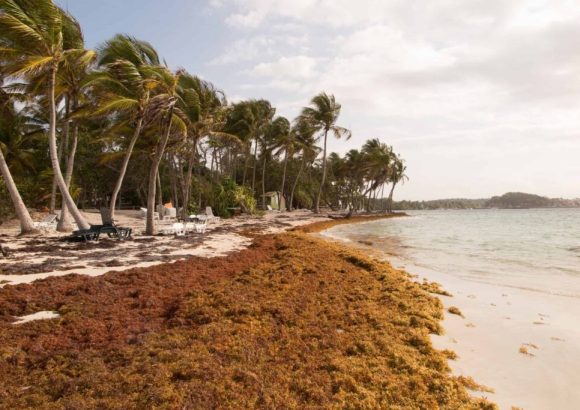
Across the Caribbean’s most popular coastal tourist hubs, a growing environmental crisis is delivering a significant blow to the region’s $30 billion a year tourism industry, with iconic destinations already seeing sharp drops in visitor numbers. In Mexico’s top Caribbean resort areas of Cancún and the Riviera Maya, massive accumulations of foul-smelling sargassum algae have smothered miles of golden beaches and shorelines, driving the steep decline in tourist arrivals that has local authorities and business owners scrambling to respond. While rising security concerns have also contributed to falling visitor counts in these world-famous getaways, multiple sector insiders confirm that the invasive seaweed outbreak remains by far the biggest driver of the downturn, a conclusion rarely shared publicly despite widespread private agreement.
The sargassum plague is not isolated to Mexico’s Caribbean coast. It has spread rapidly across the entire region, leaving few popular tourist destinations untouched, including the Dominican Republic’s most visited coastal areas. Year after year, the scale of the outbreak has grown worse, with almost every beach in the country’s eastern region now plagued by the destructive algae – even the normally pristine shorelines of Bayahibe and its surrounding communities have not been spared. For most travelers planning trips to the island, however, the distinction between affected and unaffected areas is rarely clear: many visitors write off the entire Dominican Republic as a tourist destination once they see images of sargassum-covered coastlines, even if their intended destination remains algae-free.
Frank Rainieri, one of the most respected and moderate leaders of the Dominican Republic’s tourism sector, has recently issued an urgent call to action, warning that the country cannot afford to delay a coordinated response to the crisis. Rainieri stresses that tackling the sargassum problem is just as critical as resolving ongoing water supply shortages that have plagued the Punta Cana and Bávaro regions, another top issue facing the island’s tourism industry. To date, the Dominican government has moved slowly to roll out a comprehensive national action plan to address the outbreak, and Rainieri warns that further inaction carries severe consequences. For a small island nation that relies heavily on tourism to drive its national economy, even a short-term drop in visitor arrivals can create long-lasting economic damage. While experts acknowledge that eradicating sargassum entirely is a complex, long-term challenge, the example of Mexico’s already declining tourism numbers makes clear that implementing preventative mitigation measures as quickly as possible is essential to avoiding a similar crisis for the Dominican Republic.