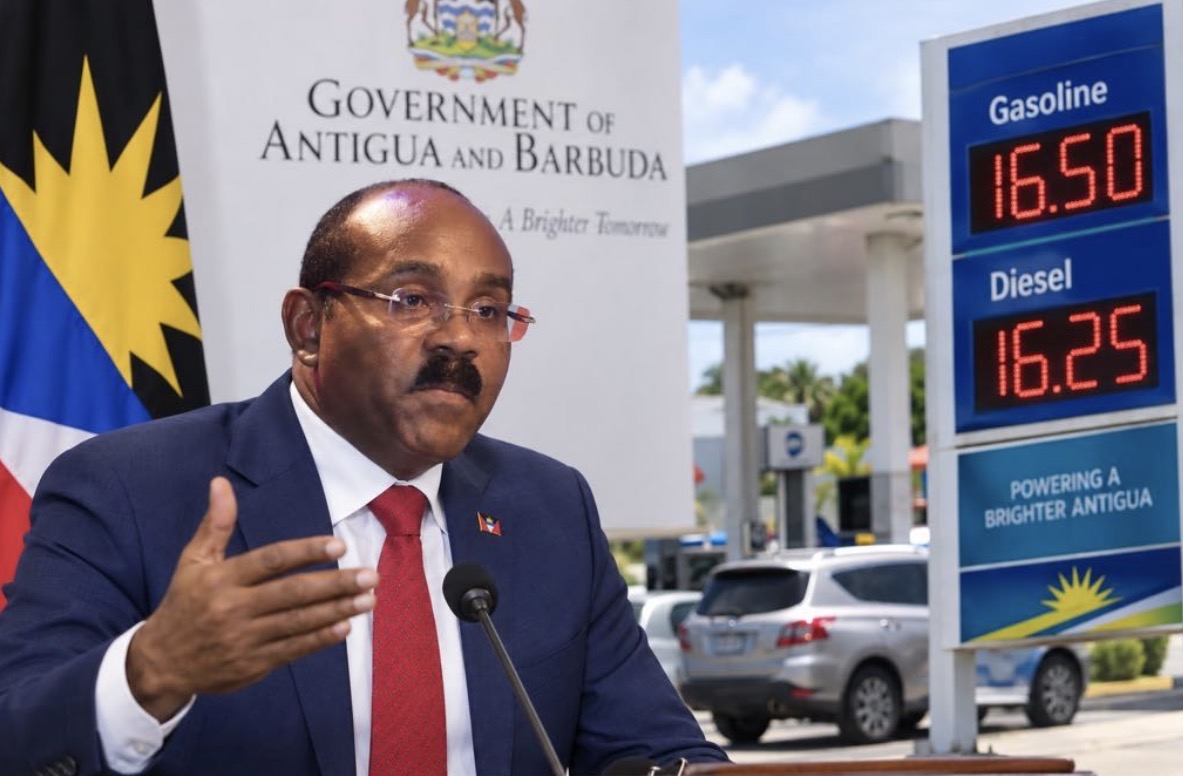
Prime Minister Gaston Browne has publicly revealed that the government of Antigua and Barbuda has secured a 30 million Eastern Caribbean dollar loan to cover outstanding debts tied to its controversial fuel price stabilization policy, which was designed to keep retail fuel costs below global market rates for local consumers.
Speaking during his weekly public program, the Browne and Browne Show, this past Saturday, Browne clarified that the borrowed funds will go toward settling mounting financial obligations that built up as the government absorbed skyrocketing international crude oil prices throughout 2024. The core goal of this policy, he reaffirmed, was to prevent sudden, crippling cost increases from being passed directly to working households and businesses across the island nation.
Browne’s announcement comes just days after the administration implemented a 2 EC dollar per gallon increase for both gasoline and diesel, a move that marked the first major adjustment to the subsidy regime in months. Prior to the price hike, retail gasoline was priced at 14.50 EC dollars per gallon, while diesel cost 14.25 EC dollars per gallon. Data from July 2024 confirms these were the lowest fuel prices across the entire Eastern Caribbean Currency Union bloc during that period.
The true scale of the policy’s cost to public finances has gradually come to light in recent weeks. Browne previously confirmed that over the first six months of 2024, the policy cost the national treasury roughly 24 million EC dollars in foregone fuel tax revenue. On top of that forgone income, the government has already transferred at least 15 million EC dollars to the West Indies Oil Company (WIOC) to offset the losses the state-owned refiner incurred from selling fuel below market cost.
Notably, the final price increase approved by Browne was smaller than the recommendation put forward by the Ministry of Finance. Ministry officials had proposed a steeper 3.50 EC dollar per gallon hike to fully close the gap between current retail prices and global market costs, but Browne said he chose a more modest increase to soften the financial blow to motorists and low-income households that rely on private vehicles for work and daily needs.
The price adjustment triggered immediate industrial action from private fuel station operators across the country, who have been locked in a dispute with the government over profit margin levels. Multiple private stations shut down operations on Tuesday, leaving motorists with no option but to refuel at the small number of outlets directly operated by WIOC, creating long lines and fuel shortages in many communities.
The standoff was resolved within 24 hours after Browne called emergency direct talks with representatives of the fuel dealers association. Following the closed-door negotiations, most private stations resumed normal operations by Wednesday. The two sides agreed to launch a 90-month collaborative review process, which will examine a wide range of ongoing challenges facing both private station operators and independent fuel haulers.
As part of the agreement, a special multi-stakeholder committee will be convened to evaluate a long-standing request from dealers to increase their allowed profit margin from the current 12% to 15%. Browne noted that the committee will deliver a detailed recommendation to the cabinet once the review period is complete.
In closing his Saturday address, the prime minister issued a clear warning to consumers that additional fuel price increases cannot be ruled out in the coming months. If global petroleum prices continue their upward trajectory amid international market volatility, he said, the government will be forced to implement further adjustments to keep the subsidy program financially sustainable.