Suriname has launched a new comprehensive five-year national security framework, the National Strategic Security Policy Plan 2026-2031, designed to tackle a growing range of transnational and domestic security threats including cross-border crime, cybercrime, human trafficking, arms smuggling, illegal gold mining, and public corruption. The plan was formally presented and transferred during the closing session of the 2026 National Security Conference, held on September 5, where Surinamese President Jennifer Simons emphasized the inextricable link between long-term economic progress and intentional investment in public safety and robust institutional capacity.
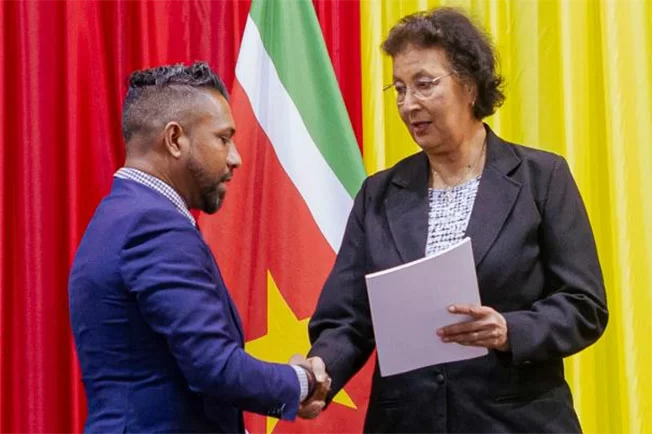
The two-day conference, organized by the Directorate of National Security (DNV) and hosted at the Congress Hall under the central theme “Strategic Resilience and Integrated Cooperation”, brought together security agencies, policymakers, civil society organizations, and international partners to deliberate on current and emerging security challenges facing the nation. After the plan was formally presented to President Simons during the event, the head of state transferred the official policy document to Major Gerard Kalka, acting director of the DNV, and Harish Monorath, Minister of Justice and Security.
The new policy framework is set to guide all national security planning and operations for the coming half-decade. In her address at the conference closing, President Simons noted that the plan comes at a critical juncture for Suriname, which is opening new economic opportunities driven by rapid development in its oil, natural gas, and gold sectors, while simultaneously facing evolving, increasingly complex security risks that threaten sustainable growth.
“There can be no durable development without security,” President Simons stated, highlighting that addressing the full spectrum of modern threats detailed in the plan requires up-to-date intelligence, advanced technological infrastructure, well-trained personnel, and strengthened, accountable public institutions. She emphasized that no single security agency or standalone organization can effectively counter current multi-faceted threats on its own, stressing that cross-agency collaboration and real-time information sharing must be expanded across all levels of government.
“Security requires an ongoing process of information sharing, analysis, and coordinated action,” the president added. She also underscored that institutional integrity within security forces must be a core priority, noting that operational professionalism, discipline, and transparency must always be paired with full respect for fundamental human rights.
Reaffirming that national security is a shared obligation rather than the sole responsibility of government officials or uniformed personnel, President Simons noted: “National security is a collective responsibility. It does not belong only to cabinet ministers or Surinamese people in uniform — it belongs to all of us.” While the government will lead coordination of the new security strategy, she added, meaningful progress can only be achieved when security agencies, civil society groups, and the broader public all take shared ownership of the country’s safety goals.