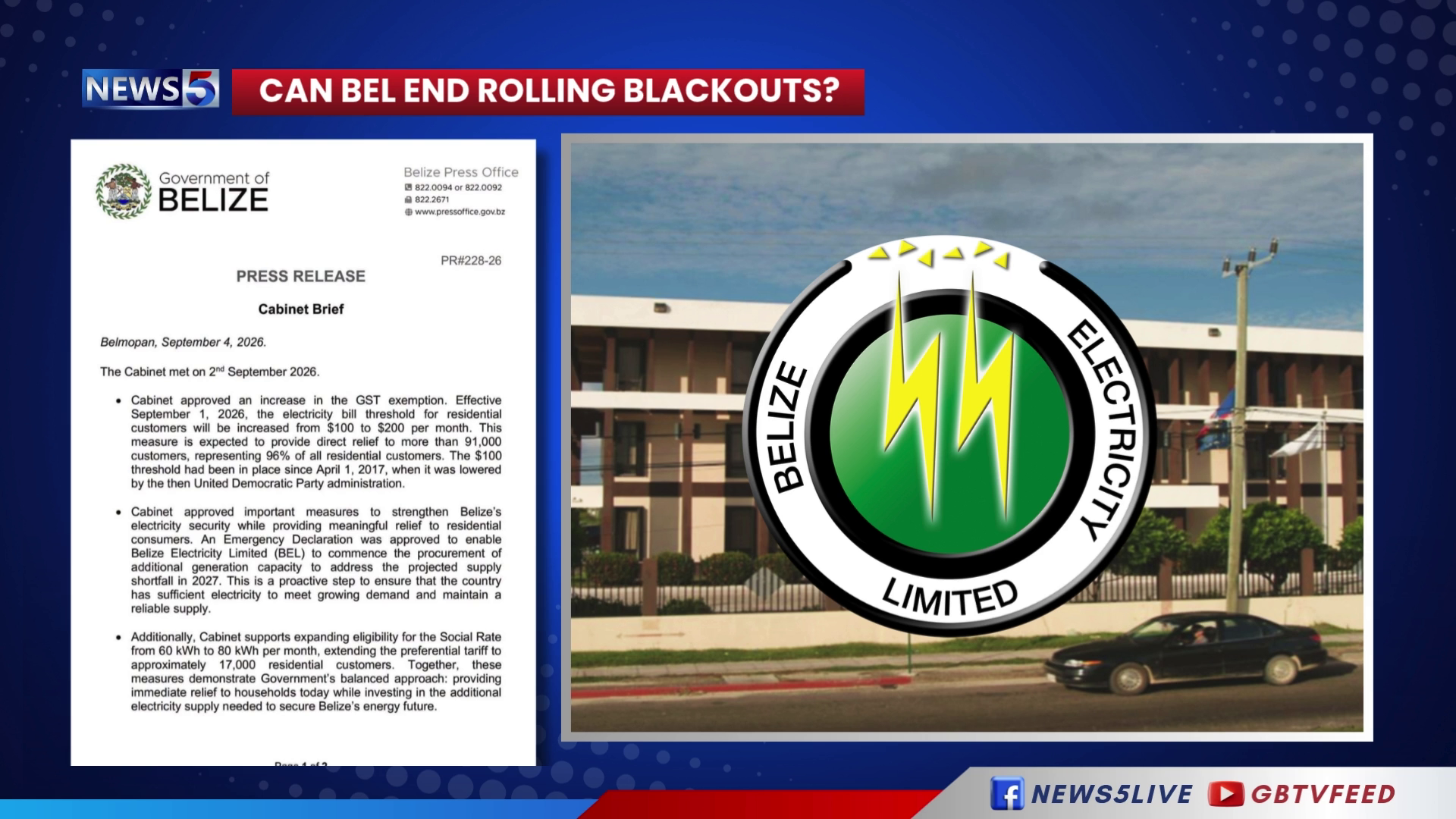
In a landmark response to a deepening national energy crisis, the government of Belize has formally approved a national power supply emergency declaration, after weeks of widespread rolling blackouts exposed critical vulnerabilities in the country’s electricity infrastructure. The emergency order, greenlit by the Belizean Cabinet during a Wednesday meeting, responds to an urgent request from Belize Electricity Limited (BEL), which warned that the nation could face a substantial energy deficit over the coming 12 months without immediate intervention.
The crisis was triggered last month when Mexico’s state-owned power utility Comisión Federal de Electricidad reduced its regular electricity exports to Belize, a move that left the Central American nation unable to meet domestic consumer and commercial demand. Over the past several weeks, the gap between available supply and rising demand has forced BEL to implement rolling, nationwide scheduled outages — commonly known as load shedding — that have disrupted daily life across the country.
Under the newly approved emergency declaration, BEL will now be able to accelerate processes to secure additional power generation capacity, cutting through typical bureaucratic red tape that would slow emergency acquisitions and infrastructure deployment. The move is designed to rapidly reduce the risk of prolonged or more frequent future outages.
Dr. Leroy Almendarez, Chief Executive Officer of Belize’s Ministry of Public Utilities, explained the regulatory and planning context that led to the emergency declaration in an interview this week. He framed the energy shortfall as a challenge of growing demand meeting constrained supply, noting that BEL conducts regular demand forecasting, on both annual and five-year timelines, that relies on historical consumption data to project future needs.
Almendarez explained that once BEL identifies a projected gap between domestic generation capacity and expected demand, it shares detailed data with the country’s Public Utilities Commission (PUC). Unlike standard regulatory adjustments, however, emergency declarations fall under Cabinet jurisdiction, so the PUC forwards the request to the Minister of Energy for full Cabinet review and approval.
Cabinet officials emphasized that the emergency declaration is a proactive, pre-emptive measure, rather than a response to a full-scale collapse of the power system. The government’s top priority is securing enough additional energy supplies to meet steadily growing domestic demand across the country in the coming year, and prevent further disruption to households and businesses.