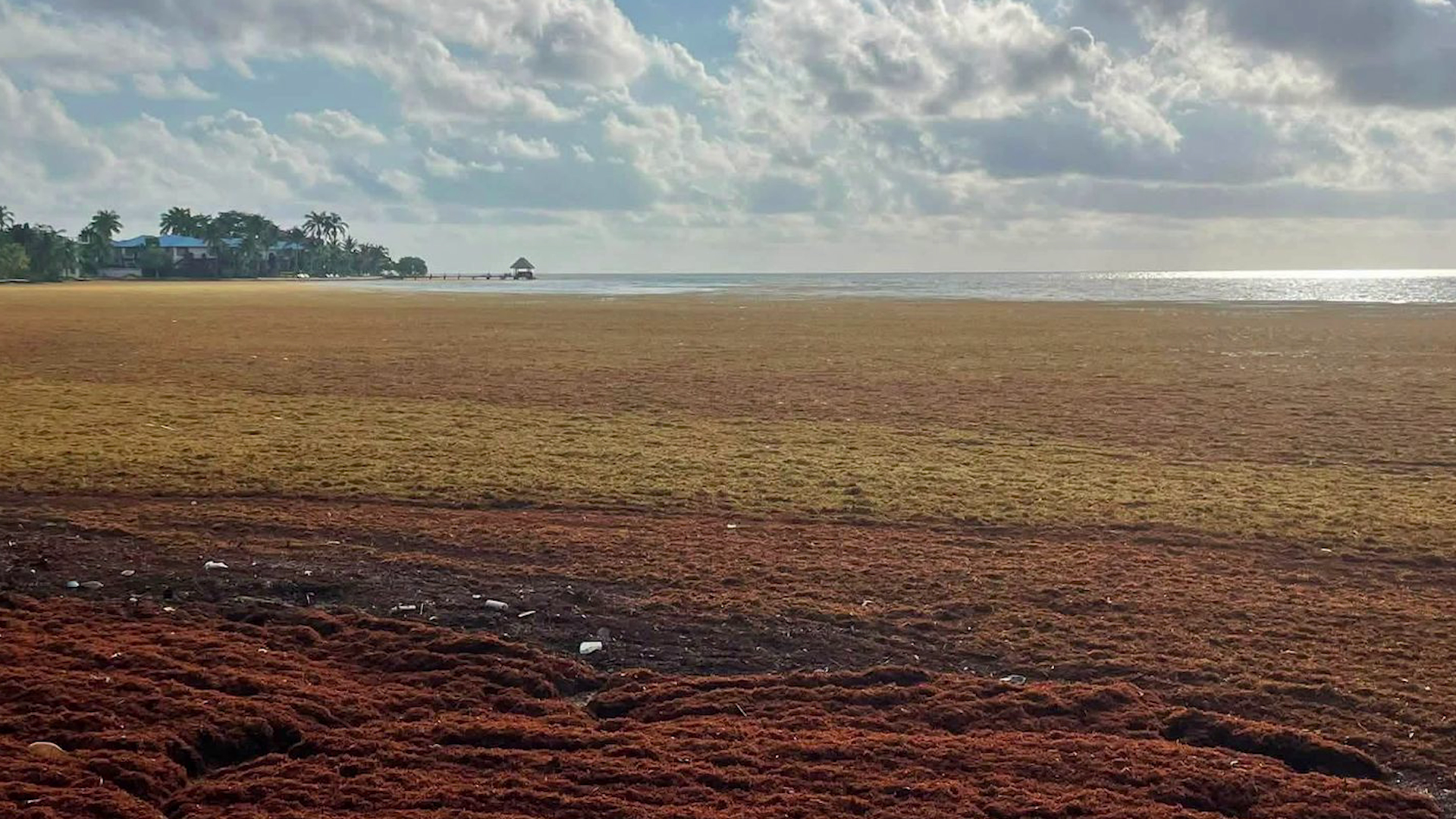
A massive, ongoing sargassum invasion has choked the popular coastal beaches of Placencia in Belize’s Stann Creek District, leaving vast stretches of shoreline unfit for recreational use and sparking a sharp three-month drop in tourist arrivals that threatens the country’s tourism-dependent economy. As of September 4, 2026, local and national tourism stakeholders have moved into urgent talks to develop targeted mitigation strategies that can reverse the damage and protect Belize’s $4 billion marine tourism sector.
Representatives from the Belize Tourism Board held a full day of collaborative discussions with the Placencia Village Council this week to map out actionable solutions for the affected peninsula. Tourism Minister Anthony Mahler, who also holds the sports portfolio, has characterized the sargassum incursion as an unprecedented three-pronged crisis: an environmental emergency, a growing public health hazard, and a severe economic shock for coastal communities that rely almost entirely on visitor spending.
Mahler brings personal perspective to the crisis, having personally cut short a foreign vacation by checking out of an international resort due to unbearable sargassum accumulation on that property’s beaches. He acknowledged that broader global economic and travel headwinds have put downward pressure on Belize’s tourism sector, but emphasized that the invasive seaweed bloom is a major independent driver of the recent three-month downturn in arrivals.
“For me, and I’ve flagged this enough in cabinet, just like the cost of living, it is a crisis. It has become a health crisis. It has become an environmental crisis, and it has become an economic crisis,” Mahler explained in an address following the stakeholder talks. He noted that local coastal businesses and resorts are already absorbing unexpected, costly damage from the invasion, requiring unplanned repairs and upgrades to infrastructure and guest amenities that cut into already strained profit margins.
To address the long-term challenge of continuous sargassum inundation, the government is currently testing mitigation systems to identify which approaches work best for Belize’s unique coastal geography through a trial-and-error process. Mahler confirmed that officials have now identified a promising machine-based solution that can operate 23 hours a day to clear seaweed, matching the near-constant pace of sargassum influx along Belize’s coastlines. The new system will require integration with existing coastal infrastructure to reach full operational capacity.
With 70% of all visitors to Belize traveling to the country for marine-focused activities, protecting clean, accessible shorelines is non-negotiable for the national economy, which draws $4 billion in annual revenue from tourism. “The last few months have been rough. It has, we’ve taken a beating from sargassum, but there are other issues,” Mahler added, referencing the overlapping global challenges hitting the travel sector.
To secure sustainable funding for long-term mitigation, Mahler has put forward a policy proposal to allocate 1.5 percentage points of a proposed 3.5% hotel tax increase directly to sargassum clearance and prevention measures. The government is also in talks with international financial institutions to secure additional grant and loan funding to scale up mitigation efforts across all affected coastal regions of the country. This report is a transcript of an evening television newscast originally published by the outlet.